
How Americans Are Trying to Escape Debt in 2026: Inside the Struggle Against Credit Cards, Auto Loans, and Student Loans
In 2026, debt is not just a financial issue in the United States — it is a defining part of everyday life. It shapes decisions, limits opportunities, and silently dictates the future of millions of Americans. It is the weight people carry into their jobs, their relationships, their homes. And for many, it feels like a burden with no clear way out.
But across the country, something is changing. A new awareness is emerging — a determination to break free, even starting from situations that once seemed impossible.
This is the story of how Americans are trying to escape debt in 2026, one payment, one decision, one sacrifice at a time.

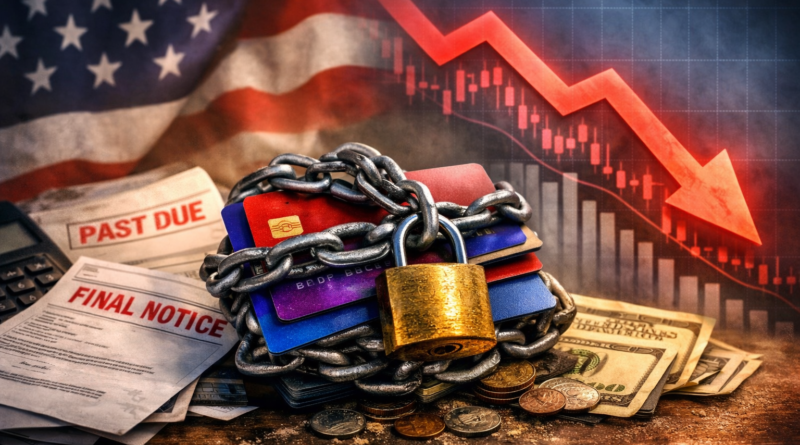
“America’s Debt Crisis: Why Millions Are Struggling in 2026
“A visual snapshot of America’s escalating credit card debt
The Reality: Debt Is Everywhere
Walk into any diner in Ohio, any supermarket in Florida, any office in California, and you’ll find the same story repeated in different forms.
Credit card balances have reached record highs, surpassing $1.3 trillion. Auto loans have become so expensive that the average monthly payment now exceeds $750. Student loans — after the end of pandemic relief — have returned like a storm, with millions struggling to restart payments they had paused for years.
Debt is not an exception in America. It is the norm.
And yet, behind the statistics, there are real people trying to rebuild their lives.
The Credit Card Trap
Take the story of Anthony, 41, from New Jersey. He works two jobs — one in logistics, one in a warehouse — and still struggles to keep up with his credit card payments.
He started with a $1,200 balance. Then came a medical bill. Then a car repair. Then groceries during a month when hours were cut.
Today, his balance is over $9,000.
Not because he spent irresponsibly. But because interest rates above 25% turn small debts into lifelong obligations.
In 2026, the average American credit card APR is the highest in decades. Every month, millions pay more in interest than in principal. It’s a treadmill — and it never stops.
Auto Loans: The New American Burden
Cars are essential in most of the United States. Public transportation is limited, distances are long, and jobs often require mobility.
But the cost of owning a car has exploded.
The average price of a new vehicle is now above $48,000. Used cars, once the affordable alternative, remain historically expensive. And lenders have tightened requirements, pushing many into high‑interest loans.
Families who once paid $300 a month now pay $600, $700, even $800.
For many, the car is not a luxury. It is a financial anchor.
Student Loans: A Debt That Follows You Into Adulthood
For younger Americans, student loans are the shadow that follows them everywhere.
Millions entered college believing education was the path to stability. Instead, they graduated into an economy where wages stagnated and costs soared.
A 27‑year‑old teacher in Texas told us she pays $412 a month in student loans — more than her car payment, more than her groceries.
She said something that captures the feeling of an entire generation:
“I did everything right. And I still feel like I’m drowning.”
The Turning Point: Americans Are Fighting Back
Despite the pressure, something remarkable is happening in 2026. People are no longer accepting debt as an unchangeable reality. They are learning, adapting, and taking control.
And the first step is psychological: understanding that debt is not a moral failure — it is a system designed to keep people stuck.
Once that mental shift happens, the strategies begin.
The First Rule: Stop the Bleeding
Before paying off debt, Americans are learning to stop accumulating more.
This means:
- cutting unnecessary subscriptions
- switching to cash or debit
- avoiding “buy now, pay later” traps
- building a small emergency fund to avoid new debt
It’s not glamorous. It’s not fast. But it works.
The Avalanche and the Snowball
Two strategies dominate the debt‑free movement:
1. The Avalanche Method
Pay the highest‑interest debt first. It saves the most money long‑term.
2. The Snowball Method
Pay the smallest debt first. It builds motivation and momentum.
Americans choose based on personality, not theory. Some need quick wins. Others want mathematical efficiency.
Both work — as long as you stay consistent.
Negotiation: The Hidden Tool Most Americans Don’t Use
In 2026, more people are discovering that debt is negotiable.
Credit card companies often reduce interest rates if you call. Hospitals offer payment plans. Auto lenders sometimes refinance. Student loan servicers can adjust monthly payments based on income.
The system is rigid — but not unbreakable.
The Role of Investing: A Surprising Shift
Something unexpected is happening: Even people in debt are starting to invest small amounts.
Not to get rich. But to build confidence. To feel progress. To break the psychological cycle of “I will always be behind.”
This movement is so strong that we covered it in a full article: How Americans Are Starting to Invest With Just $50 a Month
It’s not a contradiction. It’s a strategy: build a future while repairing the past.
The Emotional Side: Shame, Fear, and Hope
Debt is not just numbers. It is emotion.
Shame when the bill arrives. Fear when the phone rings. Stress when the paycheck disappears in two days. Guilt when you can’t help your family. Exhaustion when you work more and still fall behind.
But there is also hope. Because every payment — even $20 — is a step toward freedom.
The New American Dream
The American Dream used to be a house, a car, and a stable job. In 2026, the dream is simpler:
To be debt‑free. To breathe. To sleep without fear. To have a future again.
Millions are fighting for that dream. And for the first time in years, many are starting to believe it’s possible.
Debt Is a Battle — But Not a Life Sentence
Escaping debt in the United States is not easy. It requires discipline, sacrifice, and patience. But it is happening — quietly, steadily, powerfully.
One payment at a time. One decision at a time. One life at a time.
Debt may shape the present. But it does not have to define the future.