Time Dilation Explained: The Amazing Truth About Why Time Slows Down
Time Dilation reveals that time can slow down due to velocity and gravity, fundamentally changing our understanding of the universe.
Read More
Time Dilation reveals that time can slow down due to velocity and gravity, fundamentally changing our understanding of the universe.
Read MoreCERN scientists have reported evidence of a remarkably rare particle decay that could open the door to the zeptoverse, an unexplored frontier of physics where answers to dark matter and the origins of the universe may reside.
Read More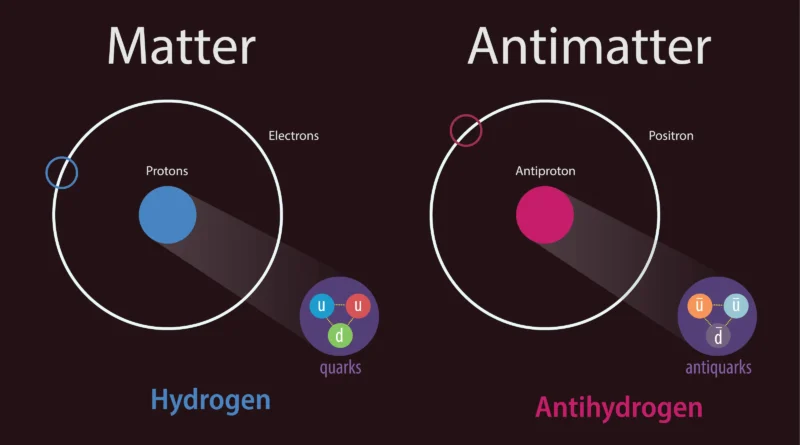
A clear visual comparison of hydrogen and antihydrogen, showing how matter and antimatter mirror each other at the level of protons, antiprotons, quarks, and antiquarks.
Read More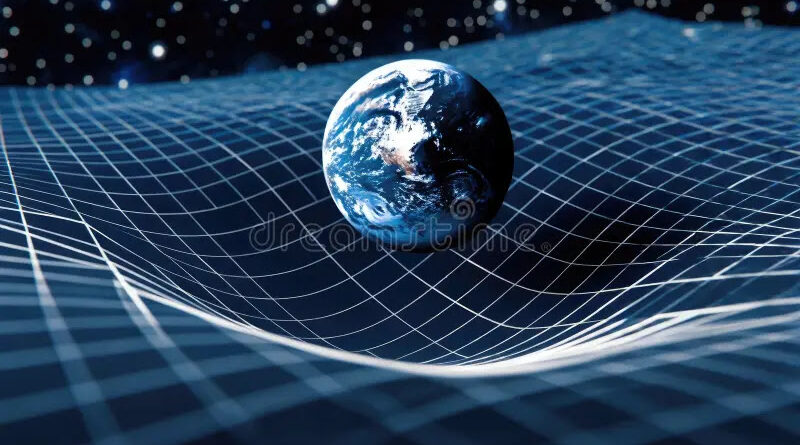
Time does not flow—it reveals itself as a hidden structure of the universe, where past, present, and future coexist beyond
Read More
In the newest issue of CERN Courier, the spotlight turns toward one of the most profound ideas in modern physics:
Read More
A narrow current traces its path across a two‑dimensional electron sheet, and in that fragile geometry the quantum world begins
Read More
Quantum superposition has always been one of the most puzzling features of the quantum world—an idea so strange that even
Read More
Every attempt to understand the universe eventually runs into the same wall: most of what exists is invisible, untouchable, and
Read More
For years, the dream of a practical nuclear clock has hovered at the edge of possibility—promising a level of precision
Read More
In the quiet world of atoms—where order, symmetry, and repetition usually reign—scientists have coaxed magnetism into doing something far more
Read More