
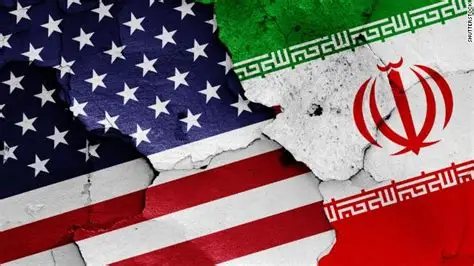
When Tensions Turn Global: How a U.S.–Iran Conflict Could Reshape the World Economy
For years, the rivalry between the United States and Iran has simmered beneath the surface of global politics, occasionally erupting into confrontations that ripple far beyond the Middle East. But the latest escalation—marked by missile exchanges, naval clashes, and diplomatic breakdowns—has revived a question that economists and strategists hoped would remain hypothetical: What happens to the global economy if Washington and Tehran slide into open conflict?
The answer is neither simple nor comforting. A direct confrontation between the two nations would not remain confined to the Gulf. It would spill into markets, supply chains, energy systems, and political alliances, reshaping the economic landscape in ways that could be felt from Shanghai to São Paulo, from Berlin to Nairobi.
The Strait of Hormuz: A Narrow Passage With Global Consequences
At the center of this geopolitical storm lies the Strait of Hormuz, a maritime corridor so narrow and so essential that it has become a symbol of global vulnerability. Roughly a fifth of the world’s traded oil passes through this channel. Every tanker, every shipment, every barrel that crosses these waters ties the fate of distant economies to the stability of a region perpetually on the brink.
If conflict were to disrupt this passage—even temporarily—the shock would be immediate:
- Oil prices would surge.
- Energy‑dependent industries would face rising costs.
- Inflation would accelerate across multiple continents.
Past crises have shown how sensitive markets are to Gulf tensions. But analysts warn that a direct U.S.–Iran confrontation would be far more disruptive than previous episodes, because both sides now possess more advanced missile systems, cyber capabilities, and regional alliances capable of widening the conflict.
A Shockwave Through Global Supply Chains
Modern supply chains are built on predictability. A conflict in the Gulf would shatter that foundation.
Shipping companies would reroute vessels away from the region, adding days or weeks to delivery times. Insurance premiums for maritime transport would spike. Ports in the Middle East could face temporary closures, and companies reliant on just‑in‑time logistics would struggle to maintain production.
Electronics, automotive components, chemicals, and even food supplies could be affected. The world learned during the pandemic how fragile supply chains can be. A military confrontation in one of the world’s most strategic waterways would test that fragility again—this time with geopolitical force.
Financial Markets: Volatility Becomes the New Normal
Financial markets react to uncertainty with speed and severity. A U.S.–Iran conflict would likely trigger:
- A flight to safe‑haven assets such as gold and U.S. Treasury bonds
- Sharp declines in global stock markets
- Currency instability, especially in emerging economies
Investors would reassess risk across entire regions, not just the Middle East. The psychological impact alone—fear of escalation, fear of prolonged disruption—could be enough to slow global investment and dampen economic confidence.
The Global Growth Equation: A Downward Revision
Even without a full‑scale war, prolonged tension can act as a brake on global growth. Higher energy prices reduce consumer spending. Companies delay expansion plans. Governments divert resources toward defense rather than development.
International institutions have repeatedly warned that geopolitical shocks are among the most dangerous threats to global economic stability. A conflict involving the United States and Iran—two nations with deep influence over energy markets and regional alliances—would amplify those risks.

Some economists argue that the world could face a scenario similar to the 1970s oil crisis, when energy disruptions triggered inflation, recession, and long‑term structural changes. Others believe the impact could be even more severe, given today’s interconnected financial systems.
Regional Economies: The Middle East at a Crossroads
The Middle East would bear the immediate economic burden. Gulf states could face:
- Disruptions in oil exports
- Declines in foreign investment
- Increased military spending
- Pressure on domestic economies already navigating post‑pandemic recovery
Countries like Saudi Arabia, the UAE, Qatar, and Kuwait would be forced to balance national security with economic stability. Meanwhile, nations such as Iraq and Lebanon—already fragile—could face deeper crises.
Beyond Economics: The Human Cost
Behind every economic model lies a human reality. Conflict brings displacement, infrastructure damage, and long‑term recovery challenges. Humanitarian organizations warn that even a limited confrontation could trigger waves of migration, strain international aid systems, and destabilize neighboring regions.
The economic cost of rebuilding—roads, ports, energy facilities, homes—would stretch into decades.
A World on Edge
The possibility of a U.S.–Iran conflict is not just a regional concern. It is a global economic risk, a geopolitical fault line that could reshape markets, alliances, and the balance of power.
In a world already navigating inflation, supply chain fragility, and political polarization, the Gulf has become a pressure point where local tensions meet global consequences. Whether diplomacy can defuse this moment—or whether the world must brace for a deeper shock—remains one of the defining questions of our time.