
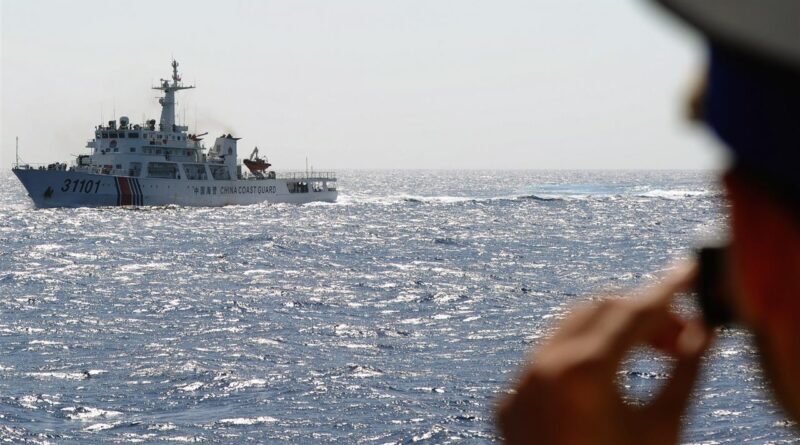
South China Sea Tensions: A Region Drifting Toward a New Geopolitical Storm
The South China Sea has once again become the stage for a dangerous contest of power, a maritime chessboard where China tightens its territorial claims and the United States pushes back with freedom‑of‑navigation operations. Each maneuver, each interception, each warning broadcast over radio frequencies adds another layer of pressure to a region already strained by overlapping claims, military build‑ups, and the immense weight of global trade flowing through its waters.
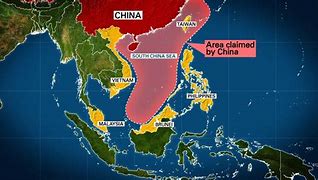
China’s Expanding Assertiveness
China continues to reinforce its sweeping claim over nearly 90% of the South China Sea, anchored in its controversial “nine‑dash line.” This claim overlaps with the exclusive economic zones of the Philippines, Vietnam, Malaysia, Brunei, and Taiwan, creating a web of disputes that has intensified over the past decade. Beijing has transformed reefs into fortified islands, complete with airstrips, missile systems, and radar installations, particularly in the Spratly and Paracel Islands. These outposts now function as forward military bases, extending China’s reach deep into contested waters.
Recent confrontations have grown more aggressive. Chinese coast guard vessels have used water cannons, dangerous close‑range maneuvers, and even collisions to deter Philippine ships near Second Thomas Shoal, one of the most volatile flashpoints in the region. These incidents reflect a broader strategy of “gray‑zone” pressure—actions that fall short of open warfare but steadily shift control in China’s favor.
U.S. Navigation Operations and Strategic Stakes
The United States, bound by defense treaties with regional partners and determined to uphold international maritime law, continues to conduct freedom‑of‑navigation operations through contested waters. These missions challenge China’s expansive claims and reinforce the principle that the South China Sea must remain open to all nations under the UN Convention on the Law of the Sea.
Washington’s presence is not symbolic. With an estimated $3.4 trillion in annual trade passing through the region, the South China Sea is one of the world’s most vital arteries for global commerce. Any disruption—whether through military escalation or the imposition of de facto control—would send shockwaves through global supply chains, energy markets, and international shipping.
A Region Caught Between Power and Vulnerability
Southeast Asian nations find themselves navigating a precarious balance. The Philippines has adopted a more assertive stance, resisting Chinese pressure and strengthening ties with the U.S. Vietnam maintains a firm but cautious posture, while Malaysia and Brunei continue to defend their maritime rights with quieter diplomacy. Across the region, the fear is the same: that a single miscalculation could ignite a conflict no one is prepared to contain.
A Global Flashpoint With No Easy Exit
The South China Sea is no longer just a regional dispute—it is a global fault line where military power, international law, and economic lifelines intersect. China’s fortified islands and assertive patrols, the U.S. Navy’s steady presence, and the rising frequency of confrontations create a volatile environment where the margin for error narrows each day.
As tensions escalate, the world watches a waterway that carries not only ships and cargo, but the fragile balance of 21st‑century geopolitics.