
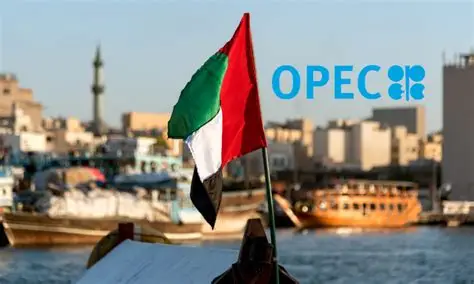
The UAE Breaks Away from OPEC — A Quiet Decision That Shakes the Global Oil Order
For decades, the world of oil politics has been a stage dominated by familiar actors, each bound by the same script: unity, coordination, and the illusion of stability. But this week, something broke. The United Arab Emirates stepped away from OPEC and OPEC+, not with a dramatic announcement, but with the kind of calm, deliberate move that carries far more weight than noise ever could.
It is a decision that rewrites alliances. A decision that leaves Saudi Arabia exposed. A decision that sends a tremor through every market that depends on the predictable rhythm of oil production. And it arrives at the worst possible moment, in the middle of a global energy crisis triggered by the conflict with Iran and the ongoing blockade of the Strait of Hormuz.
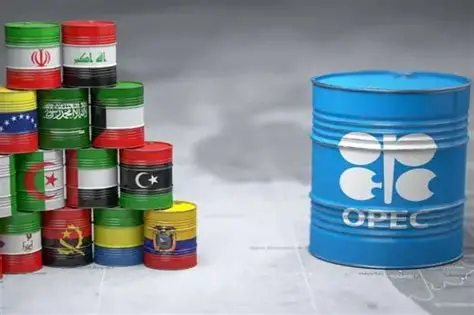
The UAE has always been one of OPEC’s most disciplined members, a country that balanced ambition with loyalty. But ambition has a way of growing, and loyalty has a way of thinning when the world around you begins to fracture. For months, tensions had been rising behind closed doors — disagreements over production quotas, frustration over Saudi dominance, and the growing sense that the UAE’s economic future could no longer be tied to decisions made in Riyadh.
When the announcement finally came, it felt less like a surprise and more like the inevitable moment when a long‑restrained truth finally surfaces.
Markets reacted instantly. Oil prices spiked, analysts scrambled to rewrite forecasts, and governments began calculating what this fracture means for their own energy security. The United States, according to early reports, sees the move as a strategic advantage — a shift that weakens the Saudi‑led bloc and opens new diplomatic pathways. But for the rest of the world, the message is far more unsettling: the old order of oil is breaking apart, and nothing has emerged to replace it.
Inside OPEC, the departure leaves a void that cannot be filled. The UAE was not just another member; it was a pillar, a stabilizer, a country with both the production capacity and the political weight to influence outcomes. Without it, the organization looks less like a unified alliance and more like a collection of states trying to hold together a structure that no longer fits the world around them.
And then there is the timing. With the Strait of Hormuz still blocked, with tankers stranded, with global supply chains under pressure, the UAE’s exit feels like a signal — a quiet declaration that the world is entering a new phase where energy politics will be more fragmented, more unpredictable, and far more dangerous.
In the end, the UAE did not just leave OPEC. It stepped into a new identity, one shaped by independence rather than alignment, by strategy rather than tradition. And the rest of the world is now left to understand what this means for a future where the balance of power in energy is shifting faster than anyone expected.