Humanoid Robots Spark a New AI Breakthrough Era
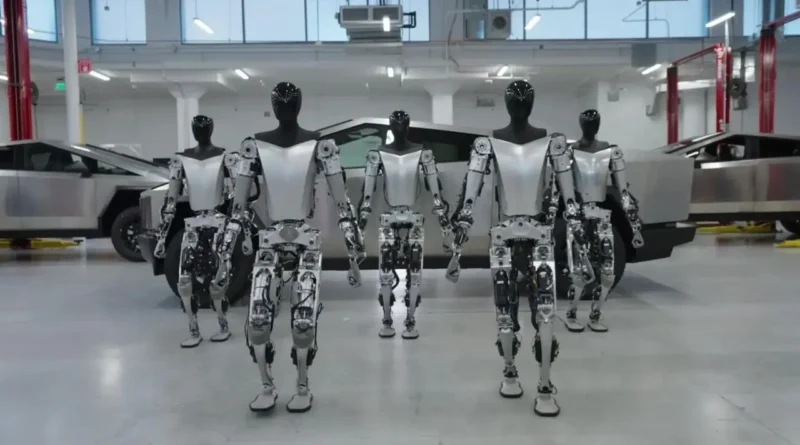
For years, artificial intelligence has learned to understand text, images, voice and code. The next technological leap could be much more tangible: humanoid robots capable of understanding what they are asked to do and acting autonomously in the real world.
According to Wang Xingxing, founder and CEO of Unitree, the robotics industry is approaching a phase comparable to the “ChatGPT moment” of artificial intelligence. The idea is simple but ambitious: a robot could receive an ordinary instruction through voice or text, interpret it and carry out the task even in an environment it has never encountered before.
Reuters reports that Wang believes such a breakthrough could still be two to ten years away.
Humanoid Robots and Artificial Intelligence: From Demonstrations to Action
The central challenge in the new phase of humanoid robotics is no longer simply building machines that can walk, run or maintain their balance. The real challenge is creating a system capable of connecting perception, reasoning and movement.
A robot would need to recognize what is in front of it, understand an instruction, determine how to achieve the objective and change its behavior when circumstances change.
This combination of AI and robotics could transform humanoid machines from sophisticated prototypes into practical tools for factories, warehouses, stores and, eventually, homes.
The Real Challenge Is the Physical World
A language model can generate a response in seconds, but a robot has to deal with physics. An object may slip, a door may be heavier than expected, or a person may suddenly cross its path.
That is why the so-called “ChatGPT moment” for robotics will depend not only on the power of artificial intelligence models, but also on sensors, actuators, batteries, control systems and, above all, enormous amounts of data collected directly from real-world environments.
Reuters reports that Unitree is investing in so-called world models, systems designed to help robots understand and predict what is happening around them. The company, however, still has to translate these software advances into concrete large-scale applications.
China Accelerates Its Humanoid Robotics Industry
China is at the center of this technological race. More than 300 companies participated in the 2026 World Robot Conference in Beijing, showcasing more than 2,000 robotic products and introducing over 150 new launches.
The industry’s focus is increasingly shifting away from spectacular demonstrations toward practical industrial applications.
According to figures reported by Reuters, China shipped more than 40,000 humanoid robots during the first half of 2026, accounting for approximately 97% of the global market in terms of shipments during that period.
These figures help explain why Beijing considers robotics a strategic technology, particularly as the country faces an aging population and a shrinking available workforce.
Unitree Is Betting on Speed
Unitree has become one of the symbols of this acceleration. By July 2026, the company had delivered approximately 18,000 bipedal humanoid robots across several models.
Shortly before its stock-market debut, the company also unveiled a new robot called “Superman,” developed in just over three months. According to Reuters, the robot can reach a claimed top speed of 12.66 meters per second and perform a standing vertical jump of approximately two meters.
The company’s market debut demonstrated the enormous investor interest surrounding the sector. Unitree raised 6.1 billion yuan, approximately $905 million, through its Shanghai IPO. According to Reuters, the offering was oversubscribed more than 8,000 times.
The enthusiasm, however, should not be confused with commercial maturity.
From Spectacle to Productivity
The biggest challenge for humanoid robotics remains economic. A robot may be able to run, dance or perform extremely complex movements, but to truly conquer the market it must prove that it can perform useful work reliably, safely and cost-effectively.
Reuters reported that many humanoid robots presented in China still cost between 300,000 and 500,000 yuan, creating a significant barrier to mass adoption.
Companies therefore need to demonstrate that the cost of the machines can be justified by the productivity they generate.
Everyday Jobs Are Becoming the New Test
The direction of the industry is already visible. At the World Robot Conference, robots were demonstrated sorting packages, assembling electronic components and performing household tasks.
The goal is no longer simply to show that a robot can move. The objective is to determine whether it can perform a useful task.
Robotics competitions are changing as well. The 2026 events include tasks requiring greater hand precision, such as tightening screws, opening bottles and picking up small objects with tweezers.
These exercises are much closer to the challenges a robot would encounter in a real working environment.
The Potential “ChatGPT Moment” for Robots
The comparison with ChatGPT should therefore be interpreted carefully.
When ChatGPT reached the market in late 2022, millions of people could immediately experience a new type of interaction with artificial intelligence.
For robots, an equivalent breakthrough would occur when a person could simply say what needs to be done and the machine could understand the context, independently plan its actions and complete the task without being manually programmed for every possible situation.
That would represent a major technological shift.
It would mean transforming the robot from a specialized machine into a general-purpose physical agent, capable of learning and adapting.
It Is Not Reality Yet
The gap between this vision and the current situation remains significant. Industry players acknowledge that humanoid robots still need major improvements in autonomy, reliability, dexterity and their ability to operate in unpredictable environments.
Another signal is coming from financial markets. After the initial enthusiasm following its listing, Unitree shares fell by approximately 45% from their peak, while the company’s market capitalization temporarily reached around $66 billion.
Reuters interpreted the sharp volatility as a sign of the risks associated with the financial enthusiasm surrounding Chinese robotics.
The technology is advancing rapidly, but the market is already beginning to demand an answer to the most important question: How much economic value can these robots actually create?
The Challenge of the Next Few Years
The future of AI-powered robotics may depend less on the ability to build increasingly spectacular robots and much more on creating systems capable of continuously learning from experience.
If artificial intelligence models can learn to understand the physical world with the same flexibility they now demonstrate with language, the sector could indeed experience a transformation comparable to the one triggered by ChatGPT in software.
But Unitree’s prediction remains just that—a prediction.
Wang Xingxing estimates that a major breakthrough could occur within two to ten years, while other industry leaders are even more optimistic. ACE Robotics chairman Wang Xiaogang has suggested that the end of 2027 could mark a turning point for the “brains” powering humanoid robots.
The direction, however, is becoming increasingly clear.
Artificial intelligence no longer wants only to answer our questions. The next step is to give it a body, allowing it to observe, decide and act in the real world.
Main source: Reuters, “Robots poised for ‘ChatGPT moment,’ Unitree CEO says,” August 20, 2026.
Additional sources: Reuters coverage of the 2026 World Robot Conference and analysis of China’s humanoid robotics market.
If you want to explore how AI is reshaping everyday digital experiences, take a look at our feature on Apple’s New Siri Revolution, where Apple unveils a powerful new direction for its assistant with a striking humanoid AI concept.
For a broader view of how artificial intelligence is transforming the entire digital ecosystem, discover The Autonomous Web, a deep dive into the future of an Internet capable of learning, adapting, and evolving on its own.
