
When Warnings Echo Across the Gulf: The New Tension Between Washington and Tehran
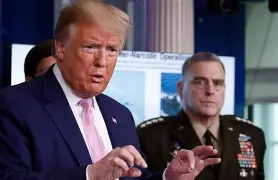
The warning arrived in a single sentence, delivered with a sharpness that left no room for interpretation: “They’d better get smart soon.” With those words, the President of the United States reignited a flame that had never truly gone out, pushing the confrontation with Iran back onto unstable ground, where every statement weighs as heavily as a military maneuver. In Washington, the phrase was framed as a necessary alert; in Tehran, it was perceived as yet another sign that nuclear negotiations have become a diplomatic minefield.
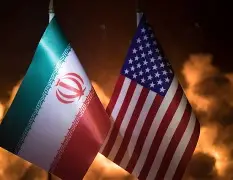
In recent weeks, the talks have turned into a labyrinth of mutual accusations. The United States insists that Iran has no genuine intention of negotiating its nuclear program, while Iranian officials speak of unbearable pressure, of a nation trying to breathe under the weight of sanctions and threats. Between the two, the Persian Gulf remains the most sensitive point on the planet, a place where every ship, every trade route, every military movement can alter the fate of global markets.
It is precisely there that the new American strategy is taking shape: a possible prolonged naval blockade of Iranian ports, a measure that analysts say would have an immediate impact on the world’s energy trade. The tankers crossing the Strait of Hormuz carry a vital share of global oil, and any disruption to that flow translates into rising prices, economic tension, and a long ripple that reaches every continent. Even now, markets react nervously, as if sensing that the distance between threat and reality is narrowing.
In Tehran, the response was swift and defiant. Government officials dismissed the President’s words as “provocations,” arguing that Iran is not collapsing but being economically strangled. They reiterated that the country will never accept negotiations “under coercion” and that any attempt to block Iranian ports would be considered a hostile act. Statements follow one after another, each harsher than the last, while international diplomacy struggles to keep open the few remaining channels of dialogue.
Meanwhile, Middle Eastern capitals watch with growing unease. U.S. allies fear that an escalation could further destabilize a region already marked by conflict, while Iran’s partners speak of “unjustified pressure” and a fragile balance at risk of breaking. In this climate, every word becomes a potential detonator, every declaration a piece that can bring the two sides closer to or further from a direct confrontation.
Yet beyond the strong rhetoric and the reciprocal threats lies a simpler, more unsettling truth: the distance between Washington and Tehran has never been so wide, and at the same time so fragile. It is a distance built on distrust, on memories of past conflicts, on interrupted negotiations and unfulfilled promises. A distance measured not only in kilometers but in perceptions, interpretations, and a diplomatic language that seems to have lost its ability to mediate.
Warships continue to patrol the Gulf, markets continue to fluctuate, and governments around the world continue to wonder what the next move will be. In this scenario, the warning issued by the American President is not just a sentence meant for microphones; it is a signal, a message that crosses oceans and borders, a reminder of a tension that could evolve into something far greater.
For now, it hangs in the air like an echo bouncing between Washington and Tehran, reminding the world that peace in the Gulf has always been a precarious balance — and that sometimes a single sentence is enough to make it tremble.