
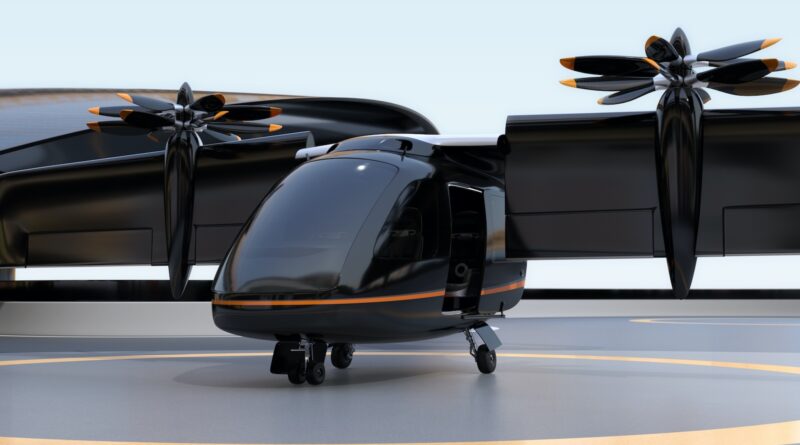
Air Mobility Takes Off: Inside the Real eVTOL Aircraft That Are About to Transform Urban Transportation
For decades, the idea of flying taxis belonged to science fiction. Today, it belongs to aviation. Electric Vertical Take‑Off and Landing aircraft — eVTOLs — are no longer futuristic concepts or glossy renderings. They are real machines, built by real companies, tested under real aviation authorities, and preparing for commercial service in the next few years. The shift is not theoretical. It is industrial, measurable, and already underway.
Among the leaders of this new sector is Joby Aviation, a U.S. company that has completed more than a thousand test flights, including demonstrations in front of the Federal Aviation Administration. Joby’s aircraft is fully electric, designed to carry four passengers plus a pilot, with a range of around 240 kilometers and a top speed of 320 km/h. Its purpose is simple: cut travel times in and around cities by up to 80 percent, bypassing traffic with silent, emission‑free flight.
In Europe, Lilium Jet is pursuing a different approach. Instead of traditional rotors, Lilium uses ducted electric fans integrated into its wings, allowing for a quieter and more aerodynamically efficient flight. The company has already built full‑scale prototypes and is progressing through the certification process with EASA, the European Union Aviation Safety Agency. Lilium’s vision extends beyond city centers: regional air mobility, connecting towns and business hubs within 100 to 200 kilometers.
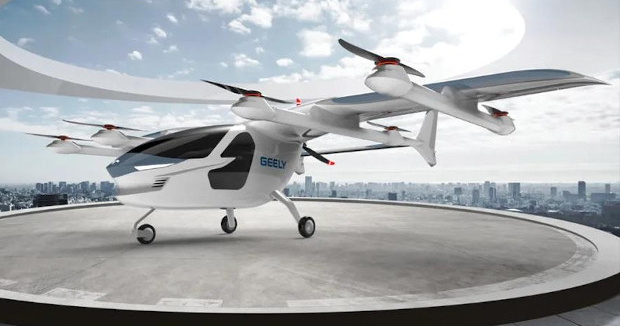
Then there is Volocopter, arguably the closest to commercial deployment. Its VoloCity aircraft has already flown publicly in Singapore, Paris, and Dubai. With a range of about 35 kilometers and rapid charging cycles, it is designed for short urban hops — airport transfers, business districts, waterfronts. Volocopter aims to operate during the Paris 2024 Olympics, marking the first real public use of flying taxis in a major global event.
Despite their differences, all eVTOLs share the same technological foundation: high‑efficiency electric motors, advanced battery systems, and fly‑by‑wire controls that manage stability, power distribution, and safety. Unlike helicopters, which rely on a single large rotor, eVTOLs use multiple independent rotors. If one motor fails, the others automatically compensate. This redundancy is one of the reasons regulators consider them safer than traditional rotorcraft.
Who flies them? The truth about piloting, automation, and licenses
One of the most common questions about eVTOLs is whether they are autonomous. The answer — at least for the first decade — is no. These aircraft will have a human pilot on board. However, the role of the pilot is very different from that of a helicopter or airplane pilot.
The FAA and EASA are creating a new type of license called the Powered‑Lift Pilot License, specifically for eVTOL operations. It requires real aviation training, but it is simpler than a helicopter license because the aircraft handles much of the workload automatically. Takeoff, transition to forward flight, and landing are largely automated. The pilot supervises, monitors systems, and intervenes only when necessary.
For passengers, the experience will feel like boarding a premium taxi service. No license, no training, no special requirements. You book through an app, arrive at a vertiport, fasten your seatbelt, and the aircraft lifts off vertically before transitioning into forward flight. A typical urban trip will last between 5 and 15 minutes.
Autonomous flight is part of the long‑term roadmap. Joby, Lilium, and Volocopter are already testing advanced autopilot systems similar to those used in professional drones. But full autonomy requires years of regulatory approval, safety validation, and public acceptance. For now, the formula is clear: human pilot on board, high‑level automation assisting every phase of flight.
The battery challenge — and the progress
The biggest technical limitation today is energy density. Current lithium‑ion batteries are heavy, and every kilogram matters in aviation. Yet progress is rapid. Joby and Lilium are developing custom high‑density cells that outperform those used in electric cars. Improvements in thermal management, charging cycles, and structural integration are pushing eVTOLs closer to commercial viability.
Charging infrastructure is also evolving. Vertiports will include fast‑charging stations capable of restoring enough energy for short flights in minutes. For high‑frequency routes — such as airport transfers — operators will rotate aircraft to maintain continuous service.
Regulation and the road to commercial service
Aviation authorities are not improvising. The FAA and EASA have been working on eVTOL regulations for years, defining airworthiness standards, pilot training requirements, maintenance procedures, and urban air corridors. Certification is expected between 2025 and 2026 for the first models, with commercial operations beginning between 2026 and 2028.
Major airlines are already preparing. United Airlines has placed orders with Archer Aviation. Japan Airlines is partnering with Volocopter. Cities like Singapore, Paris, and Dubai are building the first vertiports. The infrastructure is real, funded, and under construction.
A new layer of transportation
Flying taxis will not replace cars, buses, or trains. They will add a new layer to urban mobility — a fast, quiet, zero‑emission option for short‑to‑medium distances. Business travelers will use them to reach airports. Commuters will use them to cross congested metropolitan areas. Emergency services may use them for rapid medical transport.
The question is no longer whether eVTOLs will become part of everyday life. The question is how quickly cities will adapt to them. The aircraft exist. The tests are complete. The regulations are taking shape. The industry is moving.
Urban air mobility is no longer a dream. It is an industry preparing for takeoff.