
Hydrogen Buses: The Zero‑Emission Technology Already Transforming Public Transport
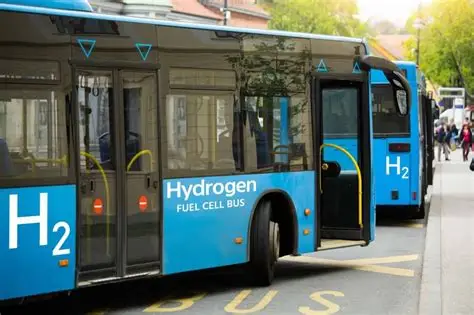
Hydrogen‑powered buses are no longer experimental vehicles or futuristic prototypes. They are already operating in major cities across Europe and Asia, providing a real, scalable alternative to diesel fleets. With zero tailpipe emissions, fast refueling, and long driving ranges, hydrogen buses represent one of the most advanced solutions for decarbonizing public transportation without compromising performance.
One of the most widely deployed models is the Solaris Urbino Hydrogen, built in Poland and now used in Germany, Italy, the Netherlands, and Sweden. The bus is powered by a fuel‑cell system that converts hydrogen into electricity, producing only water vapor as exhaust. With a range of 350 to 450 kilometers on a single tank, it can operate a full day on urban routes without refueling — a key advantage over battery‑electric buses, which often require mid‑day charging.
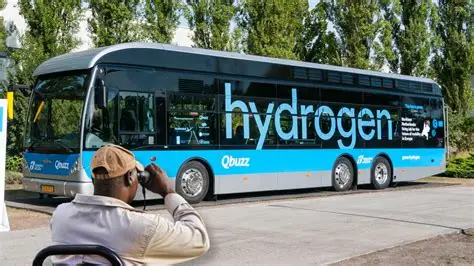
Japan has taken a similar approach with the Toyota Sora, a hydrogen bus designed for dense metropolitan areas. The Sora uses Toyota’s automotive fuel‑cell technology, adapted from the Mirai sedan, and offers smooth acceleration, quiet operation, and a range of around 200 kilometers. It has been deployed in Tokyo since 2018 and played a central role in the city’s zero‑emission mobility strategy during the 2020 Olympic Games.
The technology behind hydrogen buses is straightforward but highly efficient. A fuel‑cell stack combines hydrogen stored in high‑pressure tanks with oxygen from the air. This chemical reaction generates electricity, which powers the electric motor and charges a small onboard battery used for peak power demands. Unlike combustion engines, fuel cells have no moving parts, which reduces maintenance and increases reliability.
Refueling is one of the strongest advantages of hydrogen mobility. A full tank takes 7 to 12 minutes, similar to diesel refueling times. This makes hydrogen buses ideal for high‑frequency routes where downtime must be minimized. Cities with large bus fleets can integrate hydrogen refueling stations into existing depots, allowing seamless daily operations.
Hydrogen buses also perform well in cold climates. Battery‑electric buses often lose range in winter due to heating demands and reduced battery efficiency. Fuel‑cell systems, however, maintain stable performance across temperature variations, making them suitable for northern European cities where winter temperatures can drop below freezing.
The main challenge today is hydrogen production. Most hydrogen is still produced from natural gas, a process that emits CO₂. However, the rapid expansion of green hydrogen — produced using renewable electricity — is changing the landscape. Countries like Germany, Denmark, and Japan are investing heavily in electrolysis plants that will supply clean hydrogen for transportation and industry.
Another challenge is cost. Hydrogen buses are currently more expensive than diesel or battery‑electric models, but prices are decreasing as production scales up. Operating costs, on the other hand, are competitive, especially in regions where renewable hydrogen is subsidized or produced locally.
Cities adopting hydrogen buses report significant improvements in air quality and noise reduction. The absence of combustion eliminates particulate emissions, nitrogen oxides, and engine noise. For passengers, the experience is similar to riding a modern electric bus: smooth, quiet, and vibration‑free.
Hydrogen buses are not a distant vision. They are already on the road, carrying passengers every day, proving that zero‑emission public transport can be practical, reliable, and scalable. As green hydrogen production expands and costs fall, these vehicles are poised to become a cornerstone of sustainable urban mobility.