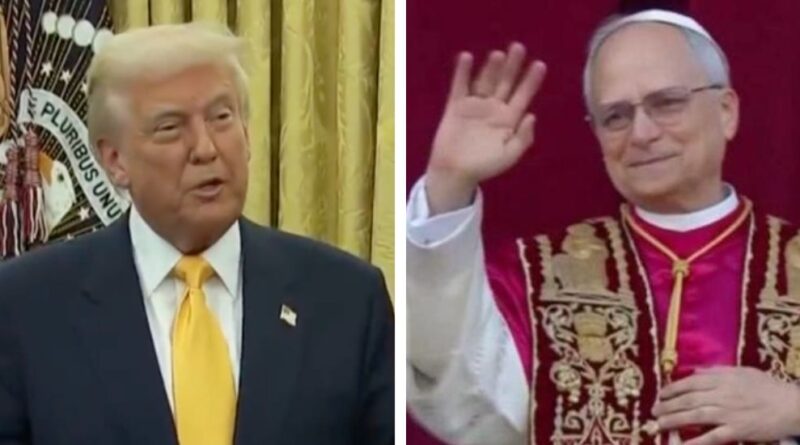
Trump Attacks Pope Leone Again: Tensions Rise Ahead of Rubio’s Vatican Visit
In the early hours of May 5, 2026, the fragile balance between Washington and the Vatican cracked once more. During a new appearance on Salem News, former U.S. President Donald Trump launched another direct attack against Pope Leone XIV, accusing him of “putting many Catholics and many people at risk.” The statement, delivered with Trump’s characteristic bluntness, immediately reverberated across diplomatic circles, arriving at a moment when relations between the Holy See and the United States were already strained.
The timing was not accidental. In just forty‑eight hours, U.S. Secretary of State Marco Rubio is scheduled to land in Rome for a delicate mission: reopening a channel of dialogue with the Vatican after weeks of escalating tension. His visit, originally planned as a routine institutional meeting, has now become a high‑stakes attempt to “repair the relationship,” as sources close to the State Department have described it.
Trump’s words, however, risk overshadowing the diplomatic effort before it even begins.
On the Vatican side, the response came swiftly but without aggression. Cardinal Pietro Parolin, Secretary of State of the Holy See, reiterated that Pope Leone “continues to preach peace,” avoiding any direct confrontation with Trump’s accusations. His tone was calm, almost pastoral, as if to underline the distance between the Vatican’s approach and the increasingly heated rhetoric coming from the American political arena.
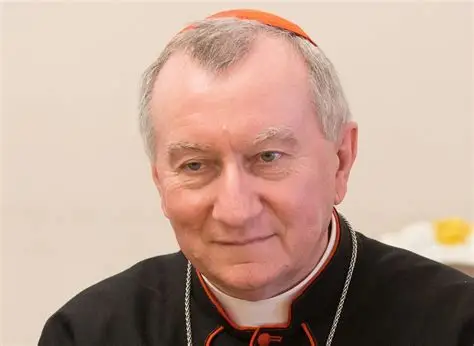
This latest clash is part of a broader pattern. Over the past month, Trump has repeatedly criticized Pope Leone XIV, accusing him of weakness on international security and of adopting positions that, in his view, “endanger the West.” The Vatican, for its part, has maintained a consistent line: diplomacy, humanitarian concern, and a refusal to engage in political escalation.
Yet the stakes are higher than a simple exchange of statements. The United States and the Vatican have historically maintained a complex but strategic relationship, especially in moments of global instability. Today, with the Middle East in turmoil and international alliances shifting, the fracture between Washington and the Holy See risks creating a vacuum that other global actors could exploit.
Rubio’s upcoming visit will therefore be more than a protocol meeting. It will be a test of whether the United States can still count on the Vatican as a moral and diplomatic partner — and whether the Pope’s message of peace can withstand the pressure of American political polarization.
For now, the world watches as two of the most influential voices on the planet — one political, one spiritual — move further apart. And the question that lingers is whether diplomacy will be strong enough to bridge the widening gap.