
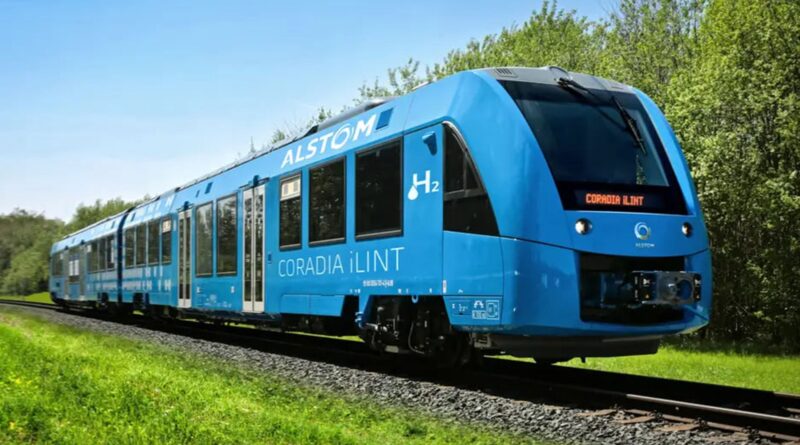
Hydrogen Trains: The Alstom Coradia iLint Revolution
Hydrogen on Rails: How the Alstom Coradia iLint Is Redefining Zero‑Emission Train Travel
There are technologies that don’t need to shout to prove they are changing the world. They move quietly, almost unnoticed, yet they rewrite the rules of an entire industry. The Alstom Coradia iLint belongs to this category: a train that breathes hydrogen instead of diesel, exhales only water vapor, and travels across Europe with the calm confidence of something that is already the future, not a promise of it.
The first time the iLint entered service in Germany, the landscape didn’t change, the tracks didn’t change, the stations didn’t change. What changed was the sound. The metallic growl of diesel engines disappeared, replaced by a soft electric hum. For passengers, it felt like stepping into a new era without realizing it. For engineers, it was the moment hydrogen stopped being a laboratory experiment and became a real transport system.
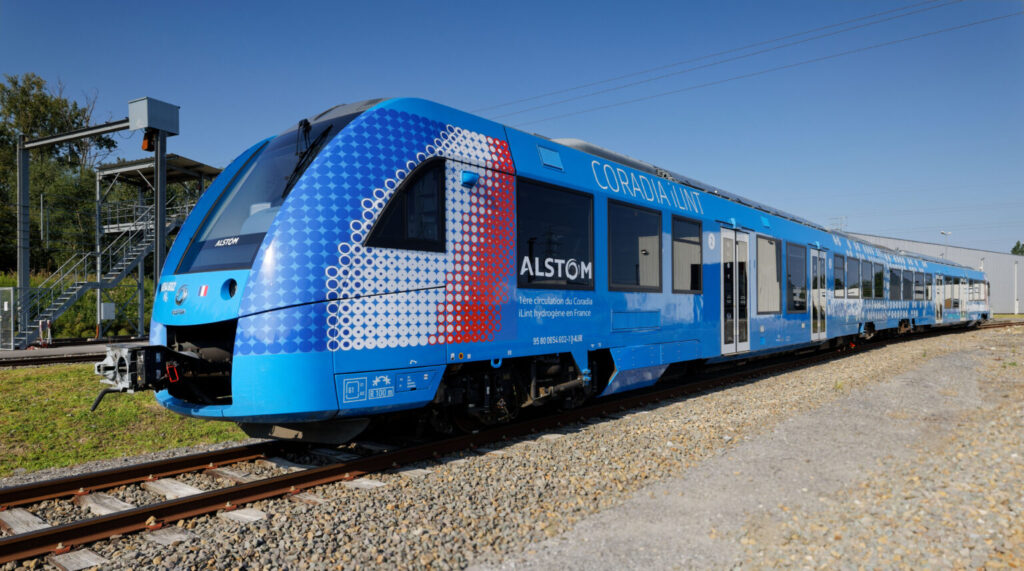
The heart of the iLint is a fuel‑cell stack capable of converting hydrogen into electricity with a precision that borders on elegance. The process is simple only in appearance: hydrogen enters the stack, meets oxygen from the air, and the reaction generates the electricity that powers the traction motors. No combustion, no smoke, no carbon. Just water droplets that evaporate on the tracks. The train carries its hydrogen in high‑pressure tanks on the roof, a design choice that frees space inside and keeps the system safe and accessible for maintenance.
What makes the iLint remarkable is not only the technology, but the way it fits into the real world. It doesn’t require new tracks, new stations, or futuristic infrastructure. It runs on the same regional lines where diesel trains have operated for decades. This is why countries like Germany, Austria, the Netherlands and Italy have looked at it not as a prototype, but as a solution ready for deployment. In Lower Saxony, the iLint completed thousands of kilometers in commercial service, proving that hydrogen can handle the daily rhythm of regional transport: morning peaks, long stretches, harsh weather, and the constant demand for reliability.
The autonomy is one of its strengths. A single tank of hydrogen allows the train to travel up to 1,000 kilometers, a range that diesel trains achieve only with large fuel reserves. Refueling takes minutes, not hours, and the process resembles that of a bus or a truck rather than a complex industrial operation. The real challenge is not the train itself, but the ecosystem around it: producing green hydrogen, storing it, transporting it, and ensuring that the entire chain remains sustainable. Yet even this challenge is becoming more manageable as Europe accelerates its hydrogen strategy.
The iLint is not alone anymore. Alstom is developing new generations of hydrogen trains, and competitors are entering the field with their own designs. But the iLint remains the symbol of a turning point: the moment when rail transport realized it could eliminate diesel without sacrificing performance. It is a quiet revolution, but revolutions do not always need noise. Sometimes they need only a train that glides through the countryside leaving nothing behind but a thin trail of vapor.
And while the world debates the future of mobility, the iLint continues to run. Not as a prototype, not as a promise, but as a working piece of tomorrow’s infrastructure. A reminder that innovation is not always loud — sometimes it arrives on schedule, stops at every station, and simply works.
As hydrogen reshapes the future of rail transport, the same silent revolution is unfolding in urban mobility, where hydrogen‑powered buses are already operating in major European cities. You can explore this parallel transformation in our in‑depth analysis of zero‑emission :Hydrogen Buses: The Zero‑Emission Technology Already Transforming Public Transport”