
Greenland Ice Sheet Collapse: The 7‑Meter Threat the World Can No Longer Ignore
Understanding the Greenland Ice Sheet Collapse Through Recent Data
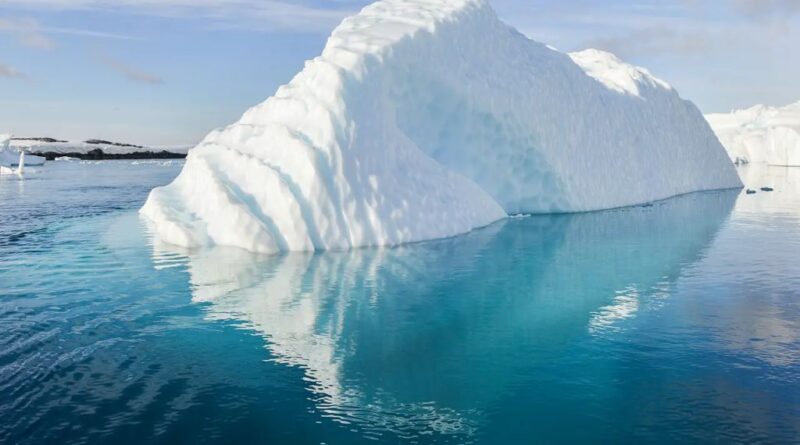
Greenland Ice Sheet Collapse is not a distant scenario or a theoretical climate model. It is a process unfolding right now, reshaping one of the planet’s most important ice reservoirs with a speed scientists have never recorded before. Greenland is no longer the silent, frozen giant it once appeared to be. It is a system in rapid transformation, losing mass at a rate that signals a profound shift — one that may already have crossed a point of no return.
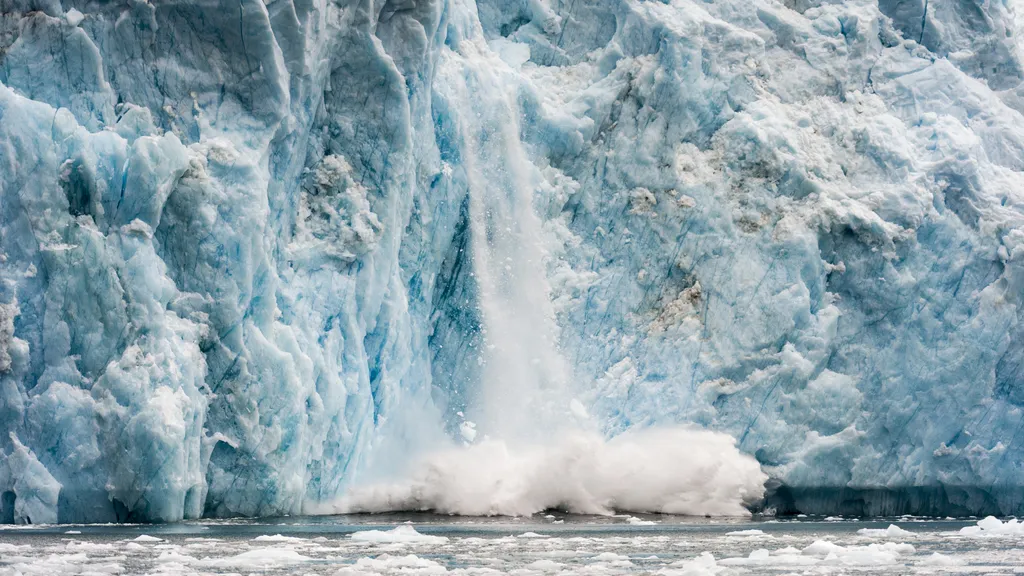
In the 1990s, Greenland was losing around 50 billion tons of ice per year. It was a warning sign, but not yet an alarm. Between 2010 and 2020, the loss increased to nearly 250 billion tons annually. Then, in 2023 and 2024, the ice sheet recorded peaks exceeding 400 billion tons. This is no longer a linear trend. It is an acceleration. Each summer becomes the foundation for an even more intense melt the following year, as if the system had lost its ability to stabilize itself.
How the Greenland Ice Sheet Collapse Became a Global Warning Signal
To understand the scale of what is happening, imagine 120 million Olympic‑sized swimming pools pouring into the ocean in a single year. It sounds surreal, but it is exactly what is occurring. And it is not an isolated phenomenon — it is a self‑reinforcing process.
The main mechanism behind this acceleration is the albedo feedback. Ice reflects most of the sunlight it receives, keeping the surface cool. When it melts, however, it exposes dark rock or liquid water, which absorb far more heat. More absorption means more melting. More melting means more absorption. It is a loop that accelerates on its own, a closed circuit that no longer needs external pushes to continue.
Recent scientific work confirms this trajectory. According to a peer‑reviewed study published in The Cryosphere, the Greenland Ice Sheet is showing clear signs of accelerated and potentially irreversible mass loss, indicating that critical thresholds may already be in motion.
Scientists fear that Greenland has already crossed one of its local tipping points. This means that even if the world were to miraculously stop global warming tomorrow morning, a significant portion of the ice sheet would continue melting for centuries. Not because the climate worsens, but because the system has already shifted into a new state.
The consequences are enormous. Even a single meter of sea‑level rise would radically reshape human geography. Cities like Miami, Shanghai, Dhaka, and Alexandria would face chronic flooding. Ports would need to be rebuilt or abandoned. Agricultural deltas — such as the Mekong or the Nile — would be invaded by saltwater, making cultivation impossible. And Greenland alone contains enough ice to raise global sea levels by more than seven meters.
Recent climate models outline three scenarios. In the most optimistic one, with warming limited to 1.5°C, the melt continues but a total collapse might be avoided. At 2°C, the critical threshold is crossed and the ice sheet enters an irreversible decline. Beyond 3°C, the collapse becomes inevitable and accelerated, with sea levels rising for centuries regardless of what humanity does.
Every tenth of a degree matters. Every year lost makes the trajectory harder to reverse. Greenland is not an abstract symbol of climate change — it is a measurable indicator that is already reshaping the planet.
And as we watch this process unfold, other extreme phenomena remind us how vulnerable Earth is to external forces. You highlighted this well in our article Earth Hit by Rare G5 Geomagnetic Storm, where a solar event revealed how delicate our systems are even beyond the atmosphere.
In the end, the story of Greenland is not just a scientific report — it is a mirror held up to our time. It shows how quickly a stable world can shift, how fragile even the largest natural systems can be, and how deeply human choices shape the planet’s future. The Greenland Ice Sheet Collapse is a warning written in ice, visible from space, measurable in millimeters of rising seas, and impossible to ignore. Whether it becomes a chapter of irreversible loss or the turning point that finally pushes humanity toward decisive action depends on what we choose to do next. The ice is speaking clearly. The question is whether we are willing to listen.
This is why the unfolding Greenland Ice Sheet Collapse