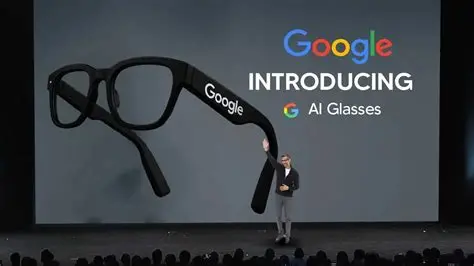
Google Android XR smart glasses: The AI Breakthrough Revealed at Google I/O 2026
Google Android XR smart glasses represent the moment artificial intelligence steps out of the screen and enters the real world, transforming the way we interact with information, language, and our surroundings.
At the heart of Google I/O 2026, as the stage lights rise and the air vibrates with anticipation, the company from Mountain View is preparing to unveil what may become the most influential gadget of the next decade: the new smart glasses built on the Android XR platform. Not just an accessory, not a toy for tech enthusiasts, but a device that promises to change the way we see — quite literally — artificial intelligence.
Google’s vision is clear: AI should no longer live inside a screen, but merge seamlessly with the real world. And these glasses represent the first concrete step toward that future. The promise is bold: real‑time translation, intelligent notifications, visual navigation, contextual recognition, and an assistant capable of understanding what you see, what you say, and what you’re about to do. It’s a leap that transforms AI from a tool into a companion, from software into presence.
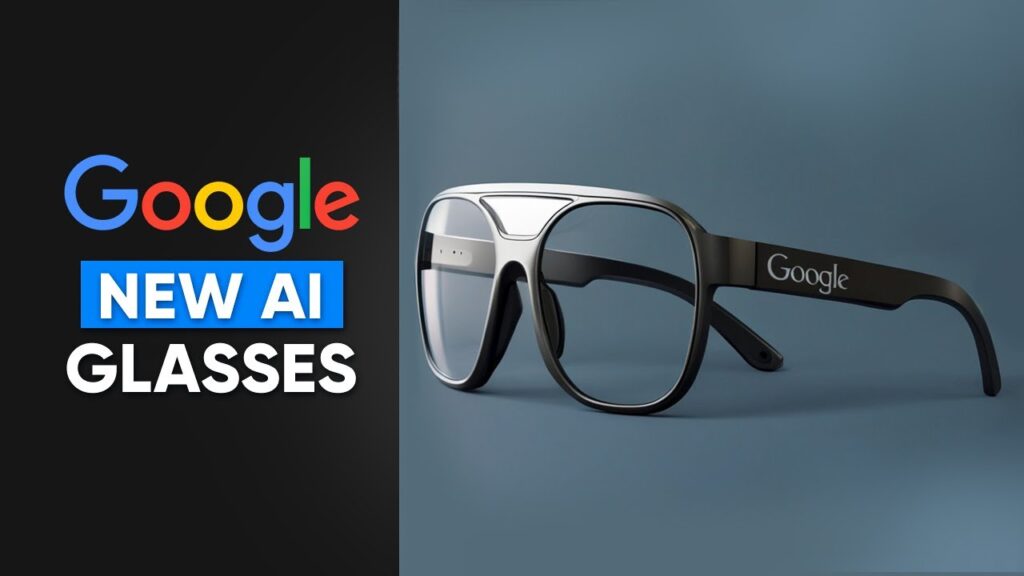
At the core of the device is Gemini, Google’s next‑generation AI assistant. It doesn’t just respond to voice commands; it observes what you observe, interprets the scene through the built‑in camera, and reacts with surprising precision. If you look at a sign in a foreign language, the translation appears instantly in your field of view. If you get lost in an unfamiliar city, directions overlay the real landscape. If an urgent message arrives, the glasses display it without interrupting what you’re doing. It’s an experience that blends digital and physical into a single continuous flow.
But the true revolution isn’t only technical — it’s cultural. For the first time, a major tech company is attempting to bring AI out of smartphones and into everyday life, without screens, without filters, without intermediaries. It’s a step that opens extraordinary possibilities but also raises profound questions. What does it mean to live in a world where a device can see what we see? How will our perception of privacy change? And how ready are we to share our gaze with an artificial intelligence?
Google insists on safety: local processing, granular controls, visual indicators when the camera is active. Yet the debate is inevitable, because every innovation that touches the boundary between technology and intimacy sparks global discussion.
Still, beyond the questions, there is a feeling that’s hard to ignore: the sense of witnessing a historic moment. The Android XR glasses are not just a new gadget — they are a signal. A signal that AI is stepping out of its digital cage and entering the real world, ready to become part of our daily lives. No longer an assistant we consult, but a presence that accompanies us, guides us, translates for us, suggests actions, and observes.
Google I/O 2026 may be remembered as the day artificial intelligence stopped being an abstract concept and began living directly in front of our eyes. Literally.