
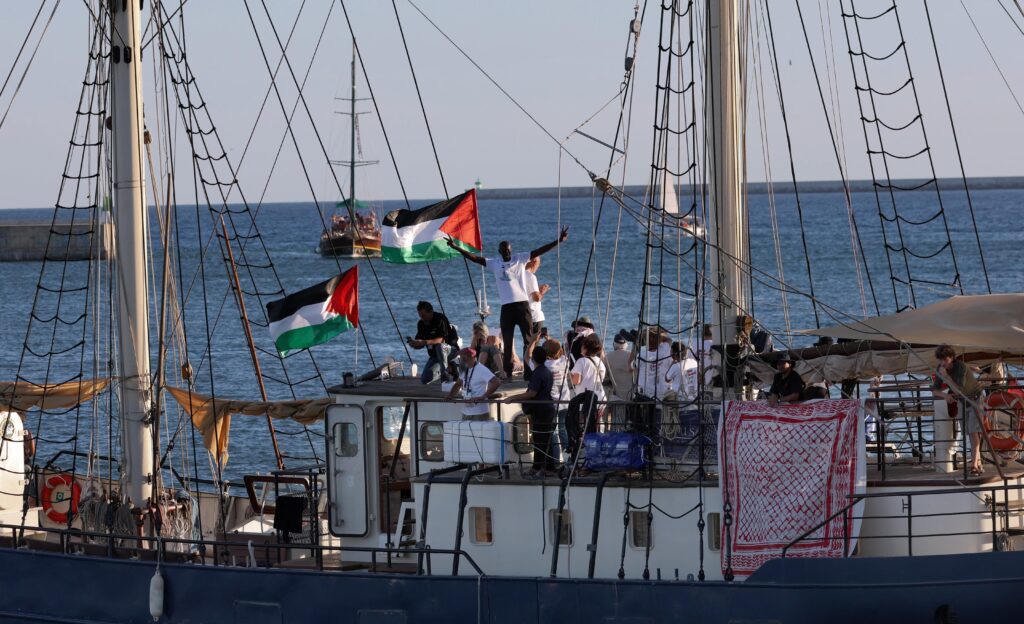
Flotilla Video Global Outrage: The Footage That Shocked the World
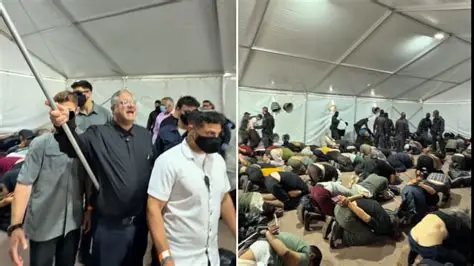
The video lasted only a few seconds, yet its impact spread across the world like a shockwave. The images — activists kneeling in the dust, handcuffed, mocked by Israeli soldiers — ricocheted across social media and international newsrooms with the speed of a lightning strike. What began as a tense maritime operation instantly transformed into a global moral flashpoint. This is no longer a story about security protocols or regional politics; it has become a universal question of dignity, power, and the meaning of human rights in an age where every frame can reshape global perception.
In major Western capitals, the reaction was immediate and severe. In Brussels, senior officials described the footage as “incompatible with international standards,” while in Berlin several lawmakers argued that the treatment of the activists “undermines the credibility of nations that claim to defend human rights.” In Paris, ministers demanded urgent clarification, insisting that “security can never justify humiliation.” The tone was sharp, unified, and unusually direct — a sign that the video had crossed a line that diplomacy alone could not smooth over.
Across the Atlantic, the United States adopted a more measured but still critical stance. Advisors at the White House referred to the footage as “deeply concerning,” while civil rights organizations called it “a symbol of a broader moral crisis.” American talk shows quickly turned the incident into a national debate: some commentators framed it as an isolated misstep, while others warned that it reflected a deeper erosion of democratic values in conflict zones. The conversation spread from political panels to late‑night monologues, showing how deeply the images had penetrated public consciousness.
In the Middle East, the reaction was immediate and visceral. Commentators in Doha, Amman, and Beirut described the scene as “deliberate humiliation,” and within hours the video had become a trending topic across the region. The imagery of kneeling, restrained activists triggered collective memories of past injustices, transforming the footage into a symbol of resistance and oppression. Demonstrations were announced in several cities, and multiple governments summoned Israeli diplomats to demand official explanations. The emotional weight of the video resonated far beyond the specifics of the Flotilla incident.
Even in Asia and Latin America, the shockwaves were unmistakable. Tokyo expressed “serious concern,” while Indian analysts warned that the episode could deepen global polarization. In Brazil, lawmakers called for an emergency debate on the country’s position regarding the Middle East crisis, describing the video as “a wake‑up call for the international community.” The footage had become a global mirror, reflecting anxieties, frustrations, and long‑standing geopolitical fractures.
What stands out, beyond the political reactions, is the symbolic power of the imagery itself. The kneeling figures, the bound hands, the bowed heads — a visual language that transcends borders, cultures, and ideologies. It evokes other eras, other humiliations, other crises that have shaped recent history. And because of that, it triggered such a vast and emotionally charged response. In the hyperconnected world of 2026, perception often weighs as heavily as facts, and in this case the perception was devastating.
Israel maintains that the operation was necessary for security reasons and argues that the video does not represent the full context of the intervention. Yet in the global arena of instant communication, where a single clip can redefine narratives in minutes, the battle over public opinion was lost the moment the footage appeared online.
The Flotilla crisis, once a contained diplomatic issue, has now evolved into a global confrontation over values, accountability, and the limits of state power. As governments scramble to contain the fallout, one question lingers in the air: how much longer can the international order withstand a world where a single video can rewrite the emotional and political landscape of an entire conflict?