Extreme Neuroplasticity: 5 Powerful Ways AI Is Shaping Human Cognitive Adaptation
Extreme Neuroplasticity and the New Scientific Perspective on Human–AI Interaction
In recent years, the conversation around artificial intelligence has shifted from fascination to introspection. We are no longer asking only what AI can do, but what it does to us — to our habits, our attention, our memory, and ultimately to the architecture of our minds. As neuroscience enters 2026, a new question rises with unusual urgency: how does the human brain adapt to a world where intelligent systems are woven into every layer of daily life?
This is where the concept of Extreme Neuroplasticity becomes more than a scientific term. It becomes a lens through which we can understand the subtle, long‑term effects of human–AI interaction. Not in the sensational sense of machines rewiring our brains, but in the grounded, evidence‑based understanding that the brain is constantly reshaped by the quality of the experiences we engage in.
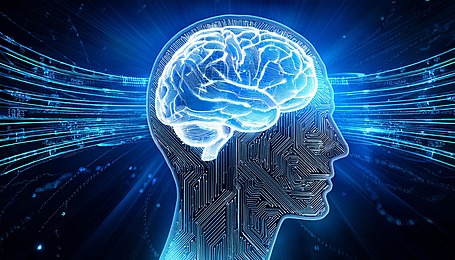
Researchers are beginning to explore this frontier with caution and precision. Instead of claiming dramatic neural transformations, they are examining how different modes of AI use — passive, reactive, reflective, or co‑creative — may influence the brain’s natural mechanisms of learning and adaptation. It is a shift from speculation to science, from fear to understanding, and from myth to measurable reality.
What We Know — and What We Don’t
In 2026, neuroscience is entering a phase of cautious but profound curiosity. Researchers are not claiming that artificial intelligence is rewiring the human brain, nor that daily interaction with digital systems is reshaping neural circuits in dramatic ways. What the scientific community is saying — carefully, rigorously — is something different: the way we use AI may influence the brain’s natural mechanisms of neuroplasticity.
This idea is supported by emerging research, including the peer‑reviewed study “The brain side of human‑AI interactions in the long‑term: the 3R principle” published in NPJ Artificial Intelligence. The authors propose that human–AI interaction can affect cognitive processes depending on whether the user engages in Reflective, Reciprocal, or Reactive modes.
The 3R Principle: A Framework for Understanding Brain–AI Dynamics
The study suggests that:
- Passive, uncritical use of AI may reduce activity‑dependent plasticity — the kind of plasticity that strengthens neural circuits through effort, attention, and deliberate thinking.
- Active, reflective, co‑creative use may instead support or even enhance neuroplasticity, because it stimulates agency, problem‑solving, and cognitive engagement.
This is not science fiction. It is a realistic, evidence‑based model of how the brain might adapt to new cognitive environments.
How AI Interaction Engages the Brain
Cognition as a Dynamic System
In this emerging scientific landscape, Extreme Neuroplasticity becomes a central concept for understanding how the human brain adapts to AI‑mediated environments.
Neuroplasticity is not a mystical transformation. It is the brain’s ability to reorganize itself through learning, experience, and attention. When interacting with AI, the brain does not “mirror” artificial systems, nor does it adopt new neural patterns proven to resemble human‑to‑human interaction. Instead, it responds according to the quality of the cognitive effort involved.
Active Use and Cognitive Strengthening
When a person collaborates with AI — writing, analyzing, creating, questioning — the brain engages executive functions, working memory, and metacognition. This aligns with what we know from research on memory formation and neural activity, including insights from your article Memory Editing: Scientists Can Now Strengthen or Weaken Specific Memories, which explores how memory is shaped by attention and repetition.
Passive Use and Cognitive Weakening
Scrolling, accepting answers without reflection, or relying on AI to think in our place may reduce the activation of circuits involved in reasoning and decision‑making. This is consistent with decades of research on neuroplasticity: circuits that are not used tend to weaken.
What Science Actually Supports in 2026
No Evidence of Structural Brain Changes Caused by AI
There is no peer‑reviewed evidence that AI alters the connectivity between the prefrontal cortex and hippocampus, nor that it produces new neural patterns comparable to human social interaction. These claims are speculative and not supported by current data.
But There Is Evidence of Cognitive Impact
Studies indexed on PubMed — such as “Neural reshaping: the plasticity of human brain and artificial intelligence in the learning process” — suggest that:
- learning with AI can modify cognitive strategies,
- AI‑assisted tasks can change how people allocate attention,
- the brain adapts to new learning environments,
- but the underlying neural architecture remains stable.
This is a subtle but crucial distinction.
A Realistic Future for Brain–AI Co‑Evolution
The Brain Will Not Become “More Like AI” — But It Will Adapt to AI‑Mediated Tasks
The future of neuroscience will not study the brain as an isolated organ, but as part of a hybrid cognitive ecosystem. This does not mean merging with machines. It means understanding how tools shape thought — the same way writing, reading, and the internet have done.
A Narrative That Fits the Evidence
The article The Brain’s Electrical “Fingerprint” of Thought explores how thoughts have measurable electrical patterns. This is true — but it does not imply that AI changes those patterns. It means that neuroscience is now capable of observing them with unprecedented precision.
In 2026, the idea of Extreme Neuroplasticity reflects a broader understanding that the brain is not static but continuously reshaped by learning, context, and digital interaction.
The Real Message
The brain is not being transformed by AI. It is being influenced by how we choose to use AI. Active, reflective engagement strengthens neuroplasticity. Passive reliance weakens it. This is the scientific consensus of 2026.
Some cognitive scientists argue that Extreme Neuroplasticity may represent the next frontier in understanding how humans evolve alongside intelligent systems.
As we look toward the future, the idea of Extreme Neuroplasticity offers a grounded and realistic way to understand how humans evolve alongside intelligent systems. The brain is not being reshaped by AI in dramatic or mysterious ways; it is responding, as it always has, to the quality of the experiences we choose. Active engagement strengthens it. Passive reliance weakens it. This is not a technological revolution — it is a cognitive one.
The real transformation lies not in the machines, but in the relationship we build with them. AI becomes a mirror that reflects our habits, amplifies our choices, and reveals the delicate balance between agency and automation. In this sense, the future of human cognition will not be defined by artificial intelligence alone, but by the way we decide to use it — with curiosity, with intention, and with the awareness that every interaction shapes the mind we carry into tomorrow.
In the end, Extreme Neuroplasticity is not a promise of change, but a reminder of responsibility. The brain remains a living system, endlessly adaptable, endlessly sensitive to the environments we create. And in this new era of human–AI coexistence, the most powerful force shaping our cognitive evolution is still — unmistakably — us.