
May Day 2026: The Day America Took the Streets
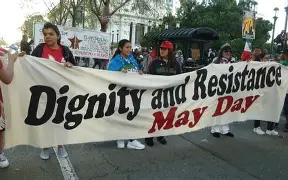
On the morning of May 1st, the United States woke up to a sound it hasn’t heard this loudly in years: the echo of thousands of footsteps converging on city streets from coast to coast. What began as a call for a national strike under the banner “Workers Over Billionaires” quickly transformed into one of the largest coordinated labor protests of the decade, stretching from New York to Washington, from Chicago to Los Angeles, and deep into the Midwest with massive gatherings in Minneapolis.
The atmosphere was electric long before the marches began. In New York, subway cars filled with nurses, teachers, delivery drivers, and young tech workers who had never attended a protest before. They moved together toward Union Square, where handmade signs rose above the crowd like a forest of grievances: wages that no longer cover rent, health insurance that costs more than a second job, and a political climate that many believe has tilted too far toward the wealthy and powerful.
In Washington, the protest took on a more symbolic weight. Demonstrators gathered near the Capitol, chanting beneath the marble columns that have witnessed every major shift in American labor history. The message was unmistakable: workers feel abandoned, and they are no longer willing to remain silent. The strike organizers framed the day as a test of national solidarity, urging Americans to skip work, skip school, and skip shopping to show how much the country depends on the people who keep it running.
Chicago’s streets pulsed with the same energy that once fueled the historic labor movements of the early 20th century. The city’s industrial past seemed to merge with its present as factory workers marched alongside gig‑economy couriers, their demands overlapping in a rare moment of unity. In Los Angeles, the protest stretched for blocks along Sunset Boulevard, where actors, hotel workers, and warehouse employees walked side by side under the California sun. Minneapolis, still marked by the social upheavals of recent years, saw one of the most passionate turnouts, with community groups leading chants that echoed through downtown.
What made May Day 2026 different was not just the scale, but the mood. This was not a protest driven by a single industry or a single grievance. It was a collective exhale from a workforce that feels squeezed by rising living costs, stagnant wages, and a political landscape that seems increasingly indifferent to their struggles. Many participants spoke of a sense of exhaustion — not only economic, but emotional — after years of inflation, housing crises, and widening inequality.
The strike also unfolded against a backdrop of national tension. With the ongoing conflict between the United States and Iran dominating headlines, and with President Trump’s recent statements about withdrawing troops from European allies, the country is navigating a moment of geopolitical uncertainty. For many protesters, the contrast was impossible to ignore: billions spent on war, while millions struggle to afford groceries, rent, or healthcare.
As night fell, the marches slowly dissolved, leaving behind streets littered with signs and the lingering hum of a country that had found its voice for a day. Whether the strike will lead to concrete political or economic change remains to be seen. But one thing is clear: May Day 2026 marked a turning point, a moment when workers across America decided to step out of the shadows and remind the nation of their power.
And for a few hours, in hundreds of cities, that power felt undeniable.