
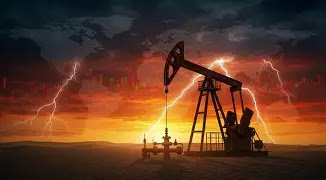
Global Markets React as Oil Prices Spike After New Middle East Disruptions
The world’s financial pulse quickened today as oil prices surged in response to fresh disruptions across key Middle Eastern shipping and energy corridors. What began as a localized disturbance has quickly expanded into a global tremor, sending markets into a state of heightened alert. Traders, governments, and energy analysts are watching the situation shift almost hour by hour, aware that even small interruptions in this region can ripple outward with disproportionate force.
The Middle East remains the spine of the global energy system — a place where narrow waterways, strategic ports, and fragile political balances determine the flow of oil that powers economies from Asia to Europe to the Americas. When that flow is threatened, even briefly, the reaction is immediate. Prices jumped sharply as reports emerged of new disruptions affecting transport routes, prompting fears of supply bottlenecks and delayed shipments. For markets already navigating inflation concerns, the spike felt like a warning shot.
Governments moved quickly into monitoring mode. Finance ministries began running revised inflation models. Central banks quietly assessed how a prolonged price surge might complicate their efforts to stabilize economies. Energy ministers across multiple regions prepared for emergency consultations, aware that the longer the instability lasts, the more pressure it will place on fuel costs, transportation networks, and consumer prices. In a world still recovering from recent economic shocks, the margin for volatility feels painfully thin.
Analysts caution that the situation could escalate if disruptions persist. Higher oil prices feed directly into the cost of goods, shipping, and manufacturing, creating a chain reaction that can push inflation upward even in countries far removed from the Middle East. Markets responded with a mix of anxiety and calculation — stocks in energy companies climbed, while sectors dependent on fuel and transport saw immediate declines. Currency markets fluttered as investors sought safe havens.
What makes this moment particularly tense is the sense of uncertainty. The disruptions are still unfolding, and the geopolitical context remains fluid. Diplomats are working behind the scenes to assess the scale of the threat, while regional governments weigh their responses. Every new report, every shift in tone, every satellite image or maritime update has the potential to reshape the narrative.
For now, the world waits — watching oil tick upward, watching markets sway, watching leaders prepare for decisions that may need to be made quickly. The story is still writing itself, and the next chapter depends on whether the Middle East’s fragile energy arteries can stabilize before the economic shock spreads further.