
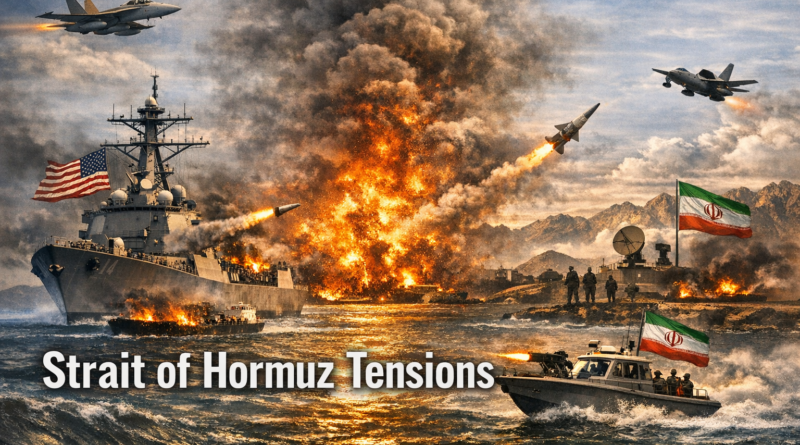
The Strait on Fire: How the Iran–US Standoff Has Pushed the World to the Edge of a New Crisis
The world woke up today to the kind of tension that reshapes borders, alliances, and the fragile balance of global power. In the narrow waters of the Strait of Hormuz, where a fifth of the planet’s oil supply passes each year, the air has thickened with the unmistakable scent of confrontation. Iran has once again closed the strait, just days after briefly reopening it, and the United States has responded with a show of force that leaves little room for ambiguity. What began as a diplomatic standoff has now evolved into a dangerous dance of threats, military maneuvers, and political brinkmanship.
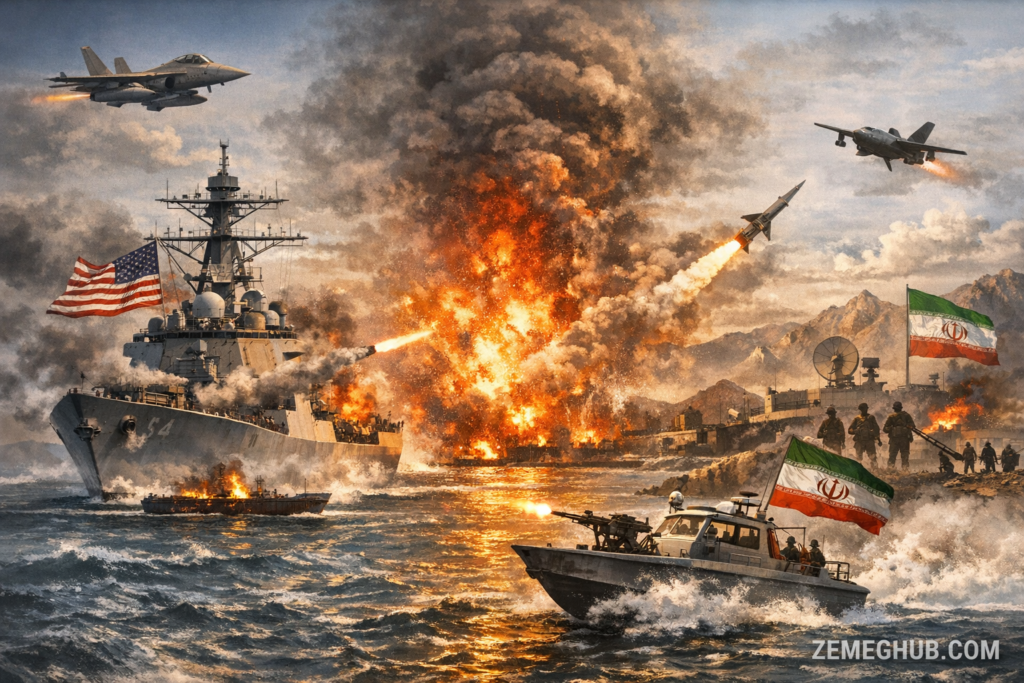
The latest escalation unfolded when a US Navy vessel intercepted and seized an Iranian cargo ship suspected of transporting sanctioned materials. According to early reports, warning shots were fired, and the hull of the ship was breached during the operation. Tehran immediately condemned the action as an act of aggression, calling it a “direct attack on Iranian sovereignty,” while Washington insisted it was enforcing international maritime law. The truth, as always, lies somewhere between the official statements and the unspoken calculations of two nations locked in a decades‑long rivalry.
What makes today’s events particularly volatile is the speed with which both sides have hardened their positions. Iran’s Revolutionary Guard announced that the closure of the strait would remain in effect “until further notice,” a phrase that in this region often signals a prolonged period of uncertainty. The United States responded with a warning that echoed across global markets: President Trump declared that Iran would be “hit hard” if it continued to obstruct international shipping or refused to return to negotiations. Oil prices spiked within minutes, and analysts began to whisper the word no one wants to hear — escalation.
Behind the headlines, the situation is even more complex. Iran is navigating internal pressure, economic strain, and a shifting regional landscape. The closure of the strait is not just a military gesture but a political message aimed at both domestic audiences and foreign powers. For Washington, the challenge is equally delicate. The United States cannot allow a strategic chokepoint to fall under unilateral control, yet it also knows that a miscalculation could ignite a conflict with consequences far beyond the Gulf.
What makes this moment particularly dangerous is the absence of trust. Every maneuver, every statement, every naval patrol is interpreted through the lens of suspicion. A radar lock, a misread signal, a drone flying too close — any of these could trigger a chain reaction that neither side truly wants but both are preparing for. The world has seen this pattern before, but rarely with stakes this high and a global economy this fragile.
Meanwhile, the region watches with a mixture of fear and resignation. Gulf states are reinforcing their defenses, shipping companies are rerouting vessels, and diplomats are scrambling to open back‑channel communications. Yet the sense of inevitability grows. The Strait of Hormuz has always been a pressure point, but today it feels like a fuse — one that is burning faster than anyone expected.
As the sun sets over the Gulf, the situation remains fluid, tense, and unpredictable. The next hours will determine whether this crisis becomes another chapter in the long history of US‑Iran friction or the spark that ignites something far more dangerous. For now, the world waits, holding its breath, watching a narrow stretch of water that has once again become the center of global attention.