
Shattered Icons: The Israeli Soldier, the Broken Statue of Jesus, and a Region on the Brink
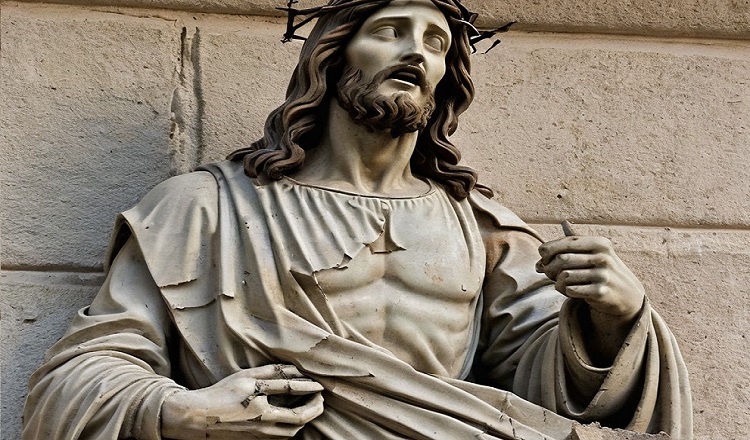
The video lasted only a few seconds, but its impact rippled across borders in an instant. In the dusty ruins of a southern Lebanese village, a lone Israeli soldier stood before a weather‑worn statue of Jesus. The figure, once a quiet symbol of faith for a community caught between conflict and survival, had already endured years of war. But what happened next transformed a local tragedy into a global flashpoint. The soldier raised his weapon, struck the statue, and sent its fractured pieces tumbling into the rubble. Someone recorded it. Someone shared it. And within hours, the world was watching.
In a region where symbols carry the weight of centuries, the destruction of a religious icon is never just an act of vandalism. It is a message, intentional or not, that echoes through the collective memory of millions. The Lebanese villagers who returned to their homes after months of displacement found not only shattered walls and burned fields, but now also a desecrated image of the figure they prayed to during the darkest nights of the conflict. For them, the video was not merely evidence of misconduct; it was a wound layered on top of many others.
Israel responded quickly, announcing an internal investigation and calling the act “unacceptable.” Officials emphasized that the soldier’s behavior did not reflect the values of the Israeli military. Yet the damage — political, emotional, symbolic — had already spread far beyond the village where the statue fell. In Beirut, religious leaders condemned the act as an assault on Christian heritage. In Rome, commentators questioned how such an incident could occur amid an already fragile regional landscape. Across social media, the video ignited debates about respect, occupation, and the human cost of war.
What makes this moment particularly volatile is the timing. Southern Lebanon is a patchwork of shattered homes, abandoned churches, and families returning to neighborhoods that no longer resemble the places they once knew. The ceasefire remains fragile, held together by diplomatic threads that could snap with a single miscalculation. The destruction of the statue, captured so vividly on camera, has become a symbol of the deeper fractures that define the region — fractures of identity, faith, and belonging.
For many Lebanese Christians, the statue represented more than a religious figure. It was a reminder of endurance, a quiet guardian that had survived bombardments, evacuations, and the slow erosion of hope. Its destruction felt like a final insult, a reminder that even sacred spaces are not spared in the relentless churn of conflict. And yet, amid the anger and grief, there is also a sense of weary familiarity. The people of southern Lebanon have lived through decades of war, and each new incident becomes another chapter in a story they never asked to write.
On the Israeli side, the incident has sparked uncomfortable questions about discipline, accountability, and the moral weight carried by soldiers operating in hostile territory. Military officials insist that the act was isolated, a moment of recklessness rather than policy. But critics argue that such behavior reflects a deeper erosion of restraint in a conflict where the lines between combatant and civilian, sacred and strategic, have blurred beyond recognition.
As the video continues to circulate, its meaning evolves. For some, it is evidence of disrespect. For others, it is a symbol of occupation. For many, it is simply another reminder that in the Middle East, even the smallest gestures can ignite storms. The broken statue has become a metaphor for a region where faith and identity are constantly tested, where the past is never truly past, and where every act — recorded, shared, amplified — becomes part of a larger struggle for dignity and recognition.
Tonight, the village where the statue once stood is quiet again. The dust has settled, the crowds have dispersed, and the fragments of the broken icon lie scattered on the ground. But the story is far from over. In a land shaped by symbols, the fall of a statue can resonate louder than the blast of artillery. And in the fragile calm of southern Lebanon, the echoes of this moment will linger long after the video stops playing.