
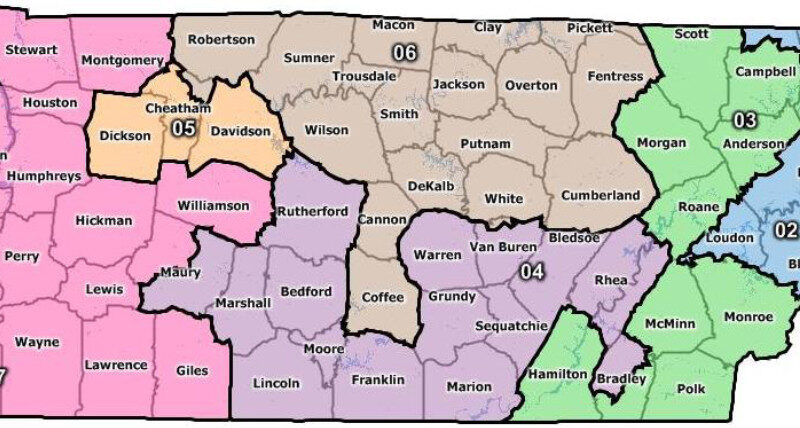
5 Significant Changes in the New Tennessee Congressional Map
Tennessee congressional map — a quiet reshuffling of political power is unfolding in the state, where newly drawn district lines are set to redefine representation and influence for years to come.
According to recent updates reported by Google News, the political landscape in Tennessee continues to evolve as these new boundaries take shape, revealing a deeper story beneath the surface.
There are moments in American politics when decisions make no noise yet change everything. Moments when a line drawn on a map becomes more powerful than a speech, more decisive than a campaign. That is exactly what is happening in Tennessee, where Republicans have unveiled a new congressional map that is set to reshape the state’s political balance for years to come. The quiet rebalancing of influence in Tennessee mirrors the dynamics described in our feature on Middle East geopolitical tensions, where power often moves in subtle, strategic waves.
The map, revealed after weeks of internal discussions and anticipation, is not just a technical update. It is a political gesture, a signal, a declaration of strength. The new boundaries split territories that had maintained their electoral identity for decades and merge others that had never shared the same political fate. It is a new mosaic, crafted with surgical precision, reflecting a clear strategy: consolidating Republican control at a time when national competition remains unpredictable.
The Tennessee congressional map has become a central point of debate, not only for its technical implications but for the quiet political shift it represents across the state. In Nashville, the reaction was immediate. The city—historically more open and progressive—now sees its influence diluted into larger, more conservative districts. Many analysts interpret this as an attempt to reduce urban political weight, a phenomenon already observed in other states and one that continues to spark debate. Some observers openly describe it as a new chapter of gerrymandering, while others point out that every party, when in power, tends to shape maps to its own advantage.
This shift highlights how the Tennessee congressional map continues to influence political identity across districts that once held very different electoral histories. But beyond the technical analysis, what stands out is the atmosphere surrounding this decision. There was no uproar, no dramatic statements. Just a document, presented almost quietly, yet destined to have far louder consequences at the ballot box. Because a map is never just a map: it is the geography of power, the visible representation of what a state wants to become.
Many analysts argue that the new Tennessee congressional map reflects a deeper strategy, one designed to reshape influence in ways that will unfold slowly but decisively over time. In today’s Tennessee, this redrawing tells a story of consolidation, of defending established positions, of a party seeking to secure its advantage in an era of rapid and unpredictable change. And it also reveals the fragility of the system, where the line between representation and political strategy becomes increasingly thin.
What remains to be seen is how voters will react, and how this new map will shape the political climate in the coming months. Every line drawn today will echo tomorrow, and Tennessee is preparing for a season in which geography will not simply be a territorial matter, but a central element of the democratic debate. As the political landscape continues to evolve, the Tennessee congressional map will remain a defining element of how representation and power are distributed in the years ahead.
As always, it is advisable to verify updates and official details through reliable institutional sources, since political situations can evolve quickly. External reference: Google News – U.S. Edition .