
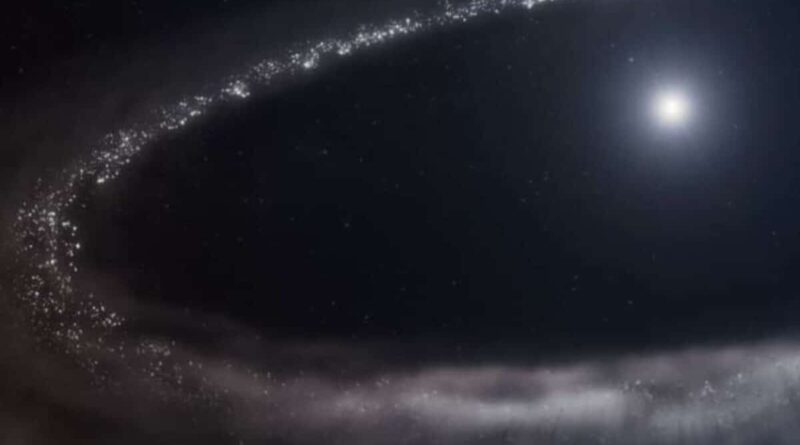
3 Clues Behind the Dark Star Discovery: Webb’s Most Mysterious Light Yet
Dark Star Discovery is the quiet spark that emerges from the universe’s earliest darkness, a faint whisper of light that Webb has captured from the dawn of time.
Dark Star Discovery is the quiet spark that emerges from the universe’s earliest darkness, a faint whisper of light that Webb has captured from the dawn of time.
There are discoveries that arrive like thunder, shaking the foundations of what we believe we know. And then there are those that slip into our understanding like a whisper from the ancient dark. The James Webb Space Telescope has just delivered one of those whispers — faint, distant, and yet powerful enough to unsettle the story of how the universe began. This Dark Star Discovery forces astronomers to confront a universe far more unpredictable than the models we once trusted.
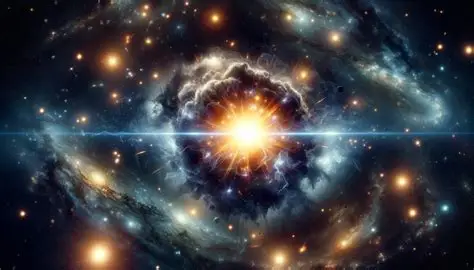
Suspended in the deep silence of space, Webb turned its golden mirror toward a region so remote that its light began its journey when the cosmos was still learning how to shine. In that fragile glow, astronomers found something that should not exist: a compact, brilliant object radiating more light than any early galaxy should have been capable of producing. It is too bright, too young, too intense. And that is why some scientists have begun to call it a “dark star,” a cosmic ghost from the dawn of time.
The paradox is simple. At that epoch, the universe was still wrapped in a thick fog of hydrogen. Stars were small, fragile, and short‑lived. Nothing should have been able to burn with such ferocity. Unless, of course, it wasn’t burning at all. Unless the light came from something deeper — something powered not by nuclear fusion, but by the annihilation of dark matter itself.
For years, theorists have imagined the possibility of dark stars, objects so massive and so strange that they shine without ever igniting. If dark matter particles can collide and release energy, then a star could grow to unimaginable sizes, glowing softly in infrared light — exactly the kind of glow Webb is designed to see. And now, for the first time, the data seems to match the theory. The more researchers examine the data behind this Dark Star Discovery, the more it becomes clear that something ancient and unconventional is shaping the early cosmos.
According to an analysis published by NASA, the earliest phases of the universe may indeed have hosted objects powered by unconventional processes, strengthening the enigmatic nature of this discovery.
This discovery echoes the mysteries explored in Dark Matter & Dark Energy: The New Detectors Listening to the Universe’s Quietest Secrets, where scientists chase the invisible forces shaping the cosmos. Webb may have just caught one of those forces in the act, revealing a star that should not exist and yet stands before us, luminous and ancient.
If this object is truly a dark star, the implications are enormous. It would be the first direct evidence that dark matter can interact with normal matter in ways we have never observed. It would open a new chapter in stellar evolution, one that predates the first galaxies and stretches back to the universe’s earliest heartbeat. And it would help explain why Webb keeps finding early galaxies that are too massive, too bright, too evolved — a puzzle that has been growing since the telescope’s first images, including the strange ultra‑red anomalies described in JWST Spots Mysterious “Red Dot” Objects.
There is something profoundly human in the way we react to discoveries like this. We look at a faint glow from the universe’s first breath and feel a strange familiarity, as if the cosmos were whispering a memory we had forgotten. Webb’s detection of this possible dark star is not just a scientific milestone; it is a reminder that the universe is still capable of surprising us, still capable of bending the rules we thought were unbreakable.
Every time we push our instruments deeper into the dark, we find that the dark pushes back with stories older than imagination. And perhaps that is why this discovery feels different — because it suggests that the universe was more alive, more complex, more restless in its earliest moments than we ever dared to believe. If the Dark Star Discovery is confirmed, it will stand as one of the most transformative clues ever found about the universe’s first moments.
Astronomers are now preparing deeper observations, gravitational lensing analyses, and spectral fingerprints to understand what this object truly is. If the spectral lines match the predictions, the case becomes overwhelming. And if they don’t, then the universe has invented something even stranger — something we have not yet imagined.
In many ways, this Dark Star Discovery feels less like an answer and more like an invitation — a reminder that the universe still holds secrets capable of reshaping everything we think we understand.
In the quiet dark where galaxies are still only ideas, something ancient flickers. Not a star. Not a galaxy. Something older. Something patient. Something that has waited more than 13 billion years for us to finally look its way. And now that we have, the universe feels different — wider, deeper, more mysterious than ever.
And perhaps that is the quiet truth behind every breakthrough like this — that the universe is not simply waiting to be understood, but urging us to step further into its vastness. Each discovery reminds us that knowledge is not a fixed destination but a moving horizon, expanding with every question we dare to ask. The Dark Star Discovery is not just a scientific anomaly; it is a doorway, a signal that the cosmos still holds chapters we have not yet learned to read. And as long as we keep looking, the universe will keep unfolding.
And perhaps that is the quiet truth behind every breakthrough like this — that the universe is not simply waiting to be understood, but urging us to step further into its vastness. Each discovery reminds us that knowledge is not a fixed destination but a moving horizon, expanding with every question we dare to ask. The Dark Star Discovery is not just a scientific anomaly; it is a doorway, a signal that the cosmos still holds chapters we have not yet learned to read. And as long as we keep looking, the universe will keep unfolding.
The Deeper Meaning Behind the Dark Star Discovery
And perhaps that is why discoveries like this linger in the mind long after the data has been analyzed. They remind us that the universe is not a solved equation but a living expanse, shifting with every new insight. The Dark Star Discovery stands as proof that even in the deepest silence, the cosmos is still speaking to us.