
Antarctica Ice Sheet Collapse – The Silent Fracture That Could Redraw the World’s Coastlines
Antarctica Ice Sheet Collapse: The Hidden Fracture Beneath West Antarctica
Antarctica Ice Sheet Collapse Antarctica’s silent fracture is no longer a distant scientific concern but a real-time transformation unfolding beneath the frozen surface. In the remote expanse of West Antarctica, the Thwaites Glacier is destabilizing faster than any model predicted, revealing a hidden rupture that could redraw the world’s coastlines in the decades ahead. What appears still and eternal from above is, in truth, a shifting colossus, cracking under the pressure of a warming ocean that is carving its way deeper into the ice.
There are moments in the planet’s history when change does not arrive with a roar but with a slow, almost imperceptible crack. In the frozen vastness of West Antarctica, that crack has already begun. Scientists monitoring the region throughout 2026 have confirmed what many feared: the Thwaites Glacier — often called the “Doomsday Glacier” — is destabilizing faster than any previous model predicted. And this time, the warning signs are not subtle. They are written directly into the ice, echoing the broader pattern of the Antarctica Ice Sheet Collapse now unfolding across the continent.
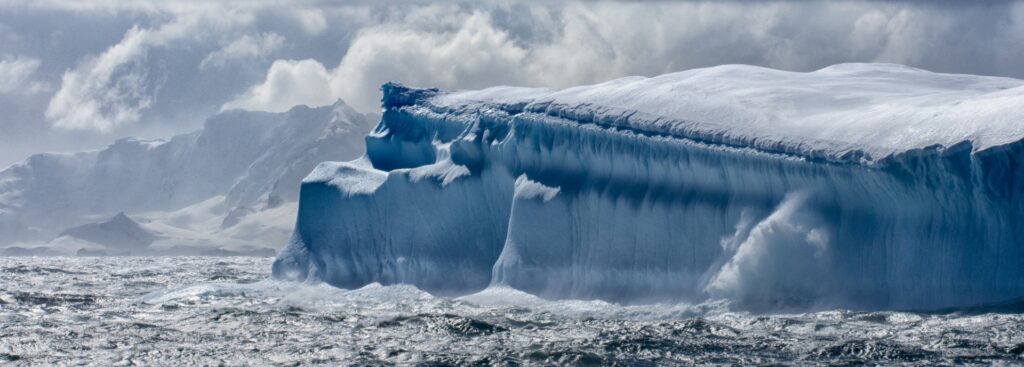
The first indication came from a series of satellite passes in early spring, revealing a widening rift beneath the glacier’s eastern flank. What looked like a thin shadow in the imagery soon revealed itself as a deep structural fault, a fracture stretching for kilometers under the surface. Researchers from the British Antarctic Survey described it as a “structural failure in slow motion,” a process that could eventually detach a massive ice shelf the size of a small country — another sign of the accelerating Antarctica Ice Sheet Collapse.
What makes this moment so critical is not the fracture itself, but what lies beneath it. The glacier rests on a bedrock that slopes downward as it moves inland — a configuration known as a retrograde slope. Once the ice begins to retreat, warm ocean water can infiltrate deeper and deeper beneath it, accelerating the collapse in a runaway feedback loop. It is a mechanism scientists have feared for decades, one that could unleash enough ice to raise global sea levels by more than half a meter. This dynamic is now considered one of the most dangerous triggers within the broader Antarctica Ice Sheet Collapse scenario.
The most unsettling discovery of 2026 came from autonomous underwater drones navigating beneath the glacier’s floating tongue. They detected water temperatures several degrees warmer than expected, swirling in turbulent currents that should not exist in such a remote, frozen place. The ocean is eating the glacier from below, carving out chambers and tunnels that weaken the entire structure. One researcher described it as “watching a cathedral collapse from the inside,” a haunting image that captures the fragility of the Antarctica Ice Sheet Collapse.
And yet, the danger does not end with Thwaites. Its collapse would destabilize the entire West Antarctic Ice Sheet, a vast frozen shield that holds enough water to raise sea levels by more than three meters. Coastal cities — from New York to Mumbai, from Venice to Shanghai — would face a future where tides creep higher each year, swallowing neighborhoods that once seemed safe. The world’s maps would not change overnight, but they would change, slowly and relentlessly, shaped by the advancing Antarctica Ice Sheet Collapse.
This new data forces us to confront a truth we can no longer ignore: the planet’s ice is responding to warming far faster than our political systems, our infrastructure, or our imagination. The collapse of West Antarctica is not a distant scenario. It is a process already underway, unfolding in real time at the edge of the world.
And it echoes another warning from the north. The accelerating melt of Greenland, documented in recent years, has already shown how quickly a massive ice sheet can destabilize when pushed beyond its threshold. As I explored in Greenland Ice Sheet Collapse: The 7‑Meter Threat the World Can No Longer Ignore, the Arctic is sending signals that match, almost perfectly, what we now see in Antarctica.
Two poles. One message. The planet’s frozen boundaries are shifting, and with them, the future shape of our world — a transformation driven, piece by piece, by the unfolding Antarctica Ice Sheet Collapse.
According to British Antarctic Survey Official scientific publication on Antarctic ice loss , the Antarctica Ice Sheet Collapse is advancing faster than previously projected.