
Iran USA negotiations: A Significant Shift as Tehran Sends Proposal and USS Gerald R. Ford Leaves
Tehran’s Proposal and the USS Gerald R. Ford: A New Chapter in Iran – US Negotiations
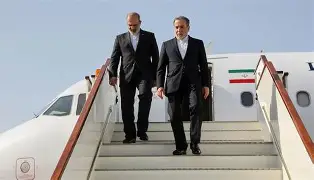
Iran USA negotiations take a new turn as Tehran sends a formal proposal to Pakistani mediators while the United States adjusts its military posture in the Middle East. What appears on the surface as a simple diplomatic gesture is, in reality, a far more complex movement—one shaped by regional pressure, military signals, and the search for an equilibrium that has eluded both nations for years.
Tehran has delivered a formal negotiation proposal to Pakistani intermediaries, a gesture that does not arrive unexpectedly but fits into a broader context of rising tensions and quiet attempts to prevent an uncontrolled escalation. Regional sources describe the document as “more structured and concrete” than previous diplomatic efforts, a detail that suggests a genuine attempt to open a more stable negotiation channel. The exact content of the proposal remains undisclosed, but the very act of sending it indicates that Iran is seeking diplomatic maneuvering space at a particularly delicate moment.
At the same time, the United States is sending signals that are impossible to ignore. The confirmation of the closure of the Civil-Military Coordination Center, announced by President Donald Trump, marks a significant shift in how U.S. forces operate in the region. The center had played a key role in coordinating communication between American forces and local partners, especially during moments of crisis. Its closure can be interpreted as an attempt to reduce the visible operational footprint of the United States or as a strategic recalibration in anticipation of new scenarios.
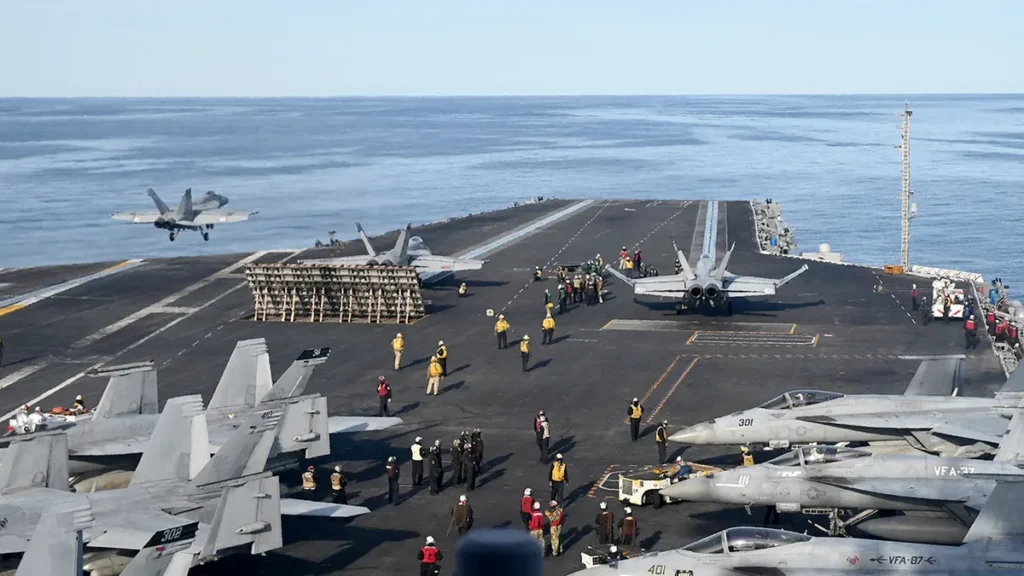
Adding to this perception is another notable development: the USS Gerald R. Ford, one of the most advanced aircraft carriers in the U.S. Navy, has begun to leave the Middle East. The Pentagon has not provided detailed explanations, but analysts emphasize that such a movement is rarely routine. It could be part of a scheduled rotation, but it could also signal a desire to reduce direct military pressure on Iran, creating space for diplomatic engagement.
The combination of these elements—the Iranian proposal, the closure of the coordination center, the movement of the aircraft carrier—creates a complex and evolving picture. It is too early to determine whether this marks the beginning of genuine de-escalation or simply a series of tactical adjustments. What is clear is that this is a moment of fluidity, where every gesture, every statement, and every military movement carries significant weight.
Pakistan’s role as mediator is not accidental. Islamabad maintains relatively balanced relations with both sides and has often acted as a bridge in moments of regional tension. Iran’s decision to rely on an external intermediary suggests a preference for avoiding direct confrontation and instead pursuing a multilateral path—perhaps in the hope of securing guarantees or building a more stable foundation for dialogue.
On the other side, the United States appears intent on maintaining a position of strength without further inflaming tensions. Reducing visible military presence can be interpreted as a signal of openness, but also as a way to avoid incidents that could escalate rapidly.
The international community is watching closely. Every movement is analyzed, every statement weighed. The Middle East remains one of the most sensitive regions in the world, and any shift in the Iran–USA dynamic has repercussions far beyond the borders of the two nations.
For now, the situation remains open. The Iranian proposal may represent a first step toward broader dialogue, or it may remain an isolated gesture. Much will depend on the American response and on the ability of mediators to transform a fragile initiative into a concrete diplomatic path.
The world watches, waiting to understand whether this moment will be remembered as a turning point or simply another chapter in a crisis that continues to resist any definitive solution.
These developments unfold at a moment when Iran US tensions remain high, shaping every diplomatic signal and military movement in the region.
Observers note that Iran US tensions have created an environment where even small gestures can shift the balance of regional stability.
The proposal sent through Pakistani mediators is seen by analysts as a rare opening in a landscape dominated by Iran US tensions.
For a deeper look at the global implications of regional crises, see our feature on how a U.S.–Iran conflict could reshape the world economy: https://zemeghub.com/when-tensions-turn-global-how-a-u-s-iran-conflict-could-reshape-the-world-economy/