
The Cities That Glow: How Photoluminescent Technology Is Transforming Nighttime Safety Worldwide
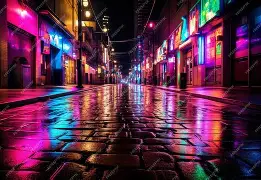
There is a moment in big cities when the night seems to hold its breath. The streets empty, the noise fades, and windows close one after another like tired eyelids. It is in that instant, when the urban world appears to switch itself off, that a new kind of light begins to emerge. It doesn’t come from streetlamps, or neon signs, or the headlights of passing cars. It rises from the ground itself, as if the city had learned to shine on its own.
They call it urban photoluminescence, but the name doesn’t quite capture the feeling it creates. It’s a soft, almost organic glow that doesn’t blind or intrude, but guides. A luminous thread that traces the edges of sidewalks, bike lanes, parking lines, and bridge contours. A light that consumes no energy, requires no cables, and fears no blackout. A light that charges during the day and releases itself at night, like a slow and steady breath.
The first time the world began to talk about it seriously was in Malaysia, when a stretch of road deep in the jungle started glowing green under the night sky. That experiment traveled around the world, becoming a symbol of how innovation can emerge in the most unexpected places. If you want to revisit that story, you can read it here: the glowing road experiment in Malaysia. That’s where it all began.
Today, however, photoluminescence is no longer an isolated experiment. It has become an urban language. In Rotterdam, bike paths glow like constellations drawn onto the asphalt. In Tokyo, certain pedestrian crossings light up when traffic slows, creating an almost cinematic effect. In Vancouver, the edges of park trails have been treated with luminescent pigments to guide nighttime runners without disturbing wildlife. In Seoul, the steps of subway stations shine with a gentle light that reduces accidents without consuming a single watt.
The technology behind it is surprisingly simple: photoluminescent materials that absorb sunlight during the day and release it slowly throughout the night. But what truly changes is not the chemistry—it’s the perception. Cities that glow are not just safer. They are more alive. More human. More poetic. It’s as if the night, instead of being a void to be filled with ever‑stronger lamps, became a space to listen to, to respect, to illuminate with care.
Urban planners speak of “soft lighting,” a philosophy that rejects the idea that safety must always mean harsh brightness. The cities of the future, they say, will no longer be built with lights that fight the darkness, but with lights that converse with it. Photoluminescence is the first step toward this new balance. It doesn’t replace traditional lighting, but accompanies it, softens it, makes it smarter.
And then there is the emotional aspect, the one no technical report can capture. Walking down a street that glows on its own is an almost intimate experience. It makes you feel part of something larger, as if the city had its own rhythm, a heartbeat that continues even when everything seems still. It’s a light that doesn’t impose itself, but invites you to follow. A light that doesn’t control you, but accompanies you.
Many wonder whether this technology will become the norm. The truth is that it doesn’t depend only on cost or efficiency, but on vision. The cities adopting photoluminescence are not doing it just to save energy or reduce light pollution. They are doing it because they understand that the night is not a problem to solve, but a territory to reinvent. And in this territory, light is no longer a weapon, but a language.
Perhaps, a few years from now, we will look back and find it strange that our streets were illuminated only by rigid, uniform streetlamps. Perhaps we will grow accustomed to seeing cities glow like living organisms, with pathways that brighten and fade according to the rhythm of the people. Perhaps the night will finally become what it should be: not an obstacle, but a landscape.
And when that happens, we will remember that it all began with a Malaysian road glowing in the dark, and with the simple, revolutionary idea that even asphalt can have a light of its own.