
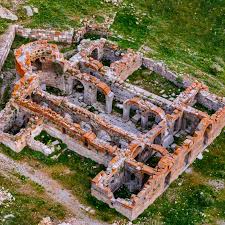
🏛️ Ruins as Memory: Why We Preserve What No Longer Functions
By MEDIA CREATION | Zemeghub | September 23, 2025
We build monuments to last.
Yet some of the most powerful structures in human history are those that have fallen — temples, amphitheaters, fortresses, and cities reduced to stone and silence.
Why do we preserve ruins?
Not for utility — but for meaning.
🧠 The Architecture of Absence
Ruins are not just broken buildings — they are narratives in stone:
– The Colosseum speaks of empire and spectacle
– Machu Picchu whispers of lost knowledge
– Hiroshima’s Genbaku Dome stands as a warning
These structures no longer serve their original purpose. Yet they serve memory — anchoring history in physical form.
🧘 Ruins and the Human Psyche
Psychologists suggest that ruins evoke:
– Nostalgia: a longing for what was
– Sublimity: awe in the face of decay
– Reflection: awareness of impermanence
In preserving ruins, we confront mortality — not just of buildings, but of ideas, cultures, and ourselves.
🔍 Preservation vs Reconstruction
Should we rebuild ruins or let them stand as they are?
– Reconstruction risks erasing history
– Preservation honors the passage of time
– Some argue for adaptive reuse — blending old and new
Each approach reflects a philosophy: Do we honor the past by restoring it, or by letting it speak through its silence?
Ruins are not failures — they are testaments.
They remind us that all things pass, but some meanings endure.
In the broken arch, the weathered stone, the empty corridor — we find not loss, but legacy.
Perhaps the most enduring architecture is not what we build — but what we choose to remember.