
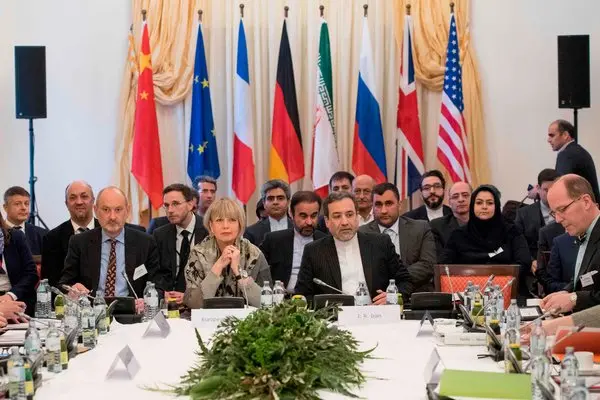
5 Key Signals Driving US–Iran Agreement Expectations in Global Markets
US–Iran Agreement Expectations and Their Global Impact
The global financial landscape is shifting rapidly as US–Iran agreement expectations intensify across diplomatic and economic circles. Markets are reacting with unusual speed: oil prices are falling, major stock indices are climbing, and investors are beginning to believe that a one‑page memorandum built around fourteen key points could mark the first meaningful step toward de‑escalation in the Gulf. In a world strained by uncertainty, the possibility of renewed dialogue between Washington and Tehran is emerging not just as a geopolitical headline but as the silent force reshaping global sentiment and market behavior.
The financial world today is moving as if a long‑awaited shift has finally begun. The US–Iran agreement expectations circulating across diplomatic and economic circles are becoming the central force behind global market behavior, pushing major stock indices toward new highs while oil prices fall sharply. Investors, analysts, and policymakers are all watching the same signal: a one‑page memorandum built around 14 essential points, a document that could mark the first real step toward de‑escalation in the Gulf after months of tension.
Market Sentiment Shifts Under Growing US–Iran Agreement Expectations
In the United States, the S&P 500 is up 0.17%, while the Nasdaq maintains a positive tone supported by the relentless strength of the AI sector. The Dow Jones follows with a 0.25% gain. Yet the most striking movement is in the energy market: WTI crude has dropped to $90.22, losing nearly $5 in a single session. This sudden decline reflects how the US–Iran agreement expectations are reshaping the geopolitical risk premium that had inflated oil prices since the beginning of the crisis. When markets believe that the Strait of Hormuz might reopen safely and that military escalation could slow, energy prices react instantly.
Across Europe, the Stoxx 600 closed 0.7% higher, signaling a broad sense of relief. Even though the FTSE 100 remains the only major index in negative territory, the overall sentiment is dominated by the same narrative: the US–Iran agreement expectations are easing pressure on sectors heavily exposed to energy costs. In Asia, the reaction has been even more dramatic. The Nikkei 225 surged past 62,000 points, setting a new all‑time high, while India’s Sensex and Nifty both advanced more than 1.2%, driven by optimism and the sharp decline in oil prices that benefits energy‑dependent economies.
The market is interpreting this potential agreement as a turning point. The US–Iran agreement expectations are not merely about the end of a military escalation; they represent the possibility of restoring stability to one of the world’s most sensitive regions. A reopening of the Strait of Hormuz would not only secure global energy routes but also reduce the volatility that has shaped financial markets for months. This is why gold, despite remaining strong, is slowing its upward momentum, while equity indices accelerate with renewed confidence.
According to reports summarized from Reuters and Bloomberg, the proposed memorandum includes de‑escalation measures, limits on military operations, and a diplomatic framework supervised by regional mediators. Sources describe it as “a short but substantial document,” capable of immediately lowering the perceived risk among investors. It is precisely this shift in perception that fuels the US–Iran agreement expectations, turning them into the main catalyst behind today’s market movements. Even without an official confirmation, the mere possibility of progress is enough to reshape global sentiment.
The American tech sector continues to shine. AMD consolidates yesterday’s extraordinary rally, while Nvidia receives another “buy” confirmation from Goldman Sachs, which expects a stronger‑than‑anticipated quarter driven by AI infrastructure demand. Materials are also showing strength, with Alcoa rising sharply as analysts at Wells Fargo argue that the aluminum sector remains undervalued and poised for recovery. These movements reflect how the US–Iran agreement expectations are influencing not only energy markets but also broader risk appetite across sectors.
If the memorandum is confirmed, analysts foresee a chain reaction: oil prices could decline further, volatility could drop significantly, and global equity markets could strengthen as geopolitical uncertainty fades. The US–Iran agreement expectations are already shaping this narrative, guiding investors toward a scenario that feels more stable, more predictable, and more aligned with long‑term economic growth.
Today, the market is moving as if this scenario is closer than ever. And with every passing hour, the US–Iran agreement expectations look less like speculation and more like a realistic possibility—one that could redefine the balance of global markets in the weeks ahead.
Reference Source
This article incorporates publicly available market data and insights summarized from Reuters, Bloomberg, and MarketWatch reports published on May 7, 2026, regarding oil price movements, global index performance, and diplomatic developments between the United States and Iran.
For readers following the broader diplomatic landscape, you may also explore our in‑depth analysis on the latest developments between Washington and Tehran in “Iran USA negotiations: A Significant Shift as Tehran Sends Proposal and USS Gerald R. Ford Leaves”, a key piece that contextualizes the evolving dynamics behind today’s rising US–Iran agreement expectations.
Source: Reuters – Middle East & Iran Diplomacy