The Fluidity of Time Before the Big Bang: A Journey into Cosmic Origins

Time, as we experience it in our everyday lives, marches forward at a predictable rate—one second per second.
This steady flow defines our understanding of reality, allowing events to unfold in a linear progression. But when we peer back into the deep past, toward the moment before the Big Bang, this familiar concept of time dissolves into something far less intuitive.
The Nature of Time in Our Universe
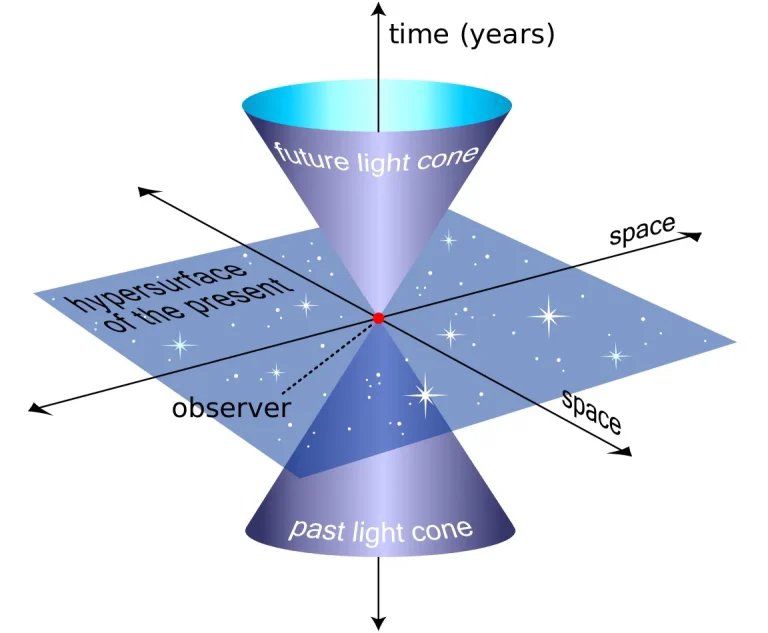
Modern physics tells us that time is not an absolute, independent entity. According to Einstein’s theory of relativity, time is intertwined with space, forming what we call “spacetime.”
This fabric bends and warps under the influence of gravity, making time’s passage relative to an observer’s position and motion.
Near massive celestial objects, such as black holes, time can slow dramatically compared to regions of weaker gravitational influence.
Yet even in these extreme environments, time still ticks forward—albeit at different rates depending on perspective.
Before the Big Bang, however, the rules were different. There was no “before” in the conventional sense, and the very notion of time itself was fundamentally altered.
What Came Before the Big Bang?
The Big Bang marks the beginning of the observable universe, but it doesn’t necessarily signify the birth of all existence. Instead, it represents a transition—an emergence of space and time as we understand them.
Before this moment, what existed is a subject of deep scientific and philosophical speculation.
Some theories propose that time simply did not exist before the Big Bang.
If space-time itself was born in that cosmic event, then speaking of “before” might not make sense—much like asking what lies north of the North Pole.
Others suggest that time existed in a radically different form, possibly as a chaotic, fluctuating dimension without the orderly progression we now experience.
Theories of a Pre-Big Bang Universe
Physicists have explored various hypotheses to explain the origin of time:
– **Quantum Foam and Timeless States:** Some ideas rooted in quantum mechanics propose that the pre-Big Bang state was a kind of quantum foam—an unpredictable, fluctuating environment where time had no distinct forward progression.
– **Cyclic Models:** Certain cosmological models suggest the universe goes through endless cycles of expansion and contraction, meaning a universe existed before the Big Bang, collapsed, and then restarted.
– **Multiverse Theories:** In some interpretations, our universe is just one bubble among many in a vast multiverse, where different regions may experience time in completely different ways.
What It Means for Our Understanding
The idea that time may not have existed before the Big Bang challenges our deep-seated intuition. It forces us to reconsider fundamental assumptions about causality, sequence, and origins.
If time itself was born in that grand explosion, then all questions about “before” must be reframed—or perhaps discarded altogether.
While scientific advancements continue to refine our understanding, the mystery of time’s beginning remains one of the most profound enigmas of modern physics.
Whether it emerged from chaos, cycled through past universes, or simply sprang into existence from nothing, one thing is certain: the nature of time is far more complex than our everyday experience suggests.
The journey to understanding cosmic time is ongoing, and each discovery takes us closer to unlocking the secrets of our universe’s ultimate origins.