
Keir Starmer Resignation: Britain Faces a New Wave of Political Uncertainty
Keir Starmer resignation has become the defining moment of a turbulent season in British politics, a turning point that has thrown the country into a new phase of uncertainty.
London woke up to the shock of his announcement, a resignation that arrived after a night of intense pressure, internal rebellion, and the disastrous local election results that shattered the Labour Party’s confidence. The words “Keir Starmer resignation” are now echoing across Westminster, dominating headlines and reshaping the political landscape in real time.
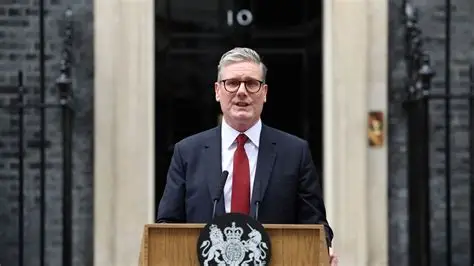
When Starmer stepped outside Number 10 to deliver his statement, the atmosphere felt unusually heavy. He appeared visibly drained, his voice carrying the weight of a leader who knew his time had run out. He spoke of responsibility, of the duty to respect the mandate he had been given, and of the need to allow new leadership to rebuild trust. There was no anger, no accusations, no attempt to shift blame. The Keir Starmer resignation speech was calm, almost somber, as if he had already accepted the end long before the cameras began to roll.
Inside the Labour Party, however, the mood was far from serene. The internal revolt had been brewing for months, but the election results ignited it into a full‑scale crisis. Senior MPs, influential mayors, and long‑standing party strategists began pushing for a change, arguing that the party had lost direction and connection with its base. The pressure mounted hour after hour, until the Keir Starmer resignation became inevitable. It was not a question of if, but when.
Attention has now shifted to Andy Burnham, whose rapid rise has stunned even his closest allies. Freshly sworn in as an MP, Burnham is widely seen as the frontrunner to take over the Labour leadership and potentially become the next Prime Minister. His transformation from a regional powerhouse in Manchester to a national figure capable of leading the country has been nothing short of dramatic. Markets reacted nervously to the Keir Starmer resignation, with the pound fluctuating and investors trying to understand what direction the UK might take next.
Across the country, the public watches the unfolding events with a mixture of disbelief and exhaustion. Another leadership change in such a short period raises serious questions about the stability of British governance. The challenges ahead are immense: a fragile economy, rising social tensions, a healthcare system under strain, and a global role that appears increasingly uncertain. The Keir Starmer resignation has exposed deep fractures within the political system, fractures that will not be easy to repair.
Starmer leaves behind a complicated legacy. His tenure was marked by unfinished reforms, internal divisions, and a constant struggle to define Labour’s identity in a post‑Brexit, post‑pandemic Britain. Yet his departure also carries a warning: without unity and a clear vision, Labour risks losing not only its grip on government but also the trust of a nation demanding clarity and direction. The Keir Starmer resignation is more than a political event; it is a symbol of a country searching for stability.
Now all eyes turn to the leadership race. The coming days will determine whether Labour can rally behind a new figure or whether the UK is heading toward yet another chapter of political turbulence. One thing is certain: the Keir Starmer resignation marks the beginning of a new era, and no one can predict where it will lead.