
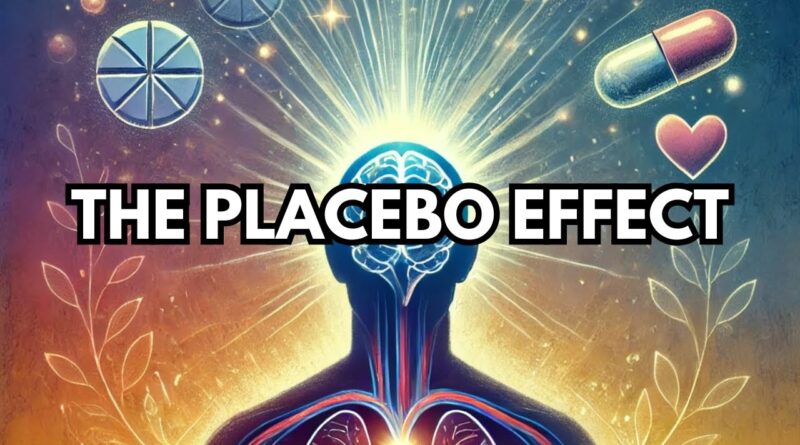
The Hidden Placebo Effect: The Mind’s Unexpected Role in Healing and Perception
Placebo effect is one of the most surprising forces in modern medicine, a phenomenon capable of changing pain, stress and the way we experience healing—even when a product contains no active ingredients. In recent years, this hidden power of the mind has become central to the discussion around wellness patches that promise regeneration, activation and dramatic biological benefits. One of the most talked‑about is the LifeWave X39, a non‑transdermal patch marketed as a light‑reflecting device capable of influencing biological processes. It costs nearly two hundred euros per box, contains no pharmacological substances, and yet millions of users insist that it makes them feel better.
In recent years, a curious trend has emerged: wellness patches that promise to “activate stem cells,” devices that claim to “stimulate regeneration,” and products that assure “natural healing” without drugs, chemicals or any active ingredients. One of the most widely discussed is the LifeWave X39, a non‑transdermal patch marketed as a light‑reflecting device capable of influencing biological processes related to repair and vitality. It costs nearly two hundred euros per box, contains no pharmacological substances, and yet millions of users insist that it makes them feel better.
How can a patch that delivers no drug produce such strong reactions? To understand this, we need to explore one of the most fascinating discoveries in medicine: the placebo effect, and its deeper, more personal counterpart, autosuggestion.
The placebo effect is not deception or imagination. It is a measurable biological response. When a person expects relief, the brain can release endogenous opioids, dopamine and other neurotransmitters that genuinely alter the perception of pain, stress and fatigue. The body responds to expectation as if it were receiving treatment. Symptoms can improve not because the product contains an active ingredient, but because the brain changes the way those symptoms are processed.
Autosuggestion goes even further. It is not merely believing that something might help; it is convincing yourself that it is already helping. It is an internal narrative that shapes how the body reacts. Applying a “miracle patch” becomes a ritual. The high price makes it feel serious. The sleek design makes it feel advanced. Testimonials make it feel possible. And the brain interprets all of this as a signal: I am doing something meaningful for myself.
From that moment, the body can genuinely change. Muscle tension decreases. Breathing becomes steadier. The nervous system calms. Pain is filtered differently. Small improvements feel larger. The person truly feels better.
But here is the nuance that matters scientifically: this does not prove that the patch itself produces biological regeneration. It proves that expectation can influence the experience of symptoms.
For a product like LifeWave X39, the key scientific question is not whether people feel better—many do—but whether the patch performs better than an indistinguishable placebo patch in rigorous, blinded clinical trials. As of today, there is no broad scientific consensus that X39 has been proven to “activate stem cells” or produce the regenerative effects described in marketing. Critics point out that the available studies often have small sample sizes, methodological limitations and a lack of independent replication.
This distinction is important. A person’s improvement is real. Pain relief, reduced anxiety, better sleep and increased subjective well‑being are genuine outcomes. But these improvements can arise from expectation, natural recovery, emotional reassurance, lifestyle changes or regression to the mean. Placebo does not mean “the symptom was imaginary.” It means the nervous system responded to belief.
At the same time, placebo effects have limits. They can strongly influence pain, fatigue, anxiety and subjective well‑being. They do not reliably cure bacterial infections, heal broken bones, shrink tumors or reverse diseases that require specific biological interventions. Belief can shape the experience of illness, but it cannot replace evidence‑based medical treatment.
So the most scientifically balanced conclusion is not that “the patch does nothing,” but that extraordinary health claims require extraordinary evidence, and at present the strongest evidence we have is for the power of expectation, placebo and autosuggestion—not for dramatic regenerative mechanisms.
The mind is the most powerful healing system we possess. When it believes, the body responds. But belief alone is not a substitute for medical care, and products that promise biological miracles must be evaluated with caution, curiosity and scientific rigor.
Perhaps the real revolution is not inventing new patches, but learning to understand the remarkable power we already carry within ourselves.
If you’re curious to explore how the mind shapes not only healing but the very fabric of reality we experience, you may enjoy another journey inside the Psychology section: The Mind’s Canvas: How Thought Shapes Reality and Something Beyond — a deeper look at how perception, imagination and belief quietly rewrite the world around us.