
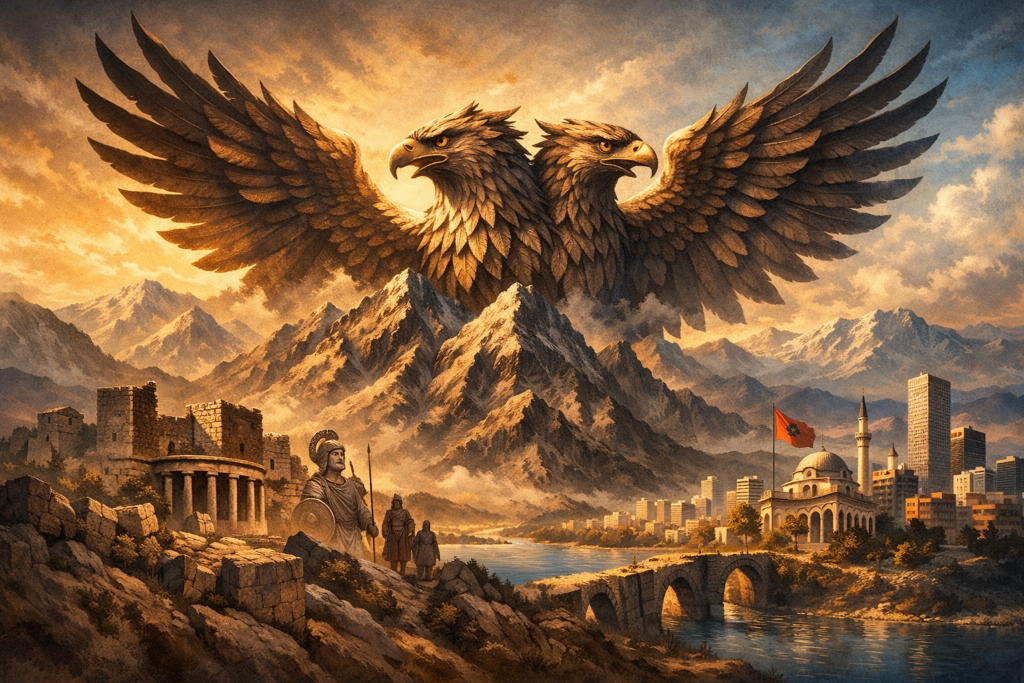
Albanians Ancient European People: The Unbroken Line from the Paleo‑Balkan World to Modern Albania
The story of the Albanians ancient European people begins long before the rise of Greece, Rome, or the great migrations that reshaped Europe. It begins in the deep shadows of the paleo‑Balkan world, where a cultural and linguistic thread was woven thousands of years ago and never broken, surviving empires, wars, occupations, and borders to reach the present day with an identity still intact.
From the Pelasgians to the Albanians of Today
There are peoples in Europe whose histories are written in marble, whose empires carved their names into continents, whose languages filled libraries and courts. Greek, Latin, Celtic, Slavic—these linguistic giants shaped the cultural map of Europe. But among them, often overlooked, often underestimated, stands a people whose story is older than most of the continent’s civilizations, a people whose language carries echoes of a world that existed before the classical age, before Rome, before the migrations that reshaped Europe.
The Albanians are one of the most ancient peoples of Europe, with roots that precede Greeks, Romans, Celts, and Slavs.
This is not a slogan. This is not nationalism. This is not myth. This is the conclusion of linguistics, archaeology, anthropology, and the stubborn continuity of a people who survived everything history threw at them.
To understand the Albanians, one must travel far back—farther than the Roman legions, farther than the Byzantine emperors, farther than the Slavic migrations, farther even than the Greek city‑states. One must travel to the shadowy dawn of European civilization, to the peoples who lived in the Balkans before writing, before chronicles, before the languages we know today.
One must begin with the Pelasgians.
The Pelasgians: Echoes Before History
The Pelasgians are a mystery. They appear in Greek literature as “the ancient ones,” the people who inhabited the Aegean and the Balkans before the arrival of the Greeks. They are described as pre‑Greek, pre‑Indo‑European, or proto‑Indo‑European depending on the scholar. They left no written texts, no inscriptions, no codified language. But they left traces—names of mountains, rivers, and cities that do not fit Greek etymology, fragments of vocabulary that seem older than Greek, older than Latin, older than the classical world.
For centuries, historians and linguists debated their identity. Some saw them as myth. Others saw them as a real population whose cultural and linguistic footprint survived in the Balkans long after their name disappeared. In the nineteenth and early twentieth centuries, many scholars proposed that the Pelasgians were ancestral to the later Illyrian and Thracian populations, and that their cultural substratum survived in the languages and traditions of the western Balkans.
Modern scholarship is more cautious, but one fact remains: the Pelasgian layer is part of the deep foundation of the Balkans, and the Albanians—through their language—preserve elements of that ancient world.
The Albanian language contains roots that do not belong to Greek, Latin, Slavic, or any other known branch. These roots are remnants of a linguistic landscape that existed before the classical civilizations. They are fossils of sound, preserved in living speech.
This is why linguists describe Albanian as a paleo‑Balkan survivor—the last living representative of a family of languages that once covered the region but vanished under waves of conquest, migration, and assimilation.
The Pelasgians were not the Albanians. But the Albanians carry echoes of the world the Pelasgians inhabited.
The Paleo‑Balkan Mosaic
After the Pelasgians, the Balkans became home to a mosaic of tribes and cultures collectively known as the paleo‑Balkan peoples. These included the Illyrians, Thracians, Dacians, Paeonians, and others whose names appear in Greek and Roman sources. They were not a single people, nor did they speak a single language. But they shared a region, a way of life, and a destiny: to be at the crossroads of every major movement in ancient Europe.
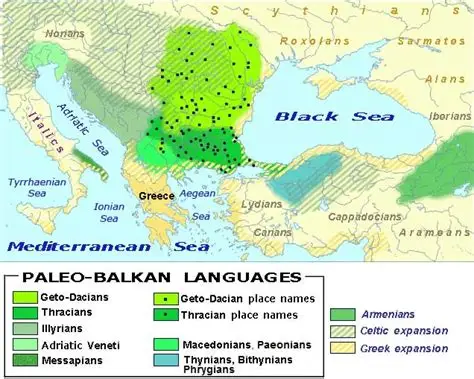
The Balkans were a corridor. Armies marched through them. Merchants traveled across them. Migrants settled in them. Empires fought over them.
To live in the Balkans was to live in a place where history never rested.
Among the paleo‑Balkan peoples, the Illyrians occupied the western region—roughly corresponding to modern Albania, Kosovo, Montenegro, and parts of North Macedonia. They were mountain people and coastal people, warriors and sailors, organized into tribes rather than centralized states. Their culture was resilient, shaped by the harsh geography of the western Balkans.
And it is the Illyrians who form the most direct bridge to the Albanians of today.
The Illyrians: The People of the Mountains and the Sea
The Illyrians appear in Greek and Roman texts as fierce, independent, and difficult to conquer. They were not a unified nation but a constellation of tribes—Taulantii, Dardani, Labeatae, Autariatae, and many others. Some lived along the Adriatic coast, engaging in trade and maritime activity. Others lived deep in the mountains, isolated and fiercely protective of their autonomy.
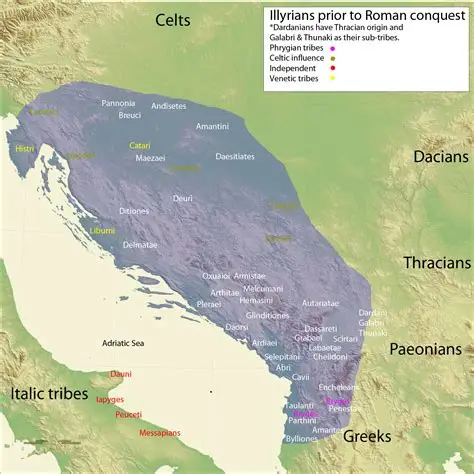
Their military reputation was formidable. Illyrian cavalry was among the most respected in the ancient world—fast, agile, deadly in rough terrain. This tradition of elite cavalry would reappear centuries later in the Albanian Stradioti, mercenaries who served in Venetian and Greek armies and were considered among the finest light cavalry of the Renaissance.
The Illyrian language is lost, but fragments survive in names of people, places, and deities. These fragments show an Indo‑European language distinct from Greek and Latin, with features that align closely with the deep structure of Albanian. While scholars cannot claim a perfect one‑to‑one descent, the consensus is clear:
Albanian is the only modern language that descends from the paleo‑Balkan linguistic world.
Every other paleo‑Balkan language disappeared. Albanian did not.
This alone makes the Albanians one of the most ancient peoples of Europe.
But their survival was not easy.
Rome Arrives: Conquest and Transformation
When Rome turned its gaze toward the Balkans, it did so with ambition. The Adriatic was strategically vital. The Illyrian coast offered naval advantages. The inland routes connected Italy to Macedonia and Greece. Rome wanted control—and Rome always took what it wanted.
The Illyrian Wars were long and brutal. Tribes resisted fiercely. Rome responded with overwhelming force.
Eventually, the Illyrian kingdoms fell, and the region was absorbed into the Roman Empire. Romanization followed—administration, law, religion, and Latin language spread across the territory. Cities grew, trade expanded, and Roman infrastructure reshaped the landscape.
But the mountains resisted.
In the highlands, Latin influence was weaker. Local traditions persisted. The language of the people—proto‑Albanian—continued to evolve, absorbing Latin vocabulary but maintaining its own grammar, phonology, and structure.
This is why Albanian contains:
- a deep layer of ancient vocabulary unrelated to Latin, Greek, or Slavic
- a significant layer of early Latin loanwords
- a structure that is not Latin, not Greek, not Slavic
If Albanian had been born from Latin, it would resemble Italian or Romanian. If it had been born from Slavic, it would resemble Serbian or Bulgarian. If it had been born from Greek, it would resemble modern Greek.
But Albanian resembles none of these. It is its own branch—ancient, isolated, and stubbornly independent.
Rome conquered the land. But Rome did not conquer the language.
The Slavic Migrations: The Great Disruption
In the sixth and seventh centuries, the Balkans experienced one of the most transformative events in their history: the arrival of the Slavs. These migrations reshaped the ethnic and linguistic map of southeastern Europe. Many paleo‑Balkan peoples were assimilated. Their languages disappeared. Their identities dissolved into the expanding Slavic world.
But not everywhere.
Once again, the mountains saved the ancestors of the Albanians.
Slavic populations settled primarily in the plains, valleys, and fertile regions. The highlands of Albania, Kosovo, and Montenegro remained difficult to penetrate and even harder to control. In these regions, the proto‑Albanian language continued to be spoken, preserved by communities that lived in isolation and maintained strong clan structures.
Modern genetic studies confirm this continuity. Ancient DNA from Bronze Age and Iron Age individuals in Albania shows strong continuity with modern Albanians. This is rare in Europe, where many populations experienced significant genetic turnover during the migrations.
The Albanians did not disappear. They did not assimilate. They did not lose their language.
They endured.
From Byzantium to the Ottoman Empire: Five Centuries of Pressure and Survival
The Slavic migrations reshaped the Balkans, but they did not erase the ancestors of the Albanians. They did not erase their language. They did not erase their identity. Instead, they created a new layer of complexity in a region already defined by complexity. And into this complexity stepped a new empire—one that would dominate the region for a thousand years: Byzantium.
Byzantium: The Empire of Faith and Fracture
The Byzantine Empire inherited the eastern half of Rome, but it was not Rome. It was a Christian empire, Greek‑speaking, deeply hierarchical, and profoundly invested in religious authority. For the ancestors of the Albanians, Byzantium was both a shield and a pressure. It protected the region from external invasions for centuries, but it also imposed new cultural and religious structures.
Christianity spread through the Balkans in waves. First Latin Christianity, then Greek Christianity. Churches were built, dioceses established, monasteries founded.
But the mountains resisted, as they always had.
In the highlands, Christianity blended with older traditions. Ancient customs survived beneath the surface. The Albanian language continued to evolve, untouched by the liturgical Greek used in churches.
This is one of the reasons Albanian remained so distinct. It was never the language of administration. It was never the language of the church. It was never the language of empire.
It was the language of the people—spoken in homes, in villages, in clans, in mountains.
Empires rise and fall. Languages of power come and go. But the language of the people endures.
And the Albanians endured.
The Coming Storm: A New Empire Approaches
By the 14th century, Byzantium was weakening. Internal conflicts, external invasions, and economic decline fractured the empire. The Slavic states grew stronger. The Venetians and Genoese competed for coastal control. The Hungarians pushed south. The Serbs expanded aggressively.
The Balkans were once again a battlefield.
And into this battlefield marched a new force—one that would reshape the region more profoundly than any before it: the Ottoman Empire.
The Ottoman Conquest: A Turning Point in Albanian History
The Ottomans did not arrive suddenly. They arrived gradually, like a tide rising. First raids, then alliances, then vassalage, then conquest.
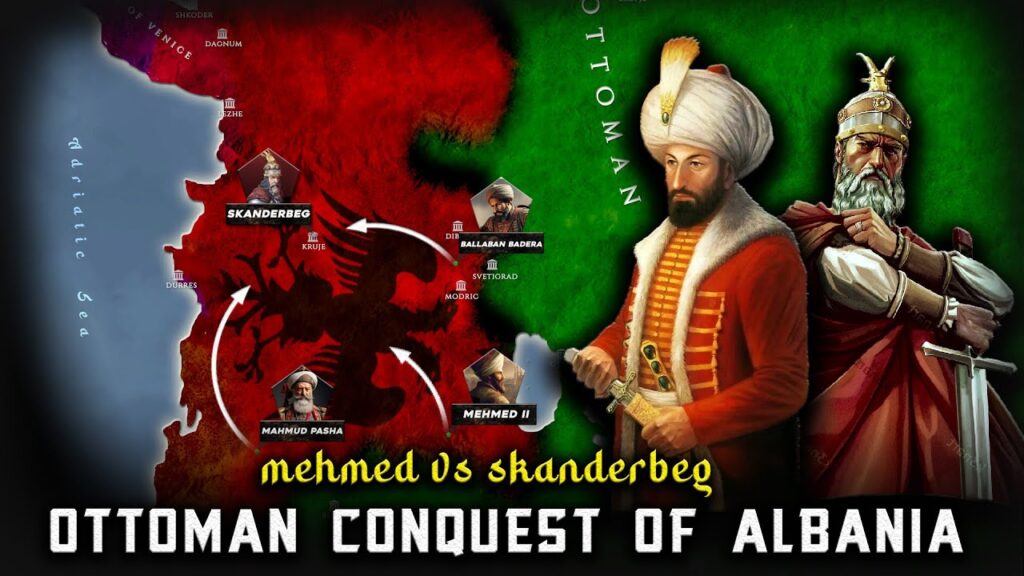
By the late 14th century, Ottoman armies were moving through the Balkans with increasing confidence. By the early 15th century, they were establishing administrative structures. By the mid‑15th century, they were the dominant power.
For the Albanians, the Ottoman arrival was not just a political change. It was a civilizational shift.
The Ottomans brought:
- a new religion
- a new administrative system
- a new legal structure
- a new military order
- a new cultural model
They imposed taxes, reorganized land ownership, and integrated local leaders into their hierarchy. Some Albanian nobles resisted. Others collaborated. Many converted to Islam, voluntarily or under pressure.
But conversion did not mean assimilation. Islam in Albania developed differently than in other regions. It blended with local customs, clan structures, and mountain traditions. It became Albanian Islam, not Ottoman Islam.
And through all of this, the Albanian language remained the core of identity.
Five Centuries of Rule: Oppression, Adaptation, and Survival
The Ottoman Empire ruled Albania for nearly 500 years. This is not a footnote. This is half a millennium. Generations lived and died under Ottoman rule. Entire social structures were reshaped. Religious identities shifted. Political autonomy vanished.
This was, undeniably, a form of cultural sradicamento—a long, slow pressure that attempted to reshape the identity of the region.
But it did not succeed.
The Albanians adapted, resisted, negotiated, rebelled, and survived.
Ottoman rule brought hardship:
- heavy taxation
- forced military service
- suppression of revolts
- destruction of villages
- deportations
- religious pressure
- political fragmentation
But it also brought paradoxical forms of continuity:
- clan structures remained intact
- mountain autonomy persisted
- local customs survived
- the Albanian language continued to evolve
- oral tradition flourished
- identity remained rooted in land and family
The Ottomans could dominate the administration. They could dominate the religion. They could dominate the economy. But they could not dominate the mountains.
And the mountains protected the language.
The Language That Would Not Die
During Ottoman rule, Albanian was not taught in schools. It was not used in courts. It was not used in administration. It was not used in religious institutions.
It survived only through oral tradition.
This is extraordinary. Most languages that lose institutional support die within a few generations. But Albanian did not die. It grew stronger.
Songs, epics, proverbs, clan laws, oral histories—all preserved the language. The Kanun of Lekë Dukagjini, transmitted orally for centuries, became a vessel of identity. Epic cycles like those of the Kreshnikë preserved ancient vocabulary and mythological structures that linguists still study today.
The Albanians were not writing their language. They were living it.
And this is why Albanian is one of the most ancient languages of Europe: it carries within it layers of vocabulary and grammar that survived untouched by the empires around it.
It is a linguistic time capsule.
Skanderbeg: The Symbol of Resistance
No story of Albanian survival under the Ottomans can be told without mentioning Gjergj Kastrioti Skanderbeg. He is not a myth. He is not a legend. He is a historical figure whose military resistance delayed Ottoman expansion into Europe for decades.
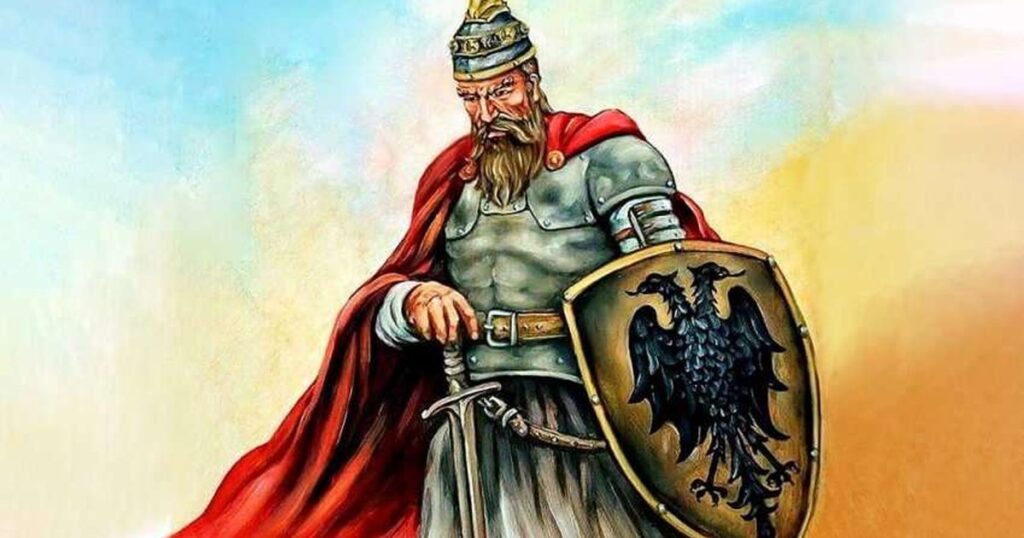
Skanderbeg united Albanian principalities, defeated Ottoman armies repeatedly, and became a symbol of European resistance. His letters, alliances, and battles are documented in Venetian, Neapolitan, and Papal archives.
But his importance is not only military. He represents the moment when Albanian identity crystallized into a political force.
Under Skanderbeg, the Albanians were not just tribes. They were a people.
And that people survived even after his death, even after the Ottomans re‑conquered the region, even after centuries of pressure.
Skanderbeg did not save Albania from Ottoman rule. But he saved Albanian identity from dissolution.
The Long Night: Albania Under Ottoman Administration
After Skanderbeg’s death in 1468, the Ottomans gradually reasserted control. By the early 16th century, Albania was fully integrated into the empire. The next centuries were marked by cycles of rebellion and repression.
But even in the darkest periods, the Albanians maintained:
- their clan structures
- their oral traditions
- their mountain autonomy
- their language
- their sense of distinct identity
Ottoman rule was heavy, but it was not total. The empire was vast, and its control varied by region. In the Albanian highlands, Ottoman authority was often nominal. Local leaders governed according to the Kanun. Ottoman officials negotiated rather than commanded.
This partial autonomy allowed Albanian identity to survive intact.
The Seeds of National Awakening
By the 18th and 19th centuries, the Ottoman Empire was weakening. National movements were rising across the Balkans. Greeks, Serbs, Bulgarians, and Romanians were asserting their identities and seeking independence.
The Albanians were slower to begin this process—not because they lacked identity, but because they were divided by religion, geography, and clan loyalties.
But when the Albanian National Awakening (Rilindja Kombëtare) began, it was powerful.
Writers, poets, and intellectuals started to codify the Albanian language. Schools were founded. Newspapers were printed. Political organizations were formed.
For the first time in history, Albanian became a written language with a national purpose.
And this movement was built on a simple truth:
The Albanians are one of the most ancient peoples of Europe, with roots that precede Greeks, Romans, Celts, and Slavs.
This truth became the foundation of national identity.
From the Albanian National Awakening to the London Conference of 1913
The nineteenth century was a century of awakening across the Balkans. The Ottoman Empire was weakening. National movements were rising. Peoples who had lived for centuries under imperial rule began to rediscover their languages, their histories, their identities. The Greeks fought for independence. The Serbs rose in rebellion. The Bulgarians organized. The Romanians asserted their autonomy.
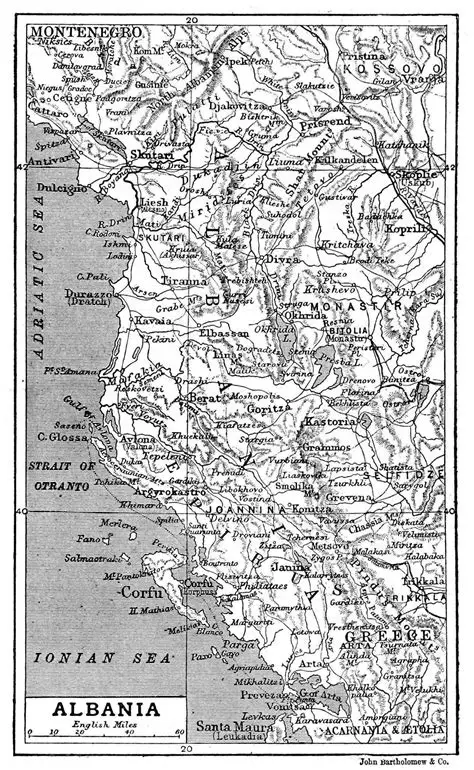
And in this great wave of national rebirth, the Albanians began to articulate something that had existed for millennia but had never been written in political form: a consciousness of being one of Europe’s most ancient peoples, heirs to a lineage older than the Greeks, older than the Romans, older than the Celts and Slavs who later filled the continent.
This was not a new identity. It was an old identity finally spoken aloud.
The Albanian National Awakening (Rilindja Kombëtare)
The Albanian National Awakening did not begin with armies. It began with words.
Writers, poets, scholars, and clergy began to gather in secret meetings, in mountain villages, in coastal towns, in diaspora communities across Italy, Egypt, Romania, and beyond. They wrote in Albanian, printed newspapers, opened schools, and argued passionately about the need to preserve the language.
The language was the heart of the movement. It was the proof of continuity. It was the living evidence that Albanians were not a new people, not a product of Ottoman rule, not a fragment of Slavic or Greek identity, but a distinct nation with roots deep in the paleo‑Balkan world.
Every article, every poem, every schoolbook carried the same message:
“We are ancient. We are continuous. We are Albanian.”
The movement faced enormous obstacles. The Ottoman authorities feared nationalist movements and often suppressed Albanian publications. Neighboring states—Serbia, Greece, Bulgaria—each had territorial ambitions and sought to claim Albanian lands by arguing that Albanians were not a distinct people. European powers viewed the Balkans as a chessboard, not as a home for ancient nations.
But the Albanians persisted.
They formed the League of Prizren in 1878, a political and military organization aimed at defending Albanian territories from partition. They demanded schools in Albanian. They demanded recognition of their language. They demanded autonomy.
For the first time in centuries, Albanians were speaking with one voice.
The Alphabet Congress of 1908: A Cultural Victory
One of the most important moments in Albanian history occurred not on a battlefield but in a classroom: the Congress of Manastir in 1908. Here, Albanian intellectuals gathered to unify the Albanian alphabet, which until then had been written in multiple scripts—Latin, Greek, Arabic.
The decision to adopt a Latin‑based alphabet was revolutionary. It connected Albania to Europe. It gave the language a modern form. It allowed newspapers, books, and schools to flourish.
It was a declaration that Albanian identity would not be erased.
And it was built on the same truth that had guided the Rilindja:
The Albanians are one of the most ancient peoples of Europe, with roots that precede Greeks, Romans, Celts, and Slavs.
This truth was not propaganda. It was the foundation of a nation.
The Balkan Wars: The Storm Before Independence
In 1912, the Balkan states—Serbia, Greece, Bulgaria, Montenegro—launched a coordinated attack against the Ottoman Empire. Their goal was to seize territory before the empire collapsed. Their armies swept through the Balkans with speed and brutality.
Albanian lands were invaded from all sides. Villages were burned. Civilians were killed. Entire regions were occupied.
The Balkan states argued that Albanians were not a distinct people, that their lands were historically Serbian, Greek, or Bulgarian. These claims were political, not historical. They ignored the linguistic, cultural, and anthropological continuity of the Albanian people.
But the Albanians resisted. Local militias fought back. Leaders declared independence on November 28, 1912, in Vlora.
For the first time in modern history, Albania stood as a sovereign nation.
But sovereignty would not last long.
The London Conference of 1913: A Nation Without a Voice
After the Balkan Wars, the Great Powers of Europe—Britain, France, Germany, Italy, Russia, Austria‑Hungary—met in London to redraw the map of the Balkans.
Albania was on the agenda. But Albanians were not invited.
The fate of an ancient people was decided in a foreign city, by foreign powers, without a single Albanian representative present.
The Great Powers recognized Albania as a state, but they drastically reduced its territory. Large Albanian regions were given to Serbia, Montenegro, and Greece. Communities that had spoken Albanian for centuries were cut off from the new state. Families were divided. Villages were split. Borders were drawn with rulers, not with respect for history.
This was not a neutral act. It was a geopolitical decision designed to balance power in the Balkans.
It was a political sradicamento—an uprooting of a people from their historical lands.
The Albanians protested. They sent letters, petitions, delegations. But the decisions had already been made.
The London Conference of 1913 left Albania small, fragile, and surrounded by hostile neighbors.
But it did not erase the Albanian people. It did not erase their language. It did not erase their continuity.
A Nation Born in Chains
Albania entered the twentieth century as a state, but not as a free nation. Its borders were imposed. Its territory was reduced. Its population was divided. Its neighbors sought to absorb it. Its internal politics were unstable. Its economy was weak.
But its identity was strong.
The Albanians had survived:
- the Pelasgian dawn
- the Illyrian age
- Roman conquest
- Slavic migrations
- Byzantine rule
- Ottoman domination
- Balkan invasions
- European partition
They had survived everything.
And they would survive the twentieth century too.
From Independence to Modern Albania: Survival in a Turbulent World
Albania entered the twentieth century not as a nation born in peace, but as a nation born in turbulence. Its borders had been drawn by foreign powers. Its territory had been reduced. Its population had been divided. Its neighbors viewed it not as a sovereign state but as a prize to be claimed. And yet, despite all of this, Albania stood. Fragile, yes. Vulnerable, yes. But standing.
The early years of independence were marked by instability. Governments rose and fell. Foreign influence seeped into every institution. Internal divisions made unity difficult. The economy struggled. Infrastructure was minimal. Illiteracy was widespread.
But identity was strong. Language was strong. Memory was strong.
The Albanians represented one of the oldest continuous populations in Europe, with cultural and linguistic roots that traced back to the ancient paleo‑Balkan world. This truth was not merely academic. It was lived. It was felt. It was the foundation upon which the new state attempted to build itself.
The Reign of King Zog: A Fragile Modernization
In 1928, Ahmet Zogu declared himself King Zog I of Albania. His reign was an attempt to modernize the country, to create institutions, to stabilize politics, to bring Albania into the European fold. He built ministries, established a national bank, created a civil administration, and tried to unify the country under a central authority.
But Albania was not an easy land to govern. Its mountains divided communities. Its clans maintained autonomy. Its neighbors interfered constantly. Its economy was weak. Its infrastructure was minimal.
King Zog walked a tightrope between modernization and survival. He sought alliances abroad. He negotiated with Italy. He tried to maintain independence while relying on foreign support.
But foreign support often comes with a price.
The Italian Occupation: A New Sradicamento
In 1939, Italy invaded Albania. The occupation was swift. King Zog fled. Albania became a protectorate of Fascist Italy.
This was a new form of sradicamento — political, cultural, economic. Italian became the language of administration. Italian companies took control of resources. Italian officials governed the country. Italian propaganda attempted to reshape identity.
But once again, the Albanians resisted. Not always with weapons — though armed resistance existed — but with identity. With language. With memory.
The Albanians had survived Rome. They had survived Byzantium. They had survived the Slavic migrations. They had survived the Ottoman Empire. They had survived the Balkan Wars. They had survived the London partition.
They would survive Italy too.
World War II: Occupation, Resistance, and Chaos
After Italy’s collapse in 1943, Germany occupied Albania. This period was marked by chaos, conflict, and the rise of partisan movements. Communists, nationalists, monarchists, and regional militias all fought for control. Villages were burned. Families were divided. The country became a battlefield.
But even in this chaos, Albanian identity remained intact. The language continued to be spoken. The oral traditions continued to be transmitted. The memory of ancient continuity remained alive.
When the war ended, Albania emerged devastated but still Albanian.
The Communist Era: Isolation and Reinvention
In 1944, Enver Hoxha and the Communist Party took control of Albania. What followed was one of the most isolated and rigid regimes in modern history. Religion was banned. Borders were sealed. Foreign influence was eliminated. The economy was centralized. The population was monitored. Dissent was crushed.
This was a new form of sradicamento — internal, ideological, total. The regime attempted to reshape society from the ground up. It attempted to erase old loyalties, old traditions, old structures.
But even this regime could not erase the deepest layer of Albanian identity.
The Albanians represented one of the oldest continuous populations in Europe, with cultural and linguistic roots that traced back to the ancient paleo‑Balkan world. This continuity was older than communism. Older than fascism. Older than the Ottoman Empire. Older than Byzantium. Older than Rome.
No ideology could erase it.
Even when religion was banned, the Kanun survived in memory. Even when borders were closed, oral tradition survived in families. Even when propaganda filled the airwaves, the Albanian language remained the vessel of identity.
Communism reshaped Albania, but it did not break Albania.
The Fall of Communism: A New Beginning, A New Struggle
In 1991, the communist regime collapsed. Albania opened its borders. The world rushed in. Freedom arrived — but so did instability.
The transition was painful. The economy collapsed. Factories closed. Unemployment soared. Corruption spread. Institutions weakened. The pyramid scheme crisis of 1997 plunged the country into chaos.
And yet, through all of this, Albanian identity remained intact.
People emigrated in massive numbers — to Italy, Greece, Germany, the UK, the US. Entire villages emptied. Families scattered across continents.
This was a new form of sradicamento — demographic, economic, global. Not imposed by an empire, but by circumstances.
But even abroad, Albanians remained Albanians. They spoke the language. They preserved traditions. They maintained identity.
The diaspora became an extension of Albania, not a replacement.
Modern Albania: Between Past and Future
Today, Albania stands at a crossroads. It is no longer isolated. It is no longer occupied. It is no longer divided by foreign powers.
But it faces new pressures:
- economic migration
- globalization
- political instability
- regional tensions
- European integration challenges
And yet, despite all of this, Albania remains one of the most culturally continuous nations in Europe.
Its language is ancient. Its identity is deep. Its memory is long. Its continuity is unbroken.
The Albanians represent one of the oldest continuous populations in Europe, with cultural and linguistic roots that trace back to the ancient paleo‑Balkan world.
This is not myth. This is not nationalism. This is not ideology. This is history.
A history written not in marble, but in survival. Not in empire, but in endurance. Not in conquest, but in continuity.
Epilogue: The Thread That Never Breaks
From the Pelasgians to the Illyrians, from Rome to Byzantium, from the Slavic migrations to the Ottoman Empire, from the London partition to modern emigration, the Albanians have endured every storm.
Empires rose and fell. Borders shifted. Languages vanished. Cultures disappeared.
But Albania remained.
Not always as a state. Not always as a kingdom. Not always as a republic.
But always as a people.
A people whose language carries echoes of a world older than Greece, older than Rome, older than the Slavic and Celtic expansions. A people whose continuity is one of the deepest in Europe. A people whose identity survived every form of sradicamento — political, cultural, religious, demographic.
A people whose thread never broke.
The Unbroken Line
History is often written by empires, but identity is written by endurance. And if there is one thing the Albanian story proves, it is that endurance can outlast conquest, migration, occupation, division, and even time itself.
From the shadowy Pelasgian dawn, through the tribal strength of the Illyrians, through the discipline of Rome, through the faith of Byzantium, through the upheaval of the Slavic migrations, through the long night of the Ottoman centuries, through the political violence of the Balkan Wars, through the cold decisions of the London Conference, through the storms of the twentieth century, through the isolation of communism, through the chaos of transition, through the waves of modern emigration—
the Albanians remained.
Not unchanged, because no people remains unchanged. But unbroken.
Their language survived when others vanished. Their memory survived when borders shifted. Their identity survived when empires collapsed. Their continuity survived when history tried to erase it.
Today, when an Albanian speaks, the words carry echoes of a world older than the classical civilizations that shaped Europe. Not because Albanians are “better,” not because they are “superior,” but because they are continuous — one of the rare peoples whose cultural and linguistic thread stretches back into the paleo‑Balkan world.
This is why the statement stands true, powerful, and historically grounded:
The Albanians represent one of the oldest continuous populations in Europe, with cultural and linguistic roots that trace back to the ancient paleo‑Balkan world.
It is not a slogan. It is not a myth. It is not a political invention. It is the conclusion of archaeology, linguistics, anthropology, and the lived experience of a people who refused to disappear.
The mountains protected them. The language united them. The oral tradition preserved them. The memory sustained them. The land anchored them.
And even today, in a world where borders are porous and identities are fluid, the Albanian thread remains visible — in the diaspora, in the villages, in the cities, in the songs, in the Kanun, in the stories told by grandparents, in the pride carried by young people who leave but never forget where they come from.
Albania is not just a state. It is not just a territory. It is not just a name on a map.
It is a continuity.
A continuity older than most nations in Europe. A continuity that survived every form of sradicamento — political, cultural, religious, demographic. A continuity that speaks through a language unlike any other. A continuity that endured when history tried to break it.
And so, after five thousand years of storms, migrations, invasions, occupations, partitions, and upheavals, the conclusion is simple:
The thread never broke. The people never disappeared. The language never died. The identity never surrendered.
The Albanians are still here. Still speaking. Still remembering. Still carrying the echo of an ancient world into the modern one.
And that — more than any empire, more than any border, more than any conquest — is the true victory of a people who refused to be erased.