

Blue Origin New Glenn Explosion – Rocket Test Ends in Launch Pad Fire, No Injuries Reported
The roar of engines that was supposed to mark another step forward for Blue Origin’s heavy‑lift ambitions ended instead in a sudden flash of fire. During a routine test at the company’s U.S. facilities, the New Glenn rocket suffered a catastrophic failure on the launch pad, erupting into a plume of smoke and debris that briefly lit up the surrounding area. Within seconds, the test structure was engulfed, and emergency systems activated automatically, flooding the pad with suppressant foam.
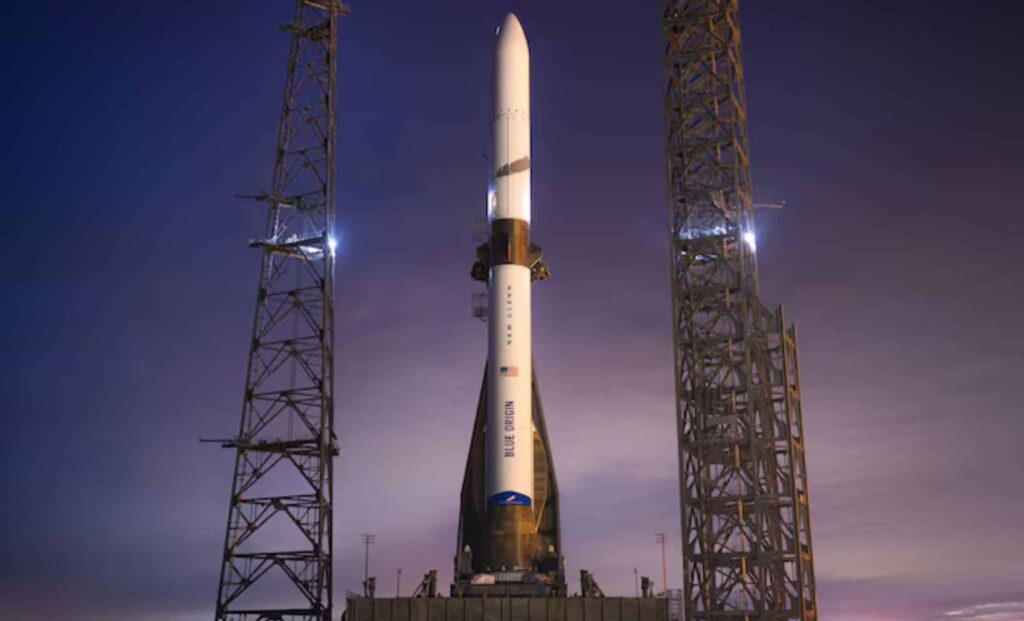
Witnesses described a deep, concussive blast followed by a column of dark smoke rising above the complex. Engineers monitoring the test feed immediately cut power to the system, while safety crews moved in to secure the perimeter. Despite the dramatic visuals, authorities confirmed that no personnel were injured, thanks to strict safety protocols that keep teams at a safe distance during high‑risk engine and structural tests.
The New Glenn, Blue Origin’s flagship heavy‑lift rocket, has been central to the company’s long‑term strategy to compete in the global launch market. Designed to carry large payloads into orbit and eventually support crewed missions, the vehicle represents years of development and billions in investment. Today’s explosion marks one of the most serious setbacks in its testing campaign, raising questions about timelines and the next steps for the program.
Initial reports suggest the failure occurred during a static‑fire sequence, a critical phase in which the rocket’s engines are ignited while the vehicle remains anchored to the ground. These tests are designed to push systems to their limits, exposing weaknesses before the rocket ever leaves the pad. In this case, something within the propulsion or structural assembly appears to have failed catastrophically, though investigators have not yet identified the root cause.
Blue Origin issued a brief statement acknowledging the incident, emphasizing that safety procedures worked exactly as intended and that the company is already analyzing telemetry and debris to understand what went wrong. The Federal Aviation Administration is expected to oversee the investigation, as is standard for any anomaly involving launch vehicles on U.S. soil.
For the aerospace community, the explosion is a stark reminder of the unforgiving nature of rocket development. Every major space program — from NASA to SpaceX to international agencies — has faced similar failures on the path to operational reliability. The question now is how quickly Blue Origin can diagnose the issue, implement fixes, and resume testing without derailing its broader schedule.
As smoke cleared from the pad and teams began the slow process of documenting the damage, one thing became clear: the road to orbit remains as challenging as ever. The New Glenn will fly again, but today’s explosion will be remembered as a pivotal moment in its journey — a violent pause in the relentless pursuit of spaceflight progress.