
Escalation in Eastern Europe: NATO’s Unease as Military Tensions Rise Near Ukraine
A sharp uptick in military movements along Ukraine’s borders has reignited fears of a new confrontation in Eastern Europe, pushing NATO to raise its level of vigilance as the regional balance grows increasingly fragile.
The atmosphere along NATO’s eastern flank has thickened once again, carrying the familiar weight of uncertainty that has defined the region since 2014. In recent weeks, intensified military posturing near Ukraine’s borders has stirred renewed concern within the Alliance, prompting warnings, strategic recalibrations, and a growing sense that the fragile balance in Eastern Europe may be shifting toward a more volatile phase.
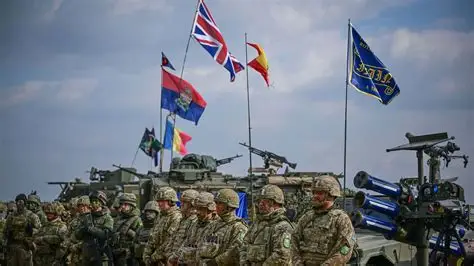
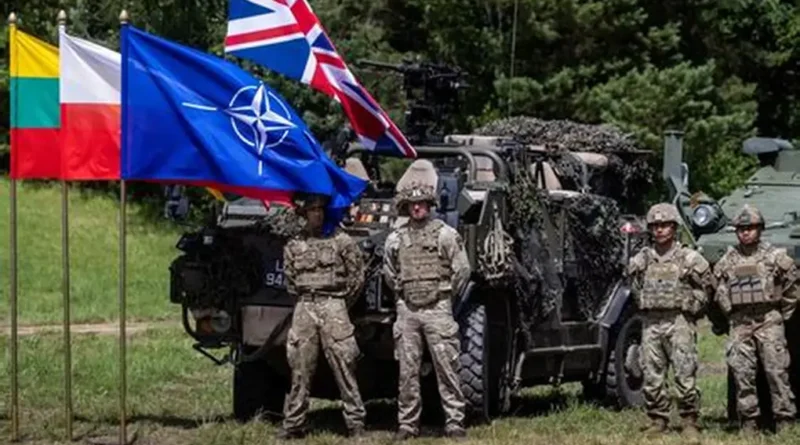
NATO officials describe a pattern that feels both cyclical and newly sharpened. Russia’s persistent use of airspace violations, cyber intrusions, and unconventional tactics has already pushed the Alliance to reinforce its defensive posture from the Baltic to the Black Sea. Over the past decade, this buildup has transformed the eastern flank into one of the most heavily monitored and militarized regions in Europe, a shield designed to deter aggression while reassuring member states that they are not alone.
Yet the latest movements near Ukraine’s borders have revived fears of escalation. The memory of the 2022 full-scale invasion remains vivid, and every drone incursion, every troop rotation, every ambiguous maneuver is now interpreted through the lens of that trauma. In Poland, for example, the scramble to intercept a wave of UAVs approaching from Belarus last year exposed gaps in NATO’s air defenses and underscored how quickly a gray-zone provocation can test the Alliance’s readiness.
Strategists warn that Russia’s objectives may not require a dramatic offensive to be effective. Analysts note that Moscow’s long-term strategy hinges on fracturing NATO unity, exploiting political divisions, and applying pressure where the Alliance appears most vulnerable. Limited incursions, territorial probes, or intensified hybrid operations could serve that purpose without triggering a full-scale confrontation.
Complicating the picture is the shifting posture of the United States. Washington has confirmed a reduction of troop presence along NATO’s borders with Ukraine, a move framed as part of a broader strategic pivot toward the Indo-Pacific. While U.S. officials insist that their commitment to European security remains firm, European allies worry that even symbolic drawdowns could embolden Moscow or create a perception of weakening resolve. Romania, one of the countries most exposed to regional instability, has already voiced concern about the potential security vacuum such adjustments might create.
Despite these anxieties, NATO continues to emphasize that its activities remain defensive in nature. The Alliance has expanded multinational battlegroups, strengthened air policing missions, and launched new initiatives such as Eastern Sentry to enhance vigilance across the entire eastern flank. These measures reflect a recognition that the security environment has fundamentally changed—and that deterrence now requires constant adaptation.
What emerges from this moment is a portrait of a region suspended between deterrence and danger. The military posturing near Ukraine may not yet signal an imminent conflict, but it reinforces a broader truth: Eastern Europe has become the frontline of a long, grinding contest over influence, sovereignty, and the future of the European security order. The question now is whether NATO’s renewed vigilance will be enough to prevent the next spark from igniting something far more destructive.