
Venezuela Earthquake 2026 — The Day the Country Broke Open
The Venezuela earthquake 2026 will be remembered as one of the most violent and destabilizing natural disasters in the nation’s modern history. On June 24, 2026, as the country celebrated the anniversary of the Battle of Carabobo, the ground beneath Venezuela split with catastrophic force. Two massive earthquakes, striking only seconds apart, reshaped entire cities, erased neighborhoods, and plunged millions into fear and uncertainty.
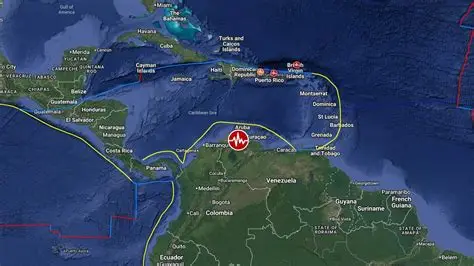
The first tremor struck at 6:04 p.m. local time, a violent jolt that sent buildings swaying across Caracas and the coastal regions. Before residents could understand what was happening, a second and even stronger shockwave tore through the same region. According to the U.S. Geological Survey, the initial quake registered magnitude 7.2, followed by a 7.5 event centered near Morón, roughly 160 kilometers west of the capital. The double impact magnified the destruction, leaving the country in a state of shock.
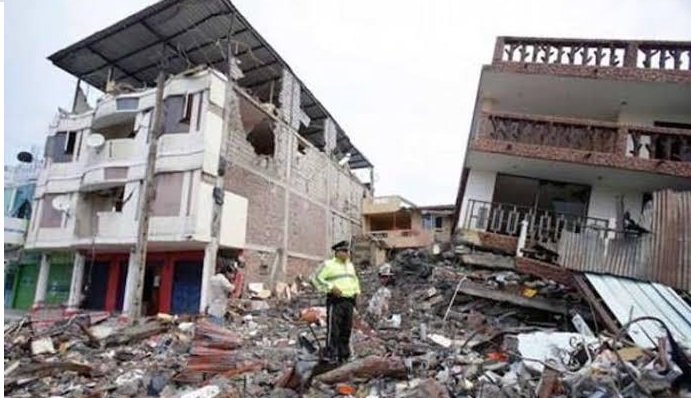
In the hours that followed, the scale of the tragedy began to emerge. Entire apartment blocks collapsed in La Guaira and Catia La Mar. Streets filled with dust, screams, and the sound of sirens. Families searched desperately for missing relatives, digging through rubble with their bare hands as emergency teams struggled to reach the most devastated areas. Early reports confirmed more than 160 deaths, over 1,500 injured, and tens of thousands missing. International agencies warned that the final death toll could climb dramatically as rescue operations progressed.
Caracas, a city already marked by years of economic hardship, suffered some of the most dramatic scenes. Buildings cracked open like shells, exposing living rooms, bedrooms, and stairwells hanging in the air. Residents described the sensation as “the ground turning liquid,” a violent rolling motion that lasted long enough to trigger panic across the capital. Many refused to return indoors, spending the night in parks, stadiums, and open squares, fearing aftershocks that continued to rattle the region.
The Venezuela earthquake 2026 also crippled critical infrastructure. The Simón Bolívar International Airport sustained severe structural damage and was immediately shut down. Power outages spread across multiple states, leaving hospitals dependent on generators as they struggled to treat the wounded. Communication networks faltered, complicating rescue coordination and leaving entire communities temporarily cut off from the outside world.
President Delcy Rodríguez declared a national state of emergency within minutes of the disaster. Schools were closed, public buildings were converted into shelters, and medical personnel were mobilized nationwide. The government urged citizens to remain calm, but the scale of the destruction made it clear that Venezuela was facing a crisis far beyond its internal capacity to manage.
International aid began to arrive within hours. The United States, Brazil, Mexico, China, India, Qatar, and several Latin American nations offered rescue teams, humanitarian supplies, and logistical support. The United Nations issued a stark warning: Venezuela had already been grappling with widespread economic instability and humanitarian challenges before the earthquake, and the disaster risked pushing millions into even deeper vulnerability.
In the coastal state of Falcón, dozens of people were reported trapped beneath collapsed structures. In Morón, the epicenter region, entire blocks were reduced to rubble. Survivors described scenes of chaos, with roads split open and buildings leaning dangerously. Emergency crews worked through the night, guided by the faint sounds of voices beneath the debris.
As the sun rose the next morning, the full magnitude of the Venezuela earthquake 2026 became painfully clear. The country stood at the edge of a humanitarian emergency, with thousands of families displaced, hospitals overwhelmed, and rescue teams racing against time. The coming days would determine how many lives could still be saved and how long it would take for Venezuela to begin rebuilding.
The earthquake did not simply shake the ground; it exposed the fragility of a nation already under immense strain. Yet amid the devastation, stories of resilience emerged: neighbors forming human chains to rescue survivors, volunteers distributing food and water, and communities opening their doors to those who had lost everything. In a moment of profound national trauma, the Venezuelan people showed a strength that no earthquake could erase.