

Financial Security in 2026: How a Changing Economy Is Rewriting the Psychology of Wealth
Financial security in 2026 is no longer something people take for granted. There are years in which the economy changes quietly, almost invisibly, and then there are years like 2026 — years in which the shift becomes tangible, perceptible, almost physical.
There are years in which the economy changes quietly, almost invisibly, and then there are years like 2026 — years in which the shift becomes tangible, perceptible, almost physical. Across much of the world, and especially in the United States, the sense of financial stability that once shaped everyday life is fading. It isn’t a sudden collapse, nor is it a single event marking the turning point. It is something subtler: a slow erosion of confidence, a doubt that slips into spending habits, into family decisions, into conversations that once felt simple.
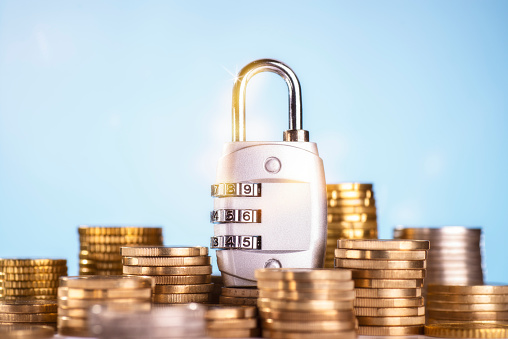
For generations, the financial system offered an implicit promise: if you worked consistently, saved with discipline, and avoided unnecessary risks, your money would hold its value. But 2026 is testing that promise. Many consumers feel that prices continue rising even when official inflation data shows a slowdown. Daily life seems more expensive, heavier, harder to plan. And while statistics tell one story, people are living another.
The shift is not only economic; it is psychological. More and more individuals are no longer asking how to grow their wealth, but how to keep it from slipping away. It is a quiet but profound transformation. Financial security, once considered a starting point, is becoming something people must actively pursue. And this feeling does not affect only the most vulnerable households — it cuts across social classes, professions, and generations.
Some signals are difficult to ignore. U.S. consumer debt has surpassed 17.5 trillion dollars, reaching the highest level ever recorded. Credit card balances have crossed 1.3 trillion, while interest rates sit at historic highs. The personal savings rate has fallen below 4%, one of the lowest levels of the past decade. These are not just numbers; they are clues pointing to a system changing faster than people can adapt.
This pressure is not limited to households. Institutions, too, are recalibrating their strategies. Some financial institutions have begun adopting more cautious lending practices, reflecting a broader climate of uncertainty. Companies are observing consumers who spend more carefully, postpone purchases, and seek stability rather than convenience. Investors are rethinking the very concept of risk, aware that the models of the past do not always interpret the present.
It is within this context that a new kind of financial behavior is emerging. It is not driven by ambition, but by necessity. More people are seeking alternatives that offer a sense of control: small recurring investments, more disciplined saving tools, assets perceived as safe havens, strategies that prioritize resilience over growth. It is a quiet revolution, built on everyday choices, on micro‑decisions that together reveal a cultural shift.
This transformation echoes what is described in The Silent Squeeze: How Americans Are Rewriting Their Financial Lives in 2026, where rising costs and the erosion of purchasing power expose a system under strain. The same forces squeezing households are also rewriting the psychology of wealth, pushing people to reconsider what it truly means to feel secure.
The central question is not whether the economy will recover. Economies always recover, in one way or another. The real question is how people will adapt, and what new habits, priorities, and strategies will define the next era of personal finance. Because when the illusion of safety cracks, it never returns in the same form. It transforms. And with it, choices, expectations, and behaviors transform as well.
2026 may be remembered as the year people stopped assuming their money was safe — and began learning how to truly protect it. Not through fear, but through awareness. Not through speculation, but through resilience. In this quiet, almost invisible shift, the beginning of a new financial era may be taking shape — one in which security is no longer a given, but a skill.