
Trump Meloni Tensions Shake Europe After Trump’s Unexpected Swipe at Italy’s PM
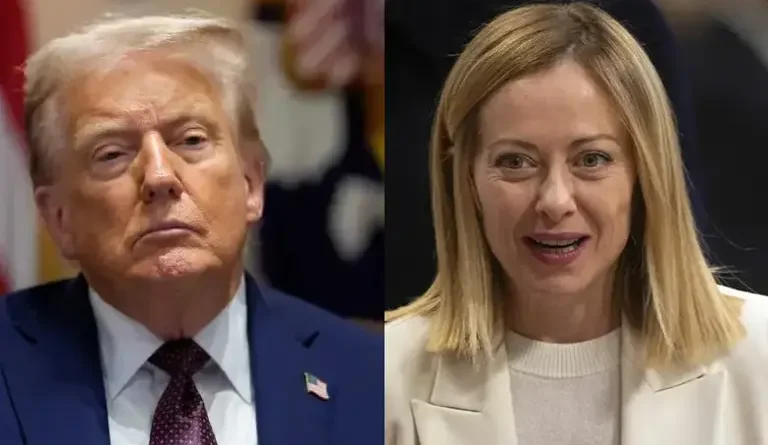
Trump Meloni tensions esploded across Europe in a matter of hours, transforming what should have been an ordinary diplomatic day in Brussels into a full‑scale political storm. The spark came from a single remark by Donald Trump, delivered with the casual sharpness that has long characterized his public interventions. He suggested that Giorgia Meloni had “implored” him for a photo, a claim that immediately reverberated through European institutions and ignited a wave of reactions that no one in Brussels had anticipated.
Meloni’s response arrived swiftly and with unmistakable firmness. From inside the Europa Building, she recorded a video rejecting Trump’s version of events as “totally invented,” insisting that Italy does not beg and never has. Her tone was controlled but resolute, the kind of tone that signals a line has been crossed. Within minutes, the clip was circulating among diplomats, journalists, and European leaders still gathered for the European Council. The atmosphere shifted instantly. Conversations that had been focused on budget negotiations and migration policy suddenly turned to the unexpected revival of transatlantic friction.
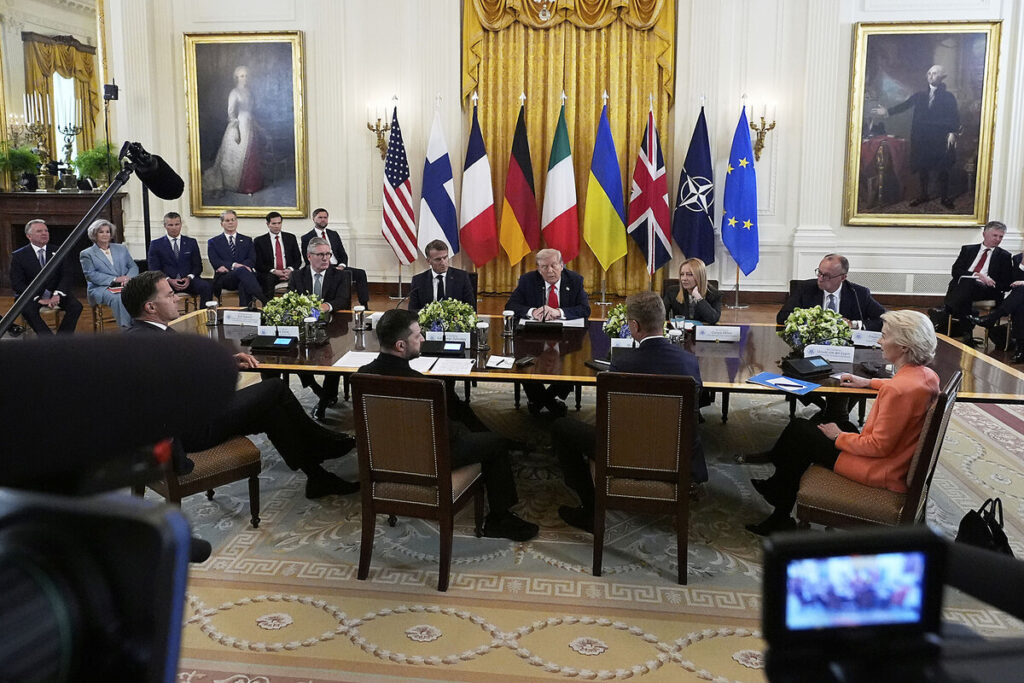
In Madrid, Pedro Sánchez was the first to express solidarity, calling Meloni directly and distancing himself from Trump’s words. Emmanuel Macron followed soon after, admitting he was surprised by the attack and promising to address the matter personally with Meloni at the upcoming Antibes summit. Even leaders who rarely align with Meloni politically recognized that this was no longer a partisan issue but a question of European dignity. The Trump Meloni tensions had become a continental affair.
What made the episode even more striking was its timing. Only days earlier, during the G7 summit in Evian, the mood between Trump and Europe had seemed to soften. Meloni had been seen speaking with Trump in a surprisingly cordial manner, prompting speculation that the long months of tension might finally be easing. Some diplomats even dared to hope that a fragile détente was forming. But the illusion evaporated instantly. Trump’s remark shattered the narrative of reconciliation and reminded Europe that stability with Washington under his leadership can vanish without warning.
In Rome, the reaction was immediate and unusually unified. President Sergio Mattarella personally called Meloni to express support, while Foreign Minister Antonio Tajani canceled a scheduled mission to the United States, describing Trump’s words as an offense to the entire country. Defense Minister Guido Crosetto went further, calling the remark “worse than a lapse in style,” a sign of disrespect that Italy could not ignore. For a moment, political divisions dissolved, replaced by a shared sense that national dignity had been challenged.
Yet the deeper implications of the Trump Meloni tensions extend far beyond the personal clash. For months, Meloni had positioned herself as a potential bridge between Trump’s America and the European Union, a role that many European leaders viewed with caution but tolerated for the sake of stability. She had repeatedly urged EU partners not to escalate tensions with Washington, arguing that Europe had more to lose than to gain from confrontation. Now that strategy appears to have collapsed. The attempt to cultivate a privileged channel with Trump has backfired, leaving her exposed and forcing her to rethink her entire foreign policy approach.
Across Europe, the episode has reignited a broader debate about the continent’s relationship with the United States. Diplomats in Brussels openly acknowledge that the resurgence of Trump Meloni tensions is not an isolated incident but part of a larger pattern that has defined the transatlantic relationship in recent years. The unpredictability of Washington’s tone, the volatility of its political climate, and the increasingly transactional nature of its diplomacy have pushed Europe to reconsider its long‑standing assumptions.
The question now circulating in European capitals is whether this moment marks a turning point. Some argue that Europe must accelerate its path toward strategic autonomy, reducing its dependence on a partner who can shift from cordiality to hostility in a single sentence. Others believe that the relationship with the United States remains too essential to be redefined so abruptly, and that Europe must instead learn to navigate the turbulence with greater resilience.
What is clear is that the Trump Meloni tensions have done more than spark a bilateral quarrel. They have exposed the fragility of the transatlantic bond and reminded Europe that the era of automatic alignment with Washington is over. The shockwave triggered by Trump’s remark continues to ripple through Brussels, Rome, Paris, and beyond, leaving leaders to confront a reality they had hoped to avoid: the stability of the Western alliance can no longer be taken for granted.