
Primordial Black Hole Discovery: A Glimpse into the Universe’s Earliest Secrets
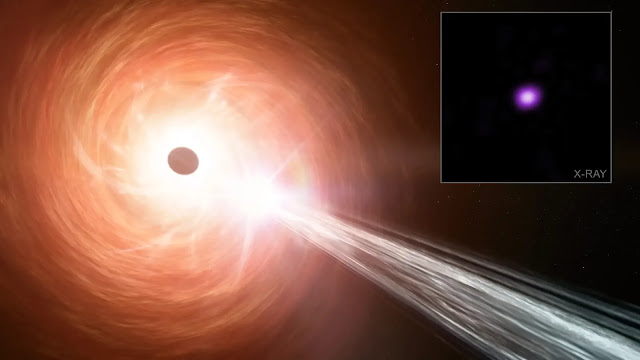
Primordial Black Hole — they found it in the deep silence of the early universe, a faint red echo magnified by the gravitational lens of a distant cluster. JWST captured it almost by accident: a compact, intensely luminous object known as Abell2744‑QSO1, shining when the cosmos was barely seven hundred million years old.
They found it in the deep silence of the early universe, a faint red echo magnified by the gravitational lens of a distant cluster. JWST captured it almost by accident: a compact, intensely luminous object known as Abell2744‑QSO1, shining when the cosmos was barely seven hundred million years old. Too massive for its time, too bright for its surroundings, too lonely to fit comfortably into any known category.
.webp "Primordial Black Hole – QSO1 observed by JWST")
Spectroscopy revealed something astonishing. The object hosts a black hole of roughly 50 million solar masses, extraordinarily massive compared with the apparent stellar mass of its host system. Its galaxy is faint, almost embryonic, as if the black hole had grown faster than the structure meant to contain it. This is what unsettles astronomers: the timeline feels inverted, the cosmic order reversed.
For decades, the standard picture has been simple. Stars form first. Some collapse into black holes. Black holes grow slowly, patiently, over billions of years. But QSO1 refuses to follow that script. It appears fully grown in an era when the universe should not yet have had the time to build such a giant.
This is why scientists are excited — and cautious. QSO1 could be a direct‑collapse black hole, born from a massive primordial gas cloud collapsing under its own weight. It could be a heavy seed, the kind theorized to explain the earliest quasars. And yes, one possibility — still unconfirmed, still debated — is that it might trace its origins back to the primordial fluctuations of the Big Bang, the hypothetical realm of primordial black holes.
But nothing is settled. NASA itself describes the primordial‑origin scenario as one of several interpretations, not a definitive conclusion. What is certain is that QSO1 challenges our understanding of how quickly the universe could assemble its first massive structures. It pushes the boundaries of cosmic evolution and forces theorists to reconsider the early growth of black holes.
Follow‑up observations with JWST and ground‑based radio telescopes will probe its mass, its environment, and its nature with greater precision. Only then will astronomers know whether QSO1 is a relic of the universe’s first heartbeat or the product of an exotic, rapid formation pathway we are only beginning to understand.
For now, it stands as one of the most intriguing clues to the universe’s earliest secrets — a reminder that even after thirteen billion years, the cosmos still surprises us.
What makes QSO1 even more intriguing is the environment in which it appears. The region surrounding the object is dim, almost ghostlike, lacking the rich stellar population that typically accompanies a black hole of such magnitude. Instead of a bustling young galaxy, astronomers see only a faint structure, as if the universe had not yet assembled the ingredients needed to build a proper host. This mismatch between the black hole’s mass and its surroundings is one of the strongest clues that something unusual happened in the early cosmos.
Some researchers suggest that QSO1 may represent a transitional phase, a moment when the first gravitational wells were beginning to shape the matter around them. In this view, the black hole did not simply appear fully formed; it acted as a gravitational anchor, pulling gas toward itself and triggering the earliest stages of galaxy formation. If this interpretation is correct, QSO1 is not just an anomaly — it is a snapshot of cosmic architecture in progress.
Others argue that the object may reveal a deeper truth about the early universe: that conditions were far more extreme, far more efficient at producing massive structures than previously believed. The density of primordial gas, the intensity of radiation fields, and the rapid cooling of the early cosmos may have created pathways for black holes to grow at astonishing speeds. These ideas are still being tested, but QSO1 provides a rare observational foothold in a domain that has long been dominated by theory.
What is certain is that discoveries like this are reshaping the conversation about the universe’s first billion years. Each new observation from JWST adds another piece to a puzzle that has remained unsolved for decades. QSO1 may not yet reveal the full story, but it opens a door — and beyond that door lies a landscape of possibilities that could redefine our understanding of cosmic origins.