
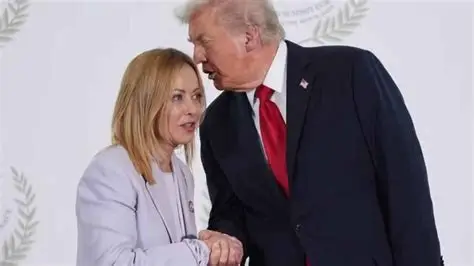
Trump, Meloni and the Fracture No One Expected: When an Ally Becomes a Target
For years, the transatlantic conservative world has repeated a simple mantra: whatever storms shake Washington or Brussels, the alliance between the United States and Europe’s right‑wing governments remains solid. It was a comforting narrative, almost a dogma. Then Donald Trump broke it in a single sentence.
His remark about Giorgia Meloni — “She begged me for a photo, I felt sorry for her” — did not just irritate Rome or Brussels. It sent shockwaves through the very political family that has defended him for a decade. The backlash did not come only from European conservatives, but from inside the American right itself. Among the voices distancing themselves from the president’s words was Rod Dreher, one of the most influential conservative writers in the United States, author of The Benedict Option and considered close to JD Vance’s ideological orbit.
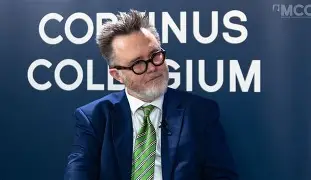
Dreher’s reaction was blunt, almost brutal. He called Trump’s comments “scandalous”, “ungentlemanly”, and ultimately “incomprehensible”. Even if the story were true — and he made clear he does not believe Meloni is the kind of woman who begs for anything — a gentleman, he said, would never reveal such a thing. His conclusion was a dagger: “What a fool our president is.”
The deeper concern, however, is not etiquette. It is geopolitics. Trump’s words risk isolating the United States from the only major conservative government left in Western Europe. Meloni has been one of Washington’s most reliable partners, a consistent supporter of NATO, Ukraine, and transatlantic cooperation. To attack her publicly, and without strategic reason, places Italian conservatives in an impossible position: defend their own prime minister or defend the American president they have long admired.
Dreher sees a pattern. Earlier this year, he wrote in The Free Press that Trump was making life harder for nationalist and conservative parties across Europe. By acting unpredictably — from the Greenland episode to the current tensions — he forces European allies into defensive positions, sometimes even against the United States itself. In his view, Trump thinks only of himself, not of America’s long‑term interests. JD Vance, he argues, genuinely cares about Europe’s future. Trump, instead, is “another story entirely”.
The criticism becomes even sharper when the conversation turns to the broader consequences. Trump’s attacks on European leaders, Dreher warns, do not just damage personal relationships. They weaken the entire transatlantic front at a moment when China and Russia are watching closely. And what troubles him most is the randomness of the targets. If Trump wanted to criticize figures like Friedrich Merz or Ursula von der Leyen, he says, there would at least be political logic behind it. But Giorgia Meloni? It makes no sense. Pedro Sánchez in Spain, he notes, is a far more problematic partner for Washington, yet Trump remains silent about him.
The result, in Dreher’s words, is “shameful”. It embarrasses him as an American who loves Italy and respects Meloni. And it hands strategic advantages to Beijing and Moscow, especially Beijing, which thrives on every fracture between the United States and Europe.
In the end, his verdict is devastating: Trump’s behavior is not only undiplomatic, not only counterproductive, but dangerous. It undermines alliances, empowers adversaries, and leaves America weaker. After supporting him in 2024, Dreher now says he is simply waiting for 2028.
The episode has opened a wound that will not heal quickly. For the first time, the American conservative world is publicly questioning whether Trump still understands the value of allies — or whether the United States, under his leadership, is isolating itself at the very moment it needs friends the most.