
Albania at the Center of an International Storm: Mass Protests, Kushner‑Linked Projects, the Aruba File, and the Shadow of Cocaine Billions
Albania has long existed on the margins of international attention, known mostly for its difficult post‑communist transition, its waves of emigration and its slow, fragile path toward European Union integration. But in the summer of 2026, this small Balkan nation has suddenly become the focal point of a story that stretches from Washington to the Caribbean, from Latin America to Europe’s largest ports, and deep into one of the most profitable criminal markets in the world: the global cocaine trade.
At the heart of this unfolding drama stand the mass protests that have swept through Tirana and other Albanian cities, the controversial tourism developments linked to Jared Kushner and Ivanka Trump, the investigations led by SPAK, the country’s Special Anti‑Corruption Structure, the explosive “Aruba File,” and the increasingly urgent questions surrounding the origin of the billions of euros that have entered Albania’s economy in recent years.
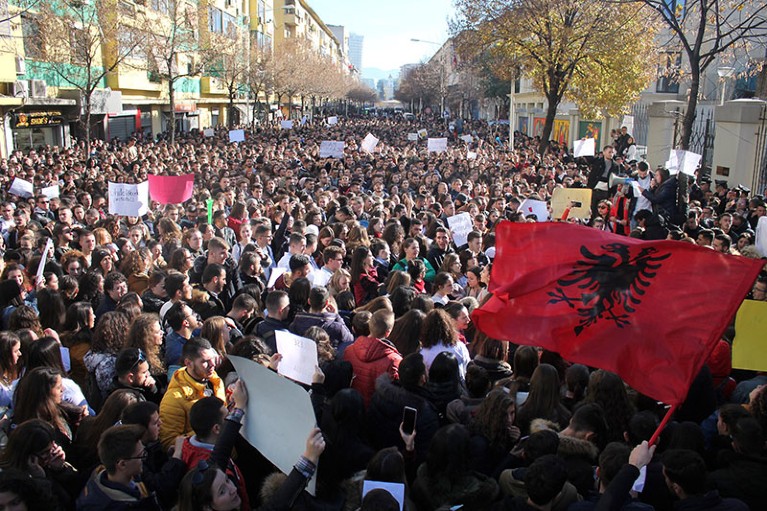
Albanian citizens marching in mass protests amid the Kushner‑linked tourism controversy and the Aruba File investigations.
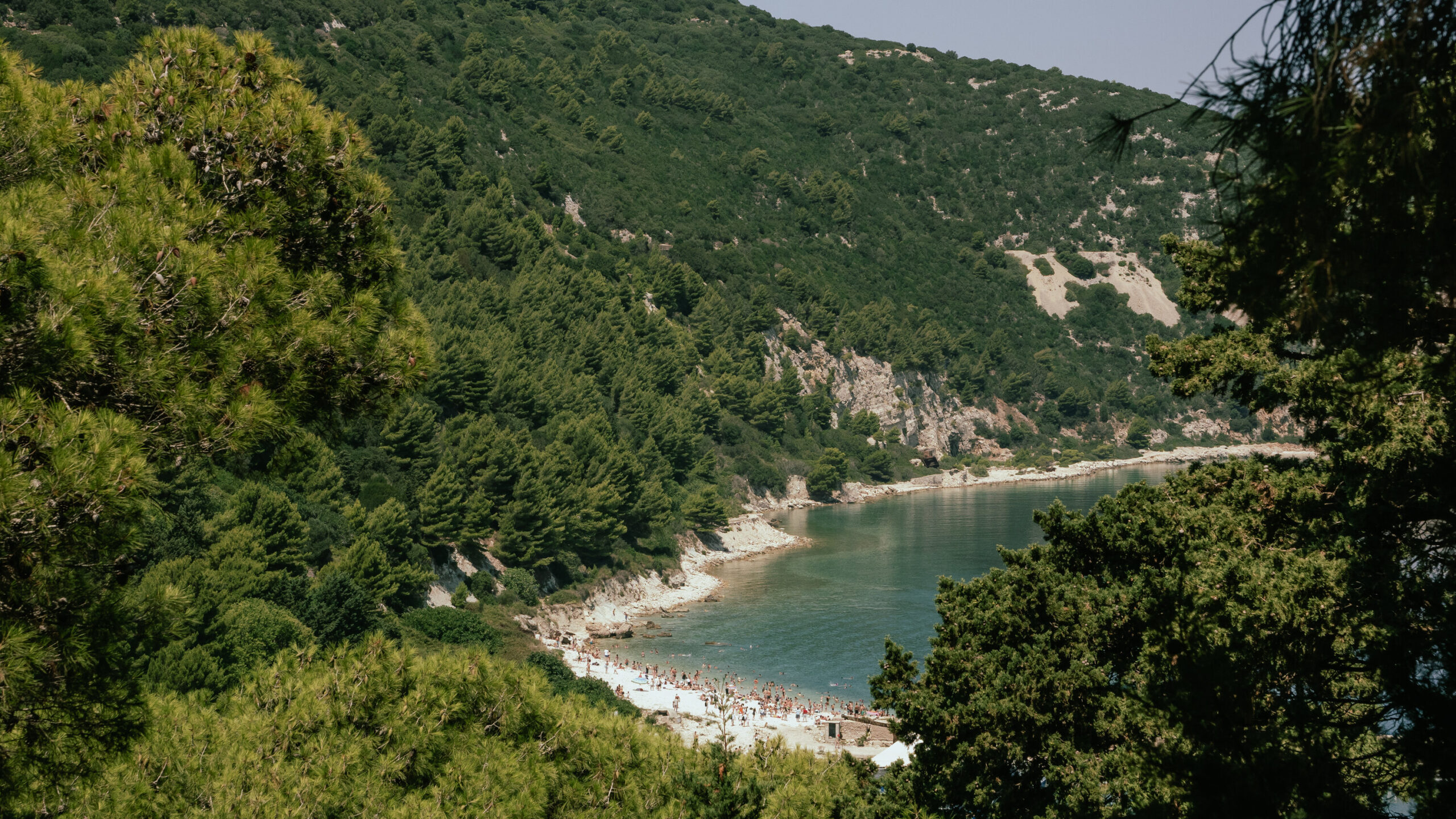
The spark that ignited the protests was a luxury tourism project associated with Jared Kushner, husband of Ivanka Trump and son‑in‑law of U.S. President Donald Trump. The project envisions high‑end developments on Sazan Island and in the protected area of Zvërnec near the Narta Lagoon, one of the Mediterranean’s most sensitive ecological zones and home to flamingos, Dalmatian pelicans, Mediterranean monk seals and endangered sea turtles. The Albanian government has promoted the project as a historic investment capable of transforming the country’s tourism industry and placing Albania on the global luxury map. Critics see something entirely different: a project approved with insufficient transparency, a threat to a protected ecosystem and a symbol of a development model where the interests of powerful investors outweigh those of local communities.

What began as an environmental protest quickly evolved into a broader civic movement. International media have dubbed it the “Flamingo Revolution,” as the flamingo has become the emblem of the Narta Lagoon’s defense. Reuters has reported thousands of demonstrators in Tirana, while Le Monde, El País and other European outlets describe continuous protests where demands now extend far beyond environmental concerns. Protesters carry signs denouncing corruption, state capture and the opaque use of public land. For many Albanians, the protest is no longer about a single resort; it is about the fundamental question of who Albania belongs to and who truly benefits from its economic development.
One of the most striking developments has been the mobilization of the Albanian diaspora. Across social media, hundreds of videos and calls to action have emerged from Albanian communities in Italy, Germany, Switzerland, France, Austria, the United Kingdom and the United States. International media have reported diaspora participation in the Tirana protests, while solidarity demonstrations have taken place in cities such as Berlin, Milan and New York under the slogan “Albania is not for sale.”
As the protests intensified, another story began to surface. SPAK — the Special Anti‑Corruption Structure created with EU and U.S. support — started releasing results from a series of investigations into money laundering and international drug trafficking. At the center of these investigations lies the so‑called “Aruba File.” According to investigative media reports, Aruba, a Caribbean island, was the site of meetings in 2019 between individuals suspected of involvement in large‑scale cocaine trafficking and international money‑laundering networks. Investigators believe these meetings involved discussions about cocaine routes into Europe, transport through major ports and the reinvestment of profits into economic sectors across the Balkans, including Albania.
Recent reports indicate that SPAK has issued dozens of arrest warrants and seized more than €100 million in assets. Investigators are attempting to trace the flow of capital believed to originate from international cocaine trafficking and later invested in real estate, construction and tourism projects. Companies, investments and individuals suspected of acting as bridges between the formal economy and criminal proceeds are now under scrutiny. These remain allegations under investigation, not final court rulings.
To understand the scale of the issue, one must look at what is happening across Europe. Europol considers cocaine trafficking one of the greatest criminal threats to the European Union. Ports such as Antwerp, Rotterdam, Hamburg and Valencia have recorded record‑breaking cocaine seizures. Criminal networks are using increasingly sophisticated methods to move drugs from Latin America to Europe, while profits are reinvested through complex international money‑laundering schemes.
In Europol reports and other international assessments, Albanian criminal groups are frequently mentioned as key actors within Europe’s cocaine networks. During 2025 and 2026, joint operations conducted by Belgium, the Netherlands, Germany, Italy, France and Albania resulted in numerous arrests of individuals suspected of multi‑ton cocaine trafficking and money laundering. Eurojust has coordinated joint investigations between SPAK and Italian authorities targeting organizations involved in cocaine and heroin trafficking.
No one yet knows where the protests or the investigations will lead. No court has proven that major tourism projects in Albania are financed by drug money. But it is equally true that international investigations, SPAK files, Europol operations and questions about the origin of capital are becoming increasingly difficult to ignore. At the same time, the protests have shown that a significant part of Albanian society is no longer willing to accept decisions perceived as opaque or imposed from above.
In the summer of 2026, Albania is not merely debating a resort, a lagoon or an island. It is debating its development model, the relationship between politics and capital, the strength of its justice institutions and the most difficult question of its post‑communist transition: whether a modern European economy can be built without confronting the true origin of the money circulating within it.