
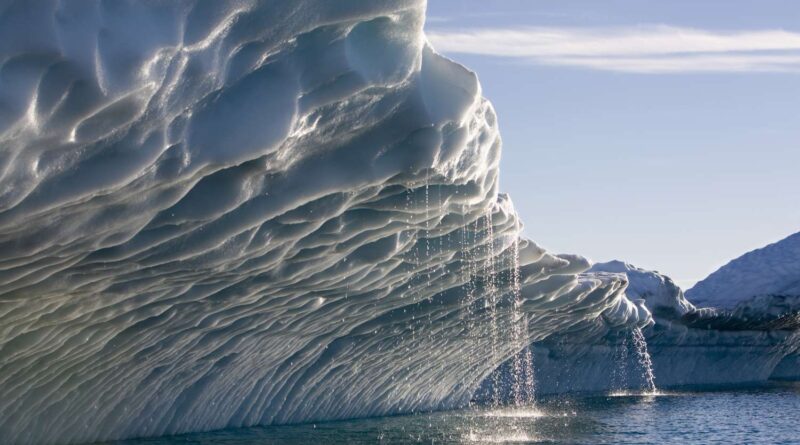
Arctic Amplification: The Alarming Science Behind the Planet’s Fastest-Changing Climate Zone
Arctic Amplification is accelerating faster than any other climate process on Earth. The Arctic is changing faster than any other region on the planet — not in projections, not in speculative models, not in hypothetical future scenarios, but in the hard, measurable reality of satellite data collected over the last four decades. The transformation unfolding above the 66th parallel is not an isolated phenomenon. It is a planetary signal, a shift so profound that scientists now describe the Arctic as the Earth’s early-warning system, a region where climate change accelerates first, amplifies fastest, and reveals the future long before it reaches the rest of the world.
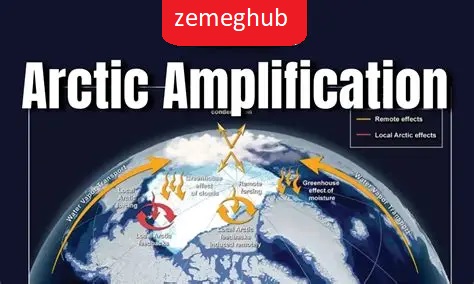
What Is Arctic Amplification and Why It Matters
The Arctic is changing faster than any other region on Earth. Not in projections, not in speculative models, not in hypothetical future scenarios — but in the hard, measurable reality of satellite data collected over the last four decades. The transformation unfolding above the 66th parallel is not an isolated phenomenon. It is a planetary signal, a shift so profound that scientists now describe the Arctic as the Earth’s early‑warning system, a region where climate change accelerates first, amplifies fastest, and reveals the future long before it reaches the rest of the world.
The scientific foundation of this understanding comes from one of the most influential climate studies of the decade: Mika Rantanen et al. (2022), published in Communications Earth & Environment, part of the Nature portfolio. Using 43 years of satellite observations from 1979 to 2021, the study analyzed four independent datasets — NASA GISTEMP, the UK Met Office HadCRUT, Berkeley Earth, and ERA5 reanalysis — and reached a conclusion that reshaped global climate science: the Arctic is warming nearly four times faster than the global average.
This acceleration is not uniform. The Barents Sea, in particular, stands out as one of the fastest‑warming regions on the planet, with temperature increases reaching seven times the global average. This extreme rate is driven by the rapid loss of sea ice, which exposes dark ocean water that absorbs far more solar radiation than reflective ice. The result is a powerful feedback loop: warming melts ice, melted ice exposes water, exposed water absorbs heat, and absorbed heat accelerates warming. This mechanism — the ice‑albedo feedback — is the engine of Arctic amplification.
Its effects are visible far beyond the Arctic Ocean. The same processes destabilizing the polar environment are also reshaping the dynamics of the Greenland Ice Sheet Collapse and the fracture unfolding across West Antarctica. These ice sheets are not passive victims of warming; they are active components of the global climate system, and their destabilization carries consequences measured in meters of potential sea‑level rise.
But the Arctic’s transformation is not only a story of melting ice. It is also a story of shifting atmospheric patterns that ripple across continents. As the Arctic warms faster than mid‑latitudes, the temperature gradient that drives the jet stream weakens. A growing body of research suggests that this weakening may contribute to more persistent jet‑stream meanders, which in turn can influence extreme weather patterns across the Northern Hemisphere. Heatwaves that linger over Europe, winter storms that stall over North America, and prolonged rainfall events in Asia may all be connected, at least in part, to these altered atmospheric dynamics. The science is still evolving, but the trend is clear: the Arctic’s transformation is increasingly intertwined with global weather extremes.
Beneath the surface, another slow but consequential process is unfolding. Permafrost — the frozen ground that has locked away ancient carbon for tens of thousands of years — is thawing. Contrary to sensational headlines about explosive methane bursts, long‑term monitoring from 2010 to 2024 paints a more nuanced picture: a gradual, persistent release of methane and CO₂, driven by warming soils and microbial activity. This slow feedback is one of the most significant long‑term risks for global climate stability, not because of sudden spikes, but because of its cumulative, irreversible nature.
The Arctic’s transformation is also reshaping ecosystems. Species that once thrived in stable, icy environments are now forced to adapt, migrate, or decline. Polar bears face shrinking hunting grounds as sea ice retreats earlier each spring and forms later each autumn. Walruses crowd onto land in massive numbers, a behavior known as “haul‑out,” driven by the loss of offshore ice platforms. Meanwhile, new species — from salmon to red foxes — are moving northward, altering food webs that evolved over millennia. The Arctic is becoming a biological frontier, a place where ecological boundaries blur and new interactions emerge.
The ocean, too, is undergoing profound change. As sea ice diminishes, the Arctic Ocean absorbs more heat, altering circulation patterns that influence global climate. Freshwater from melting ice sheets and glaciers is changing the salinity of the North Atlantic, with potential implications for the Atlantic Meridional Overturning Circulation (AMOC), a system of currents that regulates climate across Europe and North America. While scientists caution against alarmist interpretations, the possibility of AMOC weakening remains one of the most closely monitored climate risks of the 21st century.
Yet the Arctic story is not only about decline. It is also about the technologies and strategies that could slow the trajectory. The rise of green hydrogen electrolyzers, the deployment of carbon capture systems, and the global shift toward renewable energy represent humanity’s attempt to reduce the emissions driving Arctic amplification. These solutions are not theoretical; they are already being implemented, even if not yet at the scale required to alter the Arctic’s current path.
The scientific evidence is clear. The mechanisms are understood. The consequences are unfolding in real time. The Arctic is not a distant frontier — it is the planet’s early‑warning system. And it is speaking loudly.