
Revolutionary Carbon Capture Technology: How CO₂ Capture Is Transforming Heavy Industry in 2026
How Carbon Capture Technology Is Reshaping Heavy Industry
Carbon capture technology is rapidly becoming one of the most transformative tools of the energy transition. CO₂ has long been the silent symbol of our era—an invisible, odorless molecule capable of reshaping the planet’s climate with unprecedented force. For years, efforts to reduce emissions focused on switching fuels, improving efficiency, and expanding renewable energy. Yet one sector cannot be reinvented simply by replacing one technology with another: heavy industry. Cement plants, steel mills, chemical facilities, refineries. Places where CO₂ is not just a byproduct of combustion but a direct consequence of the chemical reactions themselves.
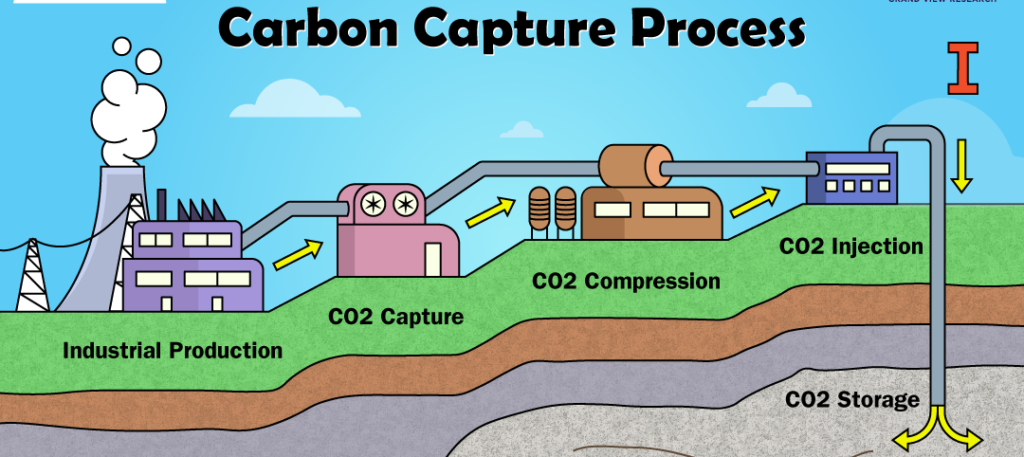
This is why 2026 marks a turning point. Carbon capture technology is no longer a laboratory experiment but a mature industrial solution capable of addressing emissions where no other method can. In Norway, the Longship project has become the most emblematic example. At the Brevik cement plant, a system captures 400,000 tons of CO₂ per year and sends it to Northern Lights, the first cross‑border European infrastructure for CO₂ transport and geological storage. The captured CO₂ travels through pipelines and ships to the North Sea, where it is injected deep underground into rock formations that once held natural gas. It is a symbolic reversal: carbon extracted to fuel industrial civilization is now being returned to the Earth in a stable and secure form.
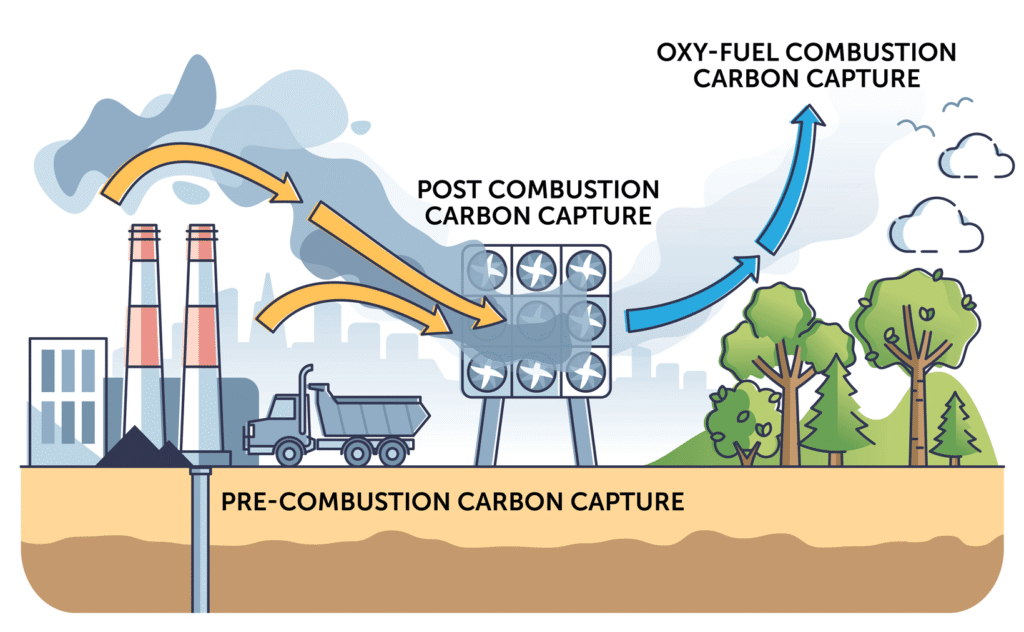
The scientific foundation behind carbon capture technology is a triumph of chemical engineering. Most systems rely on amine‑based solvents that selectively bind to CO₂ in industrial flue gases. Hot gases enter an absorption tower, where the solvent captures the CO₂ like a molecular sponge. In a second tower, the solvent is heated and releases pure CO₂, ready for compression, transport, and storage. This continuous cycle is energy‑intensive but increasingly efficient thanks to new porous materials, advanced membranes, and hybrid processes that reduce energy consumption and increase capture capacity.
The economic challenge remains significant. Capturing a ton of CO₂ currently costs between 70 and 150 euros, depending on the sector and technology. Yet costs are falling quickly as large‑scale projects expand and shared infrastructures like Northern Lights become operational. In several countries, the cost of carbon capture is beginning to compete with the cost of unabated emissions, especially where carbon pricing is stricter. The transition is no longer just an environmental necessity—it is becoming a rational industrial decision.
Critics warn that carbon capture technology must not become an excuse to delay emission reductions at the source. They argue that CCS should complement, not replace, renewable energy and efficiency improvements. This debate is essential, and it helps define the real role of carbon capture in global climate strategies. Most authoritative climate models agree: without CCS, decarbonizing heavy industry would be nearly impossible.
Beyond mitigation, carbon capture technology is opening the door to a circular carbon economy. In Denmark and Germany, green hydrogen is combined with captured CO₂ to produce methanol and sustainable aviation fuels. Elsewhere, CO₂ is transformed into construction materials, fertilizers, and polymers. Carbon is no longer treated as waste but as a resource.
What makes carbon capture technology particularly compelling is its ability to act where no other solution can. Heavy industries cannot be easily electrified, nor can they rely exclusively on renewables. The chemical reactions that turn limestone into cement or iron ore into steel release CO₂ by their very nature. Carbon capture is the only way to drastically reduce these emissions without dismantling entire industrial sectors. It does not replace; it complements. It does not disrupt; it supports. It does not destroy; it transforms.
This article connects naturally with your previous coverage of climate‑driven transformations, including your in‑depth analysis of the Antarctica Ice Sheet Collapse, which reveals how warming oceans are reshaping the planet’s most fragile regions.
In 2026, carbon capture technology is finally recognized as an essential component of the energy transition. Investments are rising, governments are creating incentives, and companies are integrating CCS into their long‑term strategies. It is a race against time, but also a race toward a future where heavy industry is no longer synonymous with pollution but with innovation.
CO₂ remains one of the defining challenges of the twenty‑first century. Yet carbon capture technology shows that innovation can provide concrete tools to confront it. Its success will depend on how well it is integrated with renewables, energy efficiency, and ambitious climate policies. This is a story of science, engineering, and vision—and it is only the beginning.
Source: International Energy Agency (IEA), CCUS Projects Database Update, 30 April 2025. The IEA confirms all key data used in this article, including the Brevik cement plant’s 400,000‑ton CO₂ capture capacity, its integration into the Longship program, and Northern Lights as the dedicated transport and storage infrastructure beneath the North Sea. URL