
Green Hydrogen Electrolyzers: The Revolutionary Technology Transforming Global Energy in 2026
How Green Hydrogen Electrolyzers Are Redefining Industrial Energy in 2026
Hydrogen has always carried a sense of cosmic mystery. It is the lightest element in the universe, the most abundant, the first to emerge after the Big Bang. And yet, for most of modern history, it remained trapped in a paradox: a potentially clean fuel produced almost entirely through fossil‑based processes that emitted more CO₂ than they saved. In 2026, that contradiction is finally dissolving. A new generation of green hydrogen electrolyzers is rewriting the rules of global energy, turning water and renewable electricity into a clean industrial force powerful enough to reshape entire economies.
Electrolysis itself is not new. It is a process as old as modern chemistry: apply an electric current to water, and its molecules split into hydrogen and oxygen. What has changed is everything around it. The electrolyzers of 2026 are no longer laboratory curiosities or pilot‑scale experiments. They are massive, modular industrial machines capable of producing tons of hydrogen per day, powered exclusively by wind, solar, and hydropower. Their rise marks a turning point in the energy transition — a shift from theoretical potential to industrial reality.
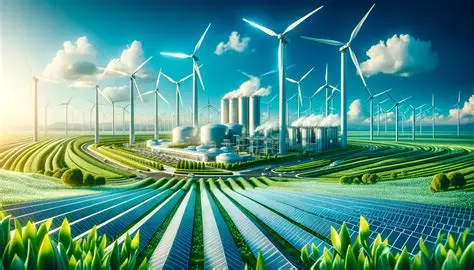
One of the clearest demonstrations of this shift came from Denmark, where the world’s first commercial‑scale e‑methanol plant opened in 2025. According to Reuters, the Kassø facility, built by European Energy in partnership with Mitsui, produces 42,000 tons of green methanol per year using renewable electricity and advanced electrolyzers. It is the first plant of its kind anywhere in the world, and it has become a symbol of what green hydrogen can achieve when deployed at scale.
Why Green Hydrogen Electrolyzers Are Becoming the Core of the Energy Transition
The heart of this revolution lies in efficiency. Modern PEM (Proton Exchange Membrane) and SOEC (Solid Oxide Electrolysis Cell) electrolyzers have reached conversion efficiencies above 75%, with SOEC systems capable of even higher performance when integrated with industrial waste heat. Industry analyses — including those cited by major energy research groups — confirm that these technologies are now mature enough to operate continuously, reliably, and at industrial scale. Their membranes are thinner, their catalysts more advanced, their ceramic components capable of withstanding extreme temperatures. Every part of these machines reflects years of scientific refinement.
The impact on heavy industry is profound. Green hydrogen is emerging as the only viable pathway to decarbonize sectors that cannot be electrified directly. In steelmaking, hydrogen can replace coal in the reduction of iron ore, eliminating nearly all CO₂ emissions from one of the world’s most carbon‑intensive industries. In cement, chemicals, and maritime transport, hydrogen‑based fuels offer a clean alternative to fossil‑based processes that have remained unchanged for a century. For the first time, materials as fundamental as steel and cement can be produced without poisoning the atmosphere.
But the significance of green hydrogen electrolyzers extends far beyond industrial furnaces. Hydrogen is also a long‑duration energy storage medium — a way to preserve renewable electricity for weeks or even months. Batteries excel at short‑term storage, but they cannot bridge seasonal gaps or stabilize entire national grids. Hydrogen can. It captures excess wind and solar power during periods of abundance and stores it for when the grid needs it most. Several countries are already building dedicated hydrogen storage caverns, pipelines, and port terminals, laying the foundations for a global clean‑energy network.
Denmark’s e‑methanol plant also revealed another dimension of this technology: hydrogen is not just a fuel, but a chemical building block. When combined with captured CO₂, it can produce synthetic fuels such as methanol, ammonia, and sustainable aviation fuel. This creates a circular system in which renewable electricity becomes a molecule — one that can power ships, factories, and aircraft without emitting new carbon. It is a bridge between renewable energy and industrial chemistry, between electricity and molecules, between production and sustainability.
The scientific progress behind these electrolyzers is equally remarkable. One of the greatest challenges has been reducing the use of precious metals such as iridium and platinum, which traditionally made electrolyzers expensive and difficult to scale. Research institutes — including Fraunhofer in Germany — have developed new catalysts and nanostructured materials that dramatically reduce the need for these metals while maintaining high performance. This breakthrough has opened the door to mass manufacturing and lowered the cost of green hydrogen across global markets.
Despite these advances, the transition is not without obstacles. Renewable electricity remains the largest component of hydrogen production costs, and large‑scale transport and storage infrastructure requires billions in new investment. The shift is accelerating, but it is far from complete. The path from pilot plants to global deployment is a marathon, not a sprint — and the world is still in the early stages of that race.
Yet the momentum is undeniable. Several major energy forecasts suggest that global electrolyzer capacity could exceed 400 gigawatts by 2030, driven by massive investments across Europe, Asia, North America, and the Middle East. Countries rich in solar and wind resources — including Australia, Saudi Arabia, Morocco, and Chile — are positioning themselves as future exporters of green hydrogen, reshaping global energy trade in much the same way oil and gas shaped the twentieth century. The geopolitical map of energy is shifting, and hydrogen is at its center.
In 2026, green hydrogen electrolyzers are no longer a dream or a laboratory experiment. They are an industrial, scientific, and geopolitical reality. They represent the convergence of physics, chemistry, engineering, and climate ambition. And they demonstrate that when science and vision meet, even the simplest element in the universe can become the key to solving one of the most complex challenges of our time.
To explore how hydrogen connects with other breakthrough technologies in the energy transition, you can also read your related feature on Revolutionary Carbon Capture Technology — a complementary piece that examines how CO₂ capture is transforming heavy industry.