
US Iran War: How the Conflict Has Entered Its Most Dangerous and Unpredictable Phase
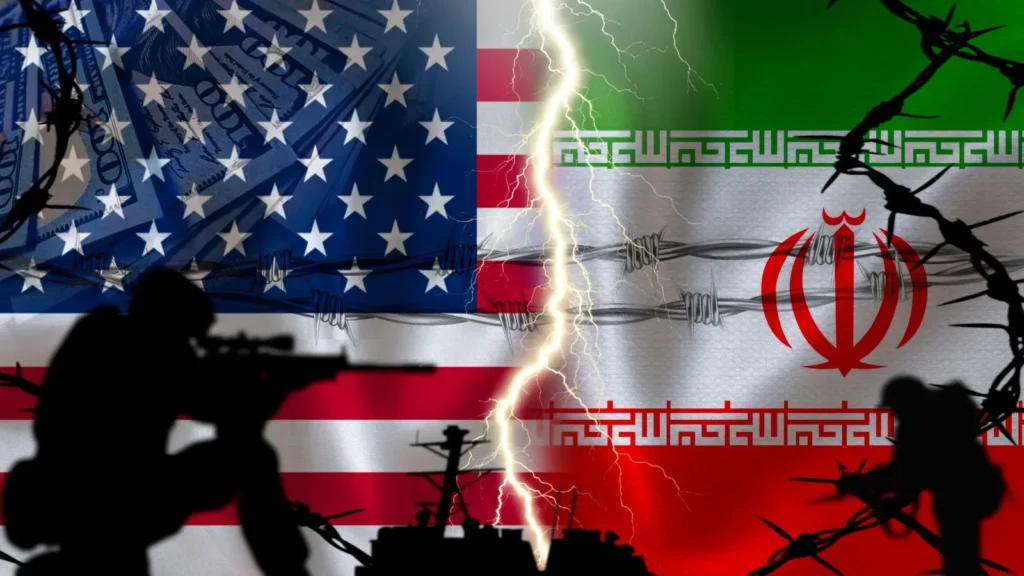
The US Iran war has crossed a threshold that diplomats, analysts and military strategists hoped would never be reached. What began months ago as a series of isolated confrontations in the Persian Gulf has now evolved into a full‑scale geopolitical crisis that is reshaping the balance of power across the Middle East. The fragile ceasefire that once held the region together has collapsed under the weight of new American airstrikes, Iranian retaliation, and a chain reaction of events that no longer follow the logic of controlled escalation. The world is watching a conflict that is no longer confined to borders, treaties or predictable military doctrine.
The latest wave of American strikes has been the most extensive since the beginning of the confrontation. In a single day, the United States launched two coordinated operations targeting Iranian coastal defenses, missile depots, command centers and strategic infrastructure stretching from Bandar Abbas to Greater Tunb Island. The attacks were not symbolic; they were designed to dismantle Iran’s ability to control the Strait of Hormuz, the narrow passage through which a significant portion of the world’s oil supply flows. By striking radar installations and anti‑ship missile batteries, Washington sent a clear message: the era of Iranian dominance over the strait is over.
Iran responded with equal intensity. The Revolutionary Guard launched missiles and drones at American bases in Bahrain, Kuwait and Jordan, framing the confrontation as an existential battle against Washington. The attack on Ali Al Salem Air Base in Kuwait was particularly significant, not because of the damage inflicted, but because it demonstrated Iran’s willingness to expand the conflict beyond its immediate borders. In Jordan, a massive missile barrage was intercepted, but the psychological impact was unmistakable: Iran is prepared to strike wherever American forces are stationed.
The turning point of the US Iran war came when Iran closed the Strait of Hormuz once again. The closure was not merely a tactical maneuver; it was a geopolitical earthquake. Oil tankers halted, commercial vessels rerouted, and global markets reacted instantly. The United States responded by imposing a total naval blockade on Iranian ports and striking a tanker attempting to breach the blockade. The result was a collapse in maritime traffic and a surge in oil prices that rippled across Asia, Europe and North America. For the first time in decades, the world realized that the stability of global energy routes could be shattered in a matter of hours.
But the conflict is not only unfolding at sea. American strikes have reached civilian areas, including an oncology hospital in Ahvaz that was forced to evacuate more than two hundred patients after nearby bombardments made the building unsafe. Iranian authorities condemned the attack as “barbaric,” while Washington remained silent. The humanitarian consequences of the US Iran war are becoming increasingly visible: schools in multiple provinces have suspended exams, medical evacuations are rising, and civilian casualties continue to climb.
Explosions were reported near Tehran, prompting air defense activation across several provinces. Cities such as Qeshm, Chabahar, Konarak, Rask, Khondab, Khorramabad and Semnan have been struck, revealing a conflict that is expanding geographically and becoming more unpredictable with each passing day. Iran has warned that if the United States targets power plants or bridges, it will retaliate by striking “all regional infrastructure,” a threat that has sent shockwaves through Gulf capitals.
One of the most alarming developments is Iran’s request for its Houthi allies to prepare for a possible closure of the Bab al‑Mandeb, the other strategic chokepoint linking the Red Sea to the Indian Ocean. If both Hormuz and Bab al‑Mandeb were shut down simultaneously, the world would face an unprecedented energy crisis. Shipping routes would collapse, oil prices would skyrocket, and global supply chains would be thrown into chaos. The US Iran war is no longer a regional conflict; it is a threat to global economic stability.
Amid the chaos, an unexpected event occurred: Iran released an American citizen, Dena Karari, who had been detained since 2024. President Trump described the gesture as “a sign of goodwill,” but analysts interpret it differently. In the context of the current escalation, the release appears to be a strategic move aimed at preventing the conflict from crossing a point of no return. It is a reminder that even in the darkest moments of war, diplomacy still flickers in the background, fragile and unpredictable.
The truth is that the US Iran war has become a struggle for control over global energy routes, a confrontation between two powers unwilling to retreat. Each day brings the world closer to a scenario where a single miscalculation could ignite a far larger conflict. The Middle East has entered a phase where traditional diplomacy is no longer enough, where military deterrence is no longer stable, and where the consequences of every strike echo far beyond the battlefield.
The world is watching a conflict that is expanding, mutating and accelerating. And as the United States and Iran continue to push each other toward the edge, the question is no longer whether the war will escalate — but how far it will go before someone decides to stop.