
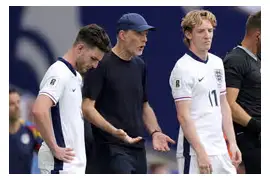
Thomas Tuchel Criticism Explodes After England’s Semifinal Collapse
Thomas Tuchel criticism has reached a breaking point in England. After the semifinal collapse against Argentina, the country is no longer discussing a simple defeat but a tactical disaster attributed directly to the national coach. The backlash is overwhelming, and the narrative emerging from players, media and supporters paints a picture of a manager who chose fear over ambition in the most decisive moment of the tournament.
Thomas Tuchel criticism has become the dominant theme in England’s football landscape after the semifinal against Argentina. What unfolded that night was not just a loss; it was a collapse of leadership, a moment in which the national team looked at its coach and realized he had abandoned the very identity that had carried them so far. England was winning, controlling the rhythm, neutralizing Messi, and shaping a match that felt within reach. Then Tuchel intervened, and everything changed.
The turning point came when he removed Gordon, the brightest spark on the pitch, to insert a defender. It was a substitution that sent a message of fear, a message that rippled through the team like a shockwave. England stopped attacking, stopped countering, stopped breathing. They retreated into their own box, suffocated by a tactical plan that seemed designed to invite Argentina forward. And Argentina accepted the invitation with ruthless clarity.
The first goal at the eighty‑fifth minute was not a surprise; it was the natural outcome of a team forced into submission. The second, deep into stoppage time, sealed a match that Tuchel had effectively handed over with his own decisions. The reaction was immediate and brutal. Former players accused him of sabotaging the game. Commentators described his choices as tactically catastrophic. Fans spoke of betrayal. The press unleashed a wave of Thomas Tuchel criticism unlike anything seen in recent years for an England manager.
Tuchel’s response only intensified the storm. He spoke coldly of passivity, of errors, of slow transitions. He insisted the substitutions were necessary. He dismissed critics as “people sitting on the couch.” In a moment when the country expected accountability, he offered detachment. And that detachment widened the fracture between him and the team.
The players themselves revealed the truth. Kane admitted that England “cannot just try to hold on.” Guehi spoke of “passivity.” Burn confessed that “it felt like only a matter of time.” These are not the words of a united squad. They are the words of a group that felt abandoned by its own coach.
Now England faces a question that can no longer be avoided. After such overwhelming Thomas Tuchel criticism, is he still the right man to lead this national team? The FA is evaluating. The fans are furious. The media is relentless. And Tuchel stands alone, defending decisions that the entire country sees as the root of a historic collapse.
One thing is undeniable: England did not simply lose the semifinal. It lost faith in its coach.