Ancient Quasars Discovered by Euclid Reveal an Astonishing New Window into the Early Universe
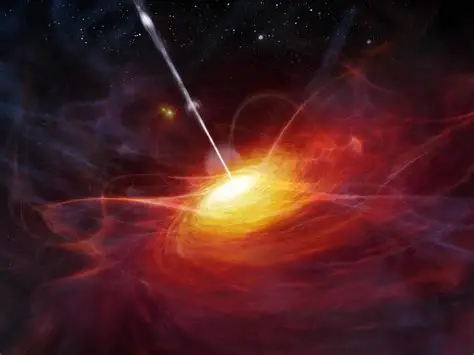
Ancient quasars discovered by Euclid are rewriting our understanding of the early universe. In a groundbreaking survey, the European Space Agency’s Euclid telescope has identified 31 previously unknown quasars from the cosmos’s first billion years, including the two most ancient ever detected. Each shines with the power of a trillion suns, illuminating a chapter of cosmic history where supermassive black holes grew far faster than current theories can explain.
The universe has always kept its deepest secrets hidden in the darkness of its earliest moments. For decades, astronomers have tried to peer into that primordial fog, searching for clues about how the first galaxies formed, how the first stars ignited, and how the first supermassive black holes — impossibly large, impossibly fast — came into existence. Now, thanks to the European Space Agency’s Euclid space telescope, that darkness has begun to lift. And what it reveals is astonishing: 31 previously unknown quasars, including the two most ancient ever discovered, each shining brighter than a trillion suns.
These ancient quasars discovered by Euclid are not just distant objects. They are cosmic fossils, relics from a time when the universe was still learning how to build structure. Their light has traveled for more than 13 billion years, crossing almost the entire history of the cosmos to reach us. They are windows into a chapter of existence where everything was new, unstable, and violently bright.
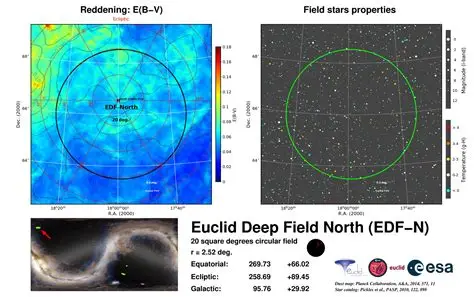
Euclid’s discovery, published July 6 in Astronomy & Astrophysics, more than doubles the number of known quasars from the universe’s first billion years. Before this survey, astronomers had identified only the brightest and most extreme examples — the cosmic equivalents of roaring giants. But Euclid’s wide‑field vision is different. It can detect fainter quasars across enormous regions of the sky, revealing a population that was previously invisible. Suddenly, the early universe looks far more crowded, far more active, and far more mysterious than we ever imagined.
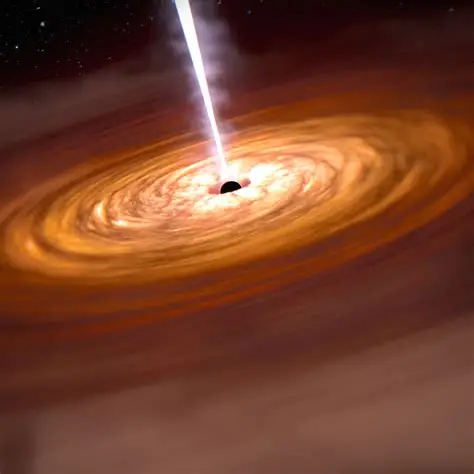
Among the 31 new quasars, two stand out like cosmic titans. One sits at a redshift of 7.77, the other at 7.69. These numbers are not just measurements — they are timestamps. They tell us that these quasars shone when the universe was only 670 million years old, barely 5% of its current age. At that time, galaxies were small, chaotic, and still assembling themselves out of primordial gas. Stars were forming in violent bursts. The cosmic web was just beginning to take shape. And yet, in that turbulent infancy, two black holes grew into monsters capable of powering quasars that outshone entire galaxies.
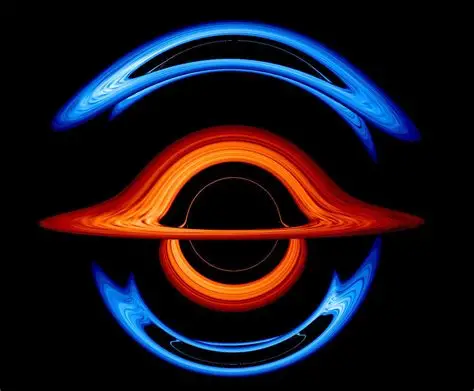
Each of these ancient quasars discovered by Euclid radiates with the luminosity of a trillion suns. Their brilliance comes from matter spiraling into supermassive black holes at their centers — black holes so large and so hungry that they should not exist so early in cosmic history. This is the heart of the mystery. According to current theories, the early universe did not have enough time, matter, or stability to feed black holes to such enormous sizes. Yet here they are, blazing across the cosmic dawn.
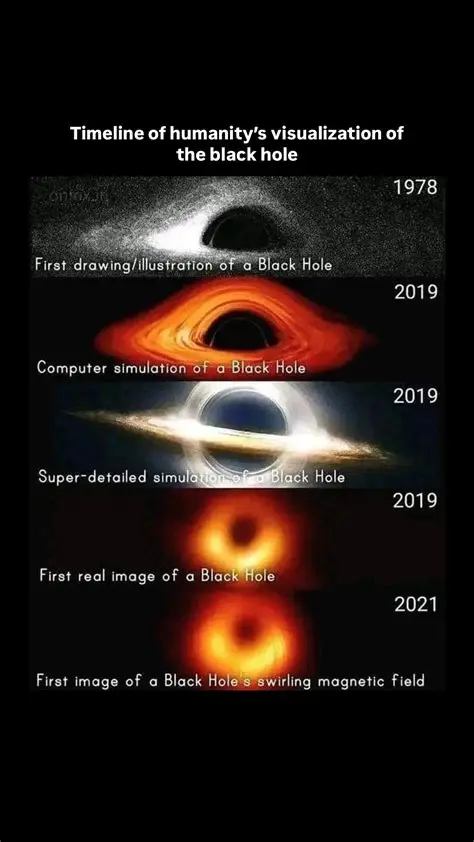
Antonio La Marca, an ESA research fellow on the Euclid team, described the discovery as “a big step toward understanding these fascinating objects on a more fundamental level.” And he is right. These quasars challenge everything we thought we knew about black hole formation. They suggest that the early universe may have been far more efficient at creating massive black holes than expected — or that entirely new mechanisms may have been at play.
For decades, astronomers have debated how the first supermassive black holes formed. Did they grow from the collapse of massive stars? Did they form directly from primordial gas clouds? Did exotic physics in the early universe accelerate their growth? Euclid’s discoveries do not answer these questions — but they bring us closer than ever to solving them.
Finding quasars from the early universe has always been difficult. They are rare, incredibly distant, and often too faint for traditional telescopes. Until now, astronomers had only found the brightest examples, making it impossible to understand the broader population. Euclid changes that. Its wide‑field survey can detect fainter quasars across huge swaths of the sky, revealing a more complete picture of the early universe.
Twelve of the newly discovered quasars have redshifts above 7, meaning their light dates back more than 13 billion years. They offer a direct look into the universe’s first 770 million years, a period when galaxies were still assembling and the first stars were burning through hydrogen for the very first time. Daming Yang, the study’s lead author, explained that these early quasars “date back to the Universe’s infancy,” and studying them will help unravel how supermassive black holes formed and grew so rapidly.
Euclid’s mission is only beginning. Over six years, it will map more than one‑third of the sky, creating the largest 3D map of the universe ever assembled. Scientists expect it to uncover hundreds of similarly ancient quasars, providing an unprecedented view of how the earliest galaxies evolved. And Euclid is not only looking outward. In late June, it captured a breathtaking image of the Milky Way’s center, revealing more than 60 million individual stars packed into a dense, glittering region.
But nothing compares to the two ancient monsters Euclid has just revealed. They are cosmic fossils, relics from a time when the universe was still learning how to build structure. Their existence suggests that black holes may have formed through mechanisms we do not yet understand — perhaps through direct collapse, exotic early‑universe physics, or processes still hidden from us.
What is certain is that Euclid has opened a new chapter in cosmology. The telescope is not just observing the universe — it is rewriting its history. And with every new quasar it finds, we move one step closer to understanding how the first giants were born in the darkness of cosmic dawn.
In this vast cosmic landscape shaped by ancient quasars discovered by Euclid, the mysteries of the early universe continue to unfold. If you want to explore how time itself may emerge from quantum reality, you can dive into one of the most intriguing journeys in modern cosmology: Cosmology and Consciousness: 7 Astonishing Insights into Parallel Universes and Hidden Dimensions — a deep exploration of hidden dimensions, quantum superposition, and the strange frontier where the universe and awareness might intertwine.