
Neural Harmony Between Friends: How Brainwaves Sync in Close Relationships

🧠 Friendship Beyond Words
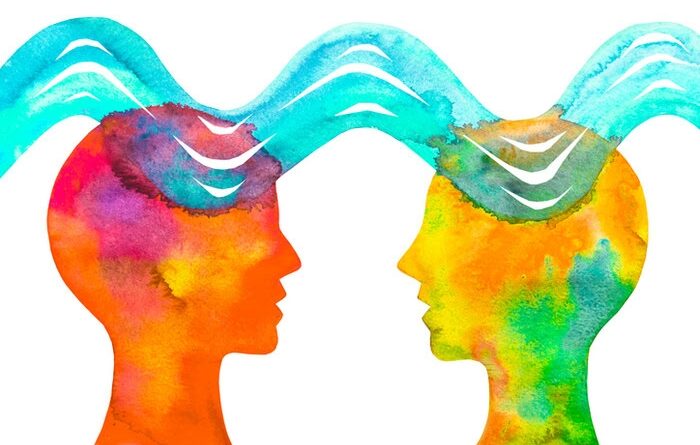
We’ve all felt it—that uncanny sense of being “on the same wavelength” with a close friend. Now, neuroscience confirms that this isn’t just a metaphor.
A groundbreaking study from the Shanghai International Studies University reveals that when two people share a deep friendship, their brains literally begin to operate in sync.
This neural synchronization goes beyond shared interests—it shapes behavior, decision-making, and even consumer choices.
🔬 The Science of Synced Minds
Researchers conducted long-term behavioral experiments with 175 participants and used neuroimaging on 47 of them to explore how close relationships influence brain activity.
The results were astonishing: friends showed synchronized neural responses when exposed to the same stimuli, such as advertisements. Their brains lit up in unison in areas responsible for object perception, attention, memory, social judgment, and reward processing.
Even more remarkably, the study found that the brain activity of one friend could predict the purchasing intentions of the other.
This suggests that close relationships foster not only emotional resonance but also cognitive alignment.
💡 Behavioral Echoes in Friendship
As friendships deepen over time, the similarity in behavior and preferences becomes stronger. Friends tend to evaluate products, make decisions, and respond to social cues in increasingly similar ways.
This isn’t just mimicry—it’s a reflection of shared neural pathways shaped by trust, empathy, and mutual experience.
🧭 Implications for Psychology and Society
This research challenges traditional views of individual cognition by showing that social bonds can reshape neural architecture. It opens new doors in understanding how relationships influence learning, decision-making, and even marketing strategies.
If our brains sync with those we’re close to, then friendship becomes a powerful force in shaping not just who we are—but how we think.