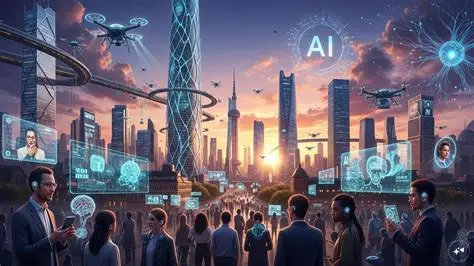
Technologies That Will Change the World by 2050 — The Astonishing Future Taking Shape Today
Technologies that will change the world by 2050 are already emerging today, and their impact will redefine how humanity produces energy, cures diseases, builds cities, explores space and interacts with intelligent machines.
Technologies That Will Change the World by 2050: The Changing World of AI, Energy, Batteries, Transportation, and Robotics
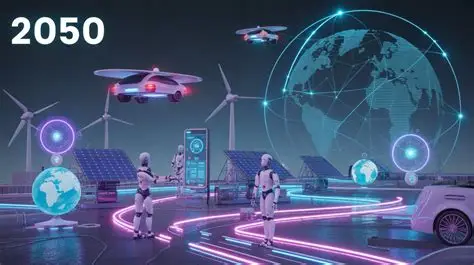
Imagining the world of 2050 means looking at a planet that will no longer resemble the one we know today. It’s not about predicting which smartphones we’ll use or which cars we’ll drive, but about understanding how energy, medicine, artificial intelligence, transportation, agriculture, industry, robotics, and even the relationship between humans and machines are transforming simultaneously.
Some of these technologies are already part of our daily lives, others still live inside laboratories, and others may turn out to be too expensive or fail to work as expected. Talking about the future doesn’t mean making prophecies, but observing what is emerging today, analyzing investments, scientific results, infrastructures, and the problems these innovations aim to solve.
The demographic context makes everything even more urgent. The United Nations estimates that by 2050 the global population could reach 9.7 billion people. The World Health Organization predicts that people aged at least 60 will number around 2 billion, while those over 80 could reach 434 million. We will therefore have a more populated and older planet, one that will require more energy, more healthcare, more food, less waste, and increasingly complex climate management. In this scenario, technologies become essential.
Artificial intelligence is the first major protagonist. If we had to choose a single technology capable of reshaping the largest number of sectors by 2050, it would likely be this one. But reducing it to the chatbots we know today would be a mistake.
The AI of the future could design drugs, analyze millions of medical records, create new materials, control robots, manage power grids, translate languages, develop software, assist scientists, optimize factories, design buildings, simulate physical phenomena, control autonomous systems, help elderly and disabled people, and personalize education.
Its growth rate is astonishing: according to the Stanford AI Index 2026, in 2025 the industry produced over 90% of the models considered significant, while global computing capacity dedicated to AI grew 3.3 times per year since 2022, reaching the equivalent of 17.1 million H100 GPUs. Adoption is equally rapid: in 2025, 88% of organizations used AI in at least one function, while generative AI was present in 70% of companies.
AI is no longer an experimental technology: it is already an economic infrastructure. Its deepest evolution may come from AI agents, systems capable of receiving a goal and autonomously completing a sequence of tasks. No longer a chatbot answering a question, but a digital worker organizing trips, managing documents, preparing schedules, controlling processes, analyzing data.
By 2050 we could have millions of specialized agents performing administrative, technical, creative, and operational activities. This doesn’t mean machines will steal all jobs: some professions will disappear, others will change profoundly, and new ones will emerge. Value will shift from repetitive work to the ability to decide, verify, create, communicate, manage complex systems, and collaborate with machines.
But there is a paradox: the more powerful AI becomes, the more energy it requires. Data centers consume enormous amounts of electricity. The IEA notes that data centers and AI account for less than 10% of global electricity demand growth in the current scenario, but their weight is much higher in some countries, especially the United States. In 2025, the electrical capacity associated with AI data centers reached 29.6 GW. This is why AI cannot be separated from the energy revolution.
The second major transformation concerns energy. For decades the world has been dominated by coal, oil, and gas. By 2050 we could have a much more electrified system. This doesn’t mean fossil fuels will disappear, but that electricity will become the main energy carrier for cars, heat pumps, industries, data centers, hydrogen production, and climate control.
The IEA speaks of entering a new era, the Age of Electricity, in which electricity takes on a central role in the economy. Sun and wind have a huge advantage: they don’t consume fuel during production. But they have a limit: they don’t produce energy when it’s needed. The sun doesn’t shine at night, the wind can drop. The future of energy will depend not only on how much renewable energy we produce, but on how much we can store.
Batteries thus become an invisible but decisive technology. They are needed for cars, trucks, bicycles, smartphones, robots, drones, power grids, homes, and industries. In 2025, 108 GW of new storage capacity were installed, 40% more than in 2024, eleven times more than in 2021. LFP batteries now represent 90% of new installations. By 2050 we could see great diversification: solid-state, sodium-ion, flow batteries, metal-air, thermal systems, gravitational storage, hydrogen, compressed air. There will be no single winning technology: each application will require a different solution.
The transformation of transportation has already begun. In 2024, global electric car sales surpassed 17 million, more than 20% of the market. In 2025 they exceeded 20 million, about 25% of new cars sold. The electric car is no longer a niche. But the real change may come from autonomy. The combination of electric power, AI, sensors, maps, and connectivity could turn the car into a node of an intelligent transport network. Imagine a city in 2050: you don’t own a car, you open an app, an autonomous vehicle arrives, takes you to work, then continues moving on its own.
This could reduce the number of cars in cities, but it could also increase traffic if travel costs become too low. Technology does not automatically determine the outcome: urban planning, politics, and human behavior do.
Robotics is the next frontier. Industrial robots have existed for decades: in 2024, 542,000 were installed, more than double compared to ten years earlier, with Asia responsible for 74% of new installations. But these robots work in structured environments. The real revolution will come when robots are intelligent enough to move in unstructured environments: homes, hospitals, warehouses, construction sites, supermarkets, gardens.
The humanoid robot exists for a simple reason: the world is built for humans. Stairs, doors, tools, kitchens, beds, cars. If a robot can use the same environments without modifying them, its field of application becomes enormous. By 2050 we could have domestic robots capable of cleaning, carrying objects, performing simple cooking tasks, assisting the elderly, monitoring homes, working in warehouses, performing dangerous tasks, collaborating with workers, and intervening in emergencies.
But building a truly reliable, affordable, and autonomous humanoid robot is far more difficult than creating a prototype. The trajectory is real, but the speed of adoption remains uncertain.
Technologies That Will Change the World by 2050: The Revolution of Life Through Medicine, Genetics, Longevity, Nanotechnologies, Quantum Science, Advanced Energy, Agriculture, and Resources
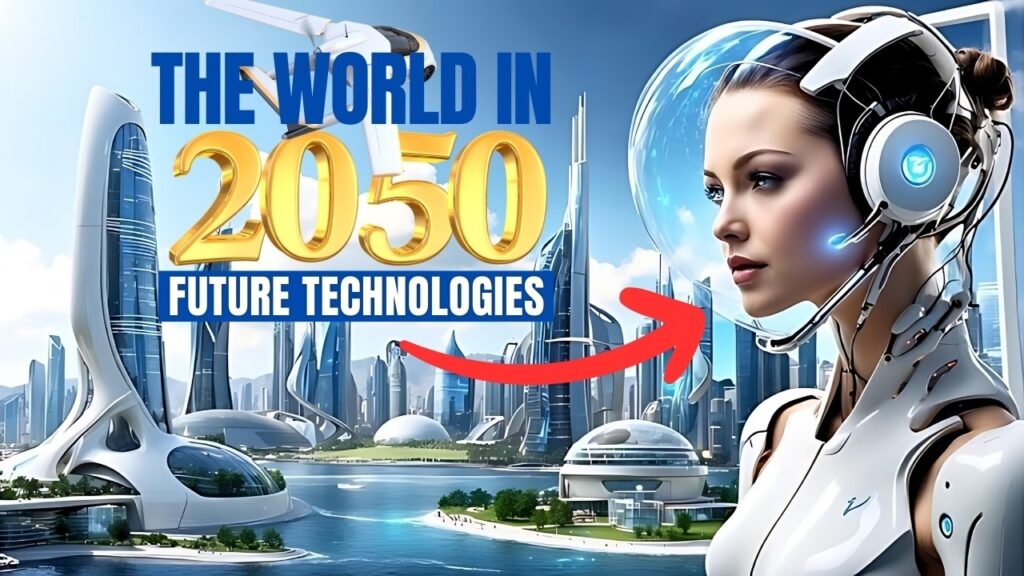
The transformation of 2050 will not concern only machines, robots, and power grids. One of the deepest revolutions will take place inside hospitals, biology laboratories, diagnostic clinics, and even in our homes. Medicine is entering an era in which the patient will no longer be treated as a generic case, but as a unique individual with an unrepeatable biological profile. Today, medicine follows a linear path: a disease is identified, a therapy is chosen based on the patient’s characteristics, and the response is observed. In the future, this process could become far more sophisticated.
The doctor of 2050 could have access to the genome, proteome, microbiome, metabolic data, complete clinical history, medical imaging, data from wearable sensors, biomarkers, and environmental information. An artificial intelligence system could integrate all of this into a computational model capable of simulating how the patient would respond to different therapies. It wouldn’t be a perfect copy of the person, but a digital twin accurate enough to guide more precise clinical decisions. Medicine would thus become personalized, predictive, and preventive.
Alongside this transformation emerges genetic engineering. The CRISPR system has shown that it is possible to modify DNA with a level of precision unimaginable just a few years ago. This opens enormous possibilities: correcting genetic mutations, developing therapies for specific diseases, modifying immune cells, creating new cancer treatments, designing organisms with targeted traits.
But biology is complex. Modifying a gene does not automatically mean curing a disease, because a single gene can influence many processes, and many conditions depend on hundreds of genetic variants and environmental factors. Despite these challenges, 2050 could mark a decisive shift: from a medicine that often treats symptoms to one that, at least in some cases, intervenes directly on biological causes.
Longevity is another central theme. We do not know whether by 2050 it will be possible to live 150 or 200 healthy years: there is no sufficient evidence to claim that. What we do know is that the global population is aging rapidly. According to the WHO, by 2050 there will be about 2 billion people aged at least 60 and around 434 million over 80. This will create enormous demand for regenerative medicine, advanced prosthetics, assistive robotics, pharmaceuticals, early diagnostics, preventive medicine, and continuous monitoring. The real revolution in longevity may not be living to 150, but living longer while maintaining autonomy and health.
Alongside biology, nanotechnology is becoming a discipline capable of manipulating matter at an infinitesimal scale. A nanometer is one billionth of a meter, a dimension in which matter behaves differently from the macroscopic world. Nanotechnologies could contribute to targeted drugs, new materials, advanced electronics, more efficient batteries, sensors, water filters, catalysts, and ultralight materials. One of the most fascinating applications concerns medicine: particles designed to recognize specific cells and release a drug exactly where needed. We are not yet facing millions of autonomous nanorobots like in science‑fiction films, but the realistic concept is that of nanostructures engineered to perform specific functions.
Quantum computing is another often misunderstood technology. It is not a “much faster computer,” but a system that uses quantum mechanical properties to tackle problems classical computing cannot handle. The most interesting applications involve chemistry, materials simulation, drug discovery, optimization, finance, cryptography, logistics, and physical simulation. Investments are growing rapidly: according to McKinsey, quantum startups went from about 2 billion dollars in 2024 to 13 billion in 2025.
The same firm estimates that the quantum technologies market could reach 60–100 billion dollars by 2035, with quantum computing responsible for 43–71 billion. This does not mean that in 2050 we will have a quantum computer on our desk: it will likely be a specialized infrastructure accessible via the cloud.
Quantum computing, however, creates a huge problem: digital security. Many current cryptographic systems rely on the mathematical difficulty of certain problems. A sufficiently powerful quantum computer could make some algorithms vulnerable. For this reason, cybersecurity is already working on post‑quantum cryptography, algorithms designed to resist even future quantum computers. It is an example of a technology that reshapes the present before it is fully mature.
Alongside quantum technologies, nuclear fusion represents one of the most fascinating energy promises. Stars produce energy by fusing atomic nuclei, and the idea is to reproduce similar processes on Earth. If we managed to build economically competitive fusion plants, we would have a high‑density, continuous energy source with very low operational CO₂ emissions and based on relatively abundant fuels. But fusion is one of the technologies with the greatest distance between theoretical promise and industrial maturity. An experiment achieving a physical result does not equal a commercial plant.
To produce energy on an industrial scale, problems related to materials, neutrons, maintenance, costs, fuel production, reliability, heat‑to‑electricity conversion, and plant management must be solved. Fusion could be important by 2050, but it is not prudent to consider it a certainty.
Nuclear fission, on the other hand, is already an industrial technology. The IEA estimates that global nuclear capacity could reach nearly 650 GW by 2050 in the current scenario, while in the Net Zero scenario it could exceed 1,000 GW. Numerous Small Modular Reactors are under development, with the first commercial projects expected around 2030. SMRs aim to make reactors smaller, modular, easier to build, and easier to integrate into energy systems. Nuclear power could become a complement to renewables, not necessarily a replacement.
Even with massive renewable expansion, some emissions will be difficult to eliminate: cement, steel, aviation, agriculture, industrial processes. For this reason, the world may need technologies capable of capturing or removing CO₂. Carbon capture occurs before CO₂ is released into the atmosphere, while carbon removal happens after emission. Technologies include direct air capture, bioenergy with carbon capture, mineralization, reforestation, biochar, and accelerated rock weathering.
The problem is cost: capturing CO₂ from an industrial chimney is very different from searching for it in the atmosphere, where it is diluted. Carbon removal could become important by 2050, but it is unlikely to be an excuse to continue emitting.
Demographic pressure will also make agriculture crucial. With a population that could reach 9.7 billion people, the food system will need to become more efficient. One response will be precision agriculture, which uses sensors, drones, satellites, AI, robots, and autonomous machinery to apply water, fertilizers, pesticides, and seeds exactly where needed. Instead of treating an entire field the same way, each portion of land is managed according to its characteristics.
Alongside this emerges vertical farming, which grows plants in controlled environments on multiple levels. Advantages include reduced water consumption, production near cities, climate control, year‑round cultivation, and reduced transportation. But there is a problem: electricity. Indoor farming requires energy for lighting, climate control, and environmental management. Vertical farming may make sense especially for high‑value crops or in places where water and space are limited.
Global protein demand is rising, opening the door to new alternatives: cultivated meat, plant proteins, precision fermentation, algae, mycoproteins, and ingredients derived from microorganisms. Cultivated meat aims to produce animal tissue without raising an entire animal, but it faces challenges related to cost, production scale, energy consumption, regulation, consumer acceptance, and required ingredients. By 2050 it could become a significant market segment, but it is not guaranteed to fully replace traditional livestock farming.
One of the least discussed problems of the future will be water. Most of the planet’s water is salty, and the challenge is having fresh water available where and when it is needed. Desalination, mainly based on reverse osmosis, could become increasingly important. By 2050 we may see more efficient membranes, systems powered by renewable energy, decentralized plants, mineral recovery, and combinations of desalination with wastewater treatment. In a hotter world, water management could become as important as energy management.
Many technological revolutions will depend on new materials. Ultralight materials, advanced composites, graphene, two‑dimensional materials, metamaterials, advanced ceramics, high‑performance alloys, self‑healing materials, and programmable materials could transform entire industries. Artificial intelligence could greatly accelerate the discovery of new materials, analyzing millions of possible structures and selecting the most promising ones.
This could create a continuous cycle: AI discovering new materials, materials enabling new batteries, batteries powering new machines, machines creating new energy systems, energy systems powering new AI. The technologies of 2050 will be increasingly interconnected.
Technologies That Will Change the World by 2050: The Cities of the Future, Space Exploration, Aerial Mobility, the Digital World, and the New Frontier of Human Interaction
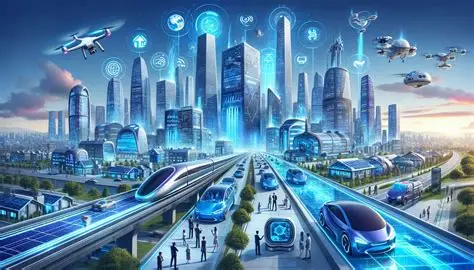
The transformation of 2050 will not stop at the technologies living in laboratories or hospitals. Change will enter cities, homes, factories, streets, outer space, and even the way we perceive reality. 3D printing, for example, is often associated with the production of small objects, but its true potential is far broader. Additive manufacturing makes it possible to build objects by adding material layer by layer, reducing waste and enabling geometries impossible with traditional methods.
In the future, it could be used for aerospace components, prosthetics, medical implants, spare parts, buildings, tools, and industrial components. Imagine a factory in 2050: it doesn’t store millions of spare parts—it stores digital files. When a component is needed, it is produced. This could completely transform industrial logistics, reducing warehouses, transportation, and waiting times.
The cities of the future could become gigantic sensor networks. A building could know its temperature, air quality, energy consumption, occupancy, humidity, and maintenance needs. Artificial intelligence could automatically optimize every system. If no one is in a room, heating decreases. If the electrical grid is under pressure, some home batteries feed energy back into it. If an elevator shows abnormal behavior, the system schedules maintenance before a failure occurs. This is the logic of predictive infrastructure: you don’t wait for something to break—you try to foresee when it might happen.
The electrical grid itself will become more complex. Today we think of it as a structure that carries energy from power plants to homes. Tomorrow we could have millions of small producers and storage units. A home could have solar panels, a battery, a heat pump, an electric car, and a smart charger.
The system could automatically decide when to consume energy, when to store it, when to sell it, and when to feed it back into the grid. In this way, millions of homes could behave like a gigantic distributed power plant. The IEA considers storage essential to support renewable growth and, in the Net Zero scenario, indicates a need for about 1,500 GW of storage by 2030, with around 1,200 GW coming from batteries.
Another major transformation concerns space. Traditionally, internet connectivity required a terrestrial network. The rise of satellite constellations is changing this model. A future with thousands of satellites in low Earth orbit could provide connectivity even in rural, desert, oceanic, mountainous, or disaster‑stricken areas. This could be extremely valuable in countries with limited terrestrial infrastructure. But it also creates problems: space debris, orbital congestion, interference, impacts on astronomy, and regulatory complexity. Space will become increasingly important—but also increasingly crowded.
The space industry could extend all the way to the Moon. By 2050, it is possible that our natural satellite will host a much more significant human and robotic presence. The necessary technologies include reusable rockets, autonomous robots, life‑support systems, local manufacturing, resource extraction, solar energy, and lunar communications.
One of the most fascinating ideas is the use of local resources: if it were possible to use materials found on the Moon to build structures, it would be far more efficient than transporting everything from Earth. This concept, called ISRU, could turn the Moon into an experimental laboratory. But the lunar economy still needs to prove it can be sustainable: it could become a huge sector or remain primarily scientific.
Drones, already common today, could become an integral part of urban and industrial infrastructure. They could be used for deliveries, agriculture, inspections, security, emergencies, research, construction, and infrastructure maintenance. More controversial is the future of flying taxis. Electric vertical takeoff and landing aircraft, eVTOLs, aim to create a new form of urban air mobility. The technology is promising, but the challenges are enormous: safety, noise, range, infrastructure, certifications, costs, and traffic management. By 2050 they may be common in some cities, but it is far from certain that they will replace cars.
The computer of the future might not be a screen. It could be something we wear. Augmented reality glasses could overlay digital information onto the real world. A technician could see instructions directly over a machine, a doctor could view patient data, a student could examine a three‑dimensional model of the heart, a tourist could see the historical reconstruction of a building. Virtual reality, instead, could create entirely digital environments. The real leap will come when these devices become lightweight, affordable, autonomous, and connected to AI. At that point, the distinction between the internet and the real world would become far less clear.
One of the most futuristic technologies is the brain‑computer interface. The idea is to allow the brain to communicate directly with a machine. The most realistic applications concern medicine: helping paralyzed people control a computer, controlling prosthetics, restoring some forms of communication, assisting people with severe disabilities.
In a more distant perspective, some imagine direct interactions between the brain and digital systems. But we are still in highly experimental territory. It is important not to confuse early clinical results with the science‑fiction idea of “uploading the mind to a computer.” There is currently no scientific demonstration that allows us to predict when—or if—this will be possible.
One of the most important changes in the medicine of the future will be the shift from treatment to prediction. Imagine a device that continuously monitors heart rate, blood pressure, glucose, sleep, temperature, physical activity, and biomarkers. An AI system could analyze this data and predict disease risk before symptoms appear. Medicine would become increasingly preventive, reducing hospitalizations, costs, and suffering.
The world of 2050 will therefore be an interwoven network of interconnected technologies: smart cities, distributed electrical grids, predictive infrastructure, satellite internet, space industry, aerial mobility, augmented reality, neural interfaces, preventive medicine. It will not be a future defined by a single invention, but by an ecosystem of innovations that influence one another. A world more complex, more intelligent, more interactive, older, more populated, more digital. A world that will require new skills, new policies, new infrastructures, and a new ability to imagine what is possible.
As the world moves toward a future shaped by technologies that will redefine energy, infrastructure, and everyday life, some breakthroughs already offer a glimpse of what is coming. One of the most fascinating developments is the rise of quantum batteries, a concept that challenges everything we know about energy storage. Their promise of near‑instant charging and decades‑long durability connects directly to the global electrification described in this article, revealing how the next generation of batteries could transform both personal devices and large‑scale systems.
The Dawn of Quantum Batteries: Energy Storage That Charges in Seconds and Lasts for Decades
Another innovation reshaping the future of clean energy is the vertical solar tracker, a design that captures sunlight in ways traditional panels cannot. This breakthrough aligns perfectly with the emerging Age of Electricity, where solar power becomes one of the most important pillars of global energy production. By adapting to all latitudes and environmental conditions, this new technology shows how solar energy is evolving into a more flexible and powerful resource.
The World’s First Vertical Solar Tracker: A New Era of All‑Latitude Clean Energy
