Genes Older Than LUCA: The Ancient Genetic Clues Hidden Inside Modern Life
Genes older than LUCA may offer one of the rare windows into a period of evolution so ancient that no direct biological traces remain.
23 August 2026 — The story of life on Earth may stretch even further back than the biological traces we can directly observe. A new study published in Cell Genomics suggests that some genetic events might predate LUCA — the Last Universal Common Ancestor — offering a rare glimpse into a period of evolution that has long been considered unreachable.
The research comes from Aaron Goldman of Oberlin College, Greg Fournier at MIT, and Betül Kaçar at the University of Wisconsin–Madison. Their work focuses on a special class of genes known as universal paralogs, which may preserve echoes of evolutionary processes that occurred before LUCA emerged.
It’s an exciting discovery, but it needs to be understood correctly. The scientists did not recover four‑billion‑year‑old DNA. Instead, they used the genomes of modern organisms to reconstruct ancient evolutionary events through computational and experimental methods — a kind of genetic archaeology performed with mathematics and molecular biology.
A Time Before LUCA
LUCA is often misunderstood. It wasn’t the first living thing on Earth. It was simply the most recent common ancestor of all cellular life that exists today. That means countless evolutionary steps must have happened before LUCA appeared: the rise of primitive information systems, early gene duplications, the first proteins, and the gradual emergence of cellular machinery.
The problem is that almost all direct traces of those early steps have vanished. Billions of years of mutation, extinction, and environmental change have erased the original genetic landscape.
This is where the new method becomes powerful.
What Universal Paralogs Really Are
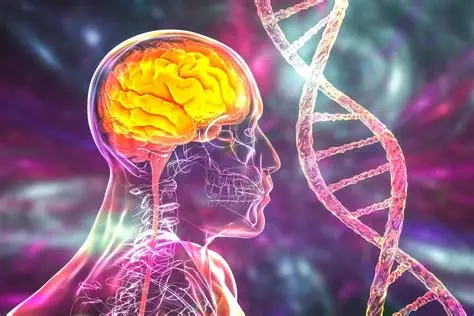
A paralog is a gene created when another gene duplicates within an organism. After duplication, the two copies can evolve independently. One might keep its original job, while the other slowly changes and takes on a new function.
If a family of duplicated genes appears across all major branches of life, its history becomes incredibly valuable. According to the study, some of these universal paralogs seem to originate from duplications that happened before LUCA existed.
In other words, their descendants are still present in modern genomes, acting like genetic fossils — not fossils made of stone, but fossils made of information.
No Ancient DNA Was Found — And That Matters
This point is essential. When people hear “genes older than LUCA,” they sometimes imagine scientists digging up preserved DNA from Earth’s earliest oceans. That’s not what happened.
The original DNA from those primordial cells is long gone. What researchers do instead is compare modern genomes, identify conserved sequences, and use phylogenetic reconstruction to infer what the ancestral versions might have looked like.
It’s similar to reconstructing an ancient language by comparing the modern languages that descended from it.
The Oldest Functions May Be the Most Fundamental
One of the most intriguing findings concerns the functions associated with these ancient paralogs. The researchers found strong links to two essential activities:
- protein synthesis
- membrane transport
These are not minor tasks. Proteins carry out nearly every function inside a cell, and membranes define the boundary between the cell and the outside world. If these systems were already present before LUCA, they may represent some of the earliest building blocks of life as we know it.
Scientists Reconstructed an Ancestral Protein
The study didn’t stop at computational reconstruction. In Goldman’s lab, the team focused on a family of universal paralogs involved in inserting proteins into cellular membranes. They reconstructed the ancestral sequence and produced a laboratory version of the protein that might have existed billions of years ago.
The result was remarkable: the reconstructed protein still interacted with membranes and with the protein‑synthesis machinery. It behaved like a functional relic from a time before modern cells took shape.
Experiments like this push the research beyond theory. They allow scientists to test ancient sequences in real biological systems — a kind of experimental time travel.
A Genetic Time Machine
The value of this work lies in its ability to use modern genomes as windows into the past. Every living organism carries fragments of its evolutionary history. Some genes have changed dramatically, others have disappeared, and a few have remained surprisingly stable.
Universal paralogs may be among the rare traces of events that occurred before LUCA. In that sense, the method works like a genetic time machine. It doesn’t take scientists back in time, but it uses surviving information to reconstruct what might have happened billions of years ago.
What This Tells Us About the Origin of Life
This research doesn’t solve the mystery of life’s origin. It doesn’t explain how the first self‑replicating systems formed or what environment nurtured them. But it does help answer a different question: what biological systems existed just before the ancestor of all modern life?
Understanding which genetic functions were already present can help scientists rebuild the earliest stages of cellular complexity, piece by piece.
A Story Written in Genomes
The most fascinating part is that some of life’s earliest history may still be readable. We don’t have fossils of the first cells. We can’t observe LUCA directly. And we certainly can’t recover the original DNA from that era.
But we can compare modern genomes, identify sequences that resisted the erosion of time, and reconstruct their ancestors mathematically and experimentally.
Universal paralogs may become one of the few tools capable of exploring a chapter of Earth’s history that once seemed completely lost.
The Next Step
The number of identified universal paralogs is still small. That’s why researchers plan to expand the search and examine other gene families that might contain pre‑LUCA information. As more genomes become available and computational tools improve, the amount of usable data will grow rapidly.
The goal isn’t to find “the oldest gene.” It’s far more ambitious: to rebuild the biological architecture that existed before all modern life diverged into its many branches.
Life on Earth may have left a deeper trace than we ever imagined — and that trace may not be in rocks or minerals, but in the genes we carry today.
The search for genes older than LUCA reminds us that some of the universe’s deepest structures have survived across unimaginable stretches of time. A similar sense of hidden architecture appears in the study of the baryon junction — a Y‑shaped gluon configuration that may explain how matter preserves its identity. Just as ancient paralogs act like genetic fossils, the baryon junction may be a physical fossil of the early universe, revealing how the building blocks of matter first learned to hold themselves together.
Exploring genes that predate LUCA shows how life carries traces of its earliest origins. But biology also carries limits, boundaries shaped by time itself. The concept of the longevity limit examines how aging emerges from DNA mutations and the gradual decline of essential systems. It’s another way of looking at life’s timeline — not from the beginning of evolution, but from the slow erosion that defines its end. Together, these two perspectives reveal how deeply time shapes every living organism.
