Why Mind Uploading Reveals the Astonishing Truth About Human Consciousness
Reviewed for scientific accuracy by the Zemeghub Editorial Team
Imagine waking up one morning and realizing that your body is gone. No heartbeat. No breath. No skin. No hands to move or eyes to blink. And yet, somewhere inside a machine, something that feels like you is still thinking. You remember your childhood. You remember the people you love. You remember the sound of a familiar voice and the embarrassment of a moment you wish you had forgotten. From the inside, everything seems normal. But a question rises like a cold shadow: are you really there, or is the machine simply running a perfect reconstruction of you?
Mind Uploading and the Mystery of Consciousness
This is the unsettling frontier of mind uploading — or whole‑brain emulation — one of the most radical ideas ever proposed in neuroscience and computer science. The concept looks simple when reduced to a sentence: take a human brain, map its structure with impossible precision, rebuild that structure inside a computational system, simulate the biological processes that make it work, and let the model run. If the essence of a person is contained in the organization and dynamics of their brain, then perhaps a sufficiently accurate digital reconstruction could reproduce memories, personality, perception, and thought.
But that idea hides an assumption so enormous that it almost breaks the concept itself: we do not know whether a mind can exist independently of the biological processes that generate it. And we certainly do not know whether copying those processes would transfer consciousness, or simply create a second entity that believes it is the same person.
The first obstacle is brutal. We still do not have a complete map of a human brain. The adult brain contains roughly 86 billion neurons, each capable of forming many connections. Estimates place the total number of synapses around 100 trillion, though this number is an order‑of‑magnitude approximation rather than a precise count. And a synapse is not a simple on‑off switch. It has strength, molecular composition, shape, receptors, dynamics. It changes with experience. It grows, weakens, disappears, reappears. The brain is not a static circuit. It is a living, changing system.
Even if we had a perfect map of every neuron and every synapse, we would only possess a snapshot of your neural architecture at one moment in time. But your mind is not a snapshot. It is activity. Electrical signals, chemical messengers, neuromodulators like dopamine and serotonin, glial cells interacting with neurons, metabolism feeding energy, blood flow shifting, hormones influencing perception.
And beyond the skull, the body constantly shapes the brain: heart, lungs, muscles, immune system, skin, senses. Your emotional state changes your perception. Your environment changes your thoughts. Learning rewires your neural connections. A mind is not a file. It is a process unfolding between brain, body, and world.
And yet, science is advancing. In 2024, the FlyWire collaboration produced the first complete connectome of an adult fruit fly: 139,255 neurons and 54.5 million synapses, reconstructed from electron‑microscopy data. It is the most complete whole‑brain connectome of an adult animal ever achieved. A creature capable of walking, seeing, navigating, learning, making decisions — fully mapped.
But the achievement becomes humbling when compared to mammals: a mouse brain contains around 100 million neurons, and the human brain explodes to tens of billions. Mapping a brain is not just a matter of better cameras. It requires imaging tissue at nanometer resolution, storing colossal datasets, reconstructing neurons in 3D, identifying synapses, interpreting them. And even then, a wiring diagram is not a working brain. Knowing the connections does not reveal the dynamics that produce consciousness.
How Mind Uploading Challenges the Nature of the Self
This is where mind uploading crosses from engineering into philosophy. Imagine a future machine capable of scanning a human brain with impossible detail. Every neuron, every synapse, every molecular state, every dynamic process. Imagine a computational model capable of reproducing all of it. The digital brain opens its eyes — metaphorically — and speaks. It remembers your childhood. It recognizes your partner. It knows your favorite song. It tells your family exactly what you would have told them. From their perspective, you have returned.
But what happened to the original you?
If your biological brain is still alive when the digital copy activates, there are now two beings. Both remember being you. Both insist they are you. Both share the same childhood, the same relationships, the same experiences. But from the moment the copy begins thinking, their lives diverge. One sleeps. The other stays awake. One falls in love. The other does not. After ten years, they are clearly two different histories. The copying process creates a profound identity problem: a copy is not automatically a transfer.
And science has no experiment capable of resolving this.
There is another possibility, stranger still. Perhaps consciousness depends on biological details we currently consider irrelevant. Maybe the precise electrical behavior of neurons matters. Maybe molecular processes inside synapses matter. Maybe glial cells matter. Maybe the body’s physiology is part of consciousness. Or perhaps none of these details are essential, and consciousness truly emerges from sufficiently organized information processing. We simply do not know.
This is why “upload your brain” hides enormous scientific uncertainty. The problem is not just scanning — it is knowing what must be scanned. Not just simulation — but knowing what must be simulated. Not just computation — but knowing what makes the resulting system conscious.
A 2025 scientific review examining trends in connectomics, transcriptomics, large‑scale activity measurements, and computing concluded that whole‑brain simulation remains beyond current capabilities. It suggested that cellular‑level simulations of mouse and marmoset brains might become feasible on future timescales, with human whole‑brain simulation even further away. These are projections, not milestones. Moore’s law does not automatically unlock consciousness. More computing power does not reveal which biological details matter. And faster processors do not tell us what consciousness is.
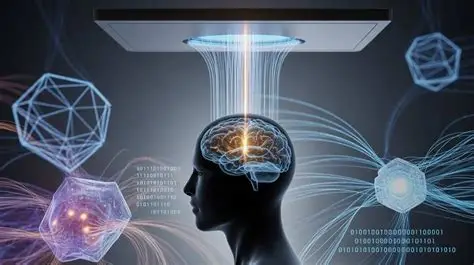
There is also a practical limitation: the most detailed methods for mapping synapses rely on electron microscopy, which requires fixed tissue. We cannot place a living person inside a scanner and download their brain. The popular image of someone entering a futuristic machine and waking up inside a computer is not an extrapolation of current technology. It is science fiction — at least for now.
The real science is slower, messier, more beautiful. Researchers map tiny pieces of nervous systems. They study synapses. They measure neural activity. They build computational models. They try to understand how circuits generate behavior. And gradually, the boundary between biological and computational neuroscience becomes less defined.
But even the fruit‑fly connectome — the most complete brain map ever created — is not a record of consciousness. It is a map of structure, not experience. It does not contain the fly’s memories. It does not contain the molecular state of every cell. It does not reveal the subjective world of the animal. And it certainly does not demonstrate that consciousness can be transferred into a computer.
Mind uploading forces us to confront deeper questions. What is a memory? Where is personality stored? How does the brain maintain a sense of self despite constant change? What physical processes generate consciousness? Could consciousness emerge from sufficiently complex information processing? Does biological tissue matter fundamentally, or is organization enough?
And the most disturbing question: what makes you the same person you were ten years ago? Your body has changed. Your cells have changed. Your beliefs have changed. Your memories have changed. Your brain has changed. And yet you experience yourself as continuous. That continuity may be one of the most extraordinary phenomena the brain produces.
Mind uploading may not give us immortality. It may give us copies. Imagine the technology becomes perfect. You enter a machine. Your brain is scanned. A digital reconstruction is created. The system starts. It says your name. It remembers everything. It speaks with your voice. It knows your loved ones. It tells your family that it is you. But you are still sitting inside the machine.
Would you feel immortal? Or would you feel like you just created someone else?
Science cannot answer this. Because it is not only a question about computation. It is a question about identity.
We do not yet know how to upload a mind. We do not even know what would have to be uploaded. But for the first time in history, we are beginning to map the machinery from which a mind emerges. And that may be the beginning of an even stranger journey. Before humanity can ask whether a mind can live inside a machine, it must answer a much older question:
What, exactly, is a mind?
Explore More in Neuroscience
The question of whether a mind could ever exist inside a machine begins with a more immediate one: how closely can technology actually connect with the human brain? In our article Brain-Computer Interfaces: When the Brain Starts Talking to the Machine, we explore how researchers are already building systems that allow neural signals to interact with computers.
But before we can ask whether consciousness could be transferred, we first have to understand what consciousness actually is. How the Brain Constructs Reality — The Astonishing Science Behind Conscious Perception looks at how the brain transforms neural activity into the reality we experience.