Brain Two Separate Organs: The Astonishing Discovery Redefining Neuroscience
The boundary of knowledge regarding the human body has been shaken by an extraordinary scientific discovery. For centuries, textbooks in medicine and biology have described the brain as a single integrated organ, a complex structure grown from a single original cluster of embryonic stem cells. However, a pioneering study led by Stanford Medicine has completely overturned this historical definition, demonstrating that what we carry inside our skull is not a unitary block, but rather the union of two distinct organs and nervous systems, shaped separately over the course of evolution and then fused together.
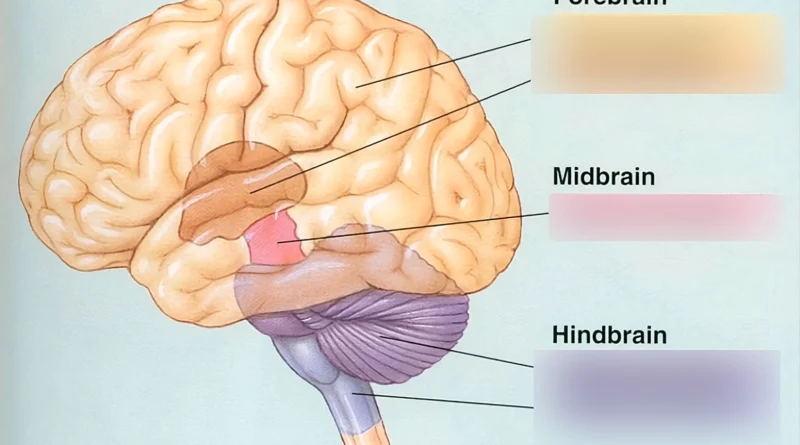
The results of this epic molecular investigation, published in the prestigious scientific journal Nature Neuroscience, shed a completely new light on our biological identity. Scientists have discovered that the front part of the brain, which includes the forebrain and midbrain responsible for logical thinking, language, mathematics, and deep consciousness, originates from entirely different cellular lines compared to the hindbrain, the posterior portion dedicated to controlling primary vital functions such as heartbeat and respiration.
This architecture reveals that evolution literally took two pre-existing and independent neural systems, moving them closer in space until they cooperated as if they were a single entity.
The Ancient Genetic Legacy Rooted in the Tree of Life
To understand how deeply this structural division is rooted in the history of life on Earth, the research team coordinated by developmental biologist Kyle Loh traced embryonic development by analyzing over five hundred million years of evolutionary history. By mapping the genes of various species, scientists traced the exact same two-origin biological pattern in chickens, zebrafish, and even acorn worms, small marine organisms inhabiting ocean floors that share a very remote common ancestor with humans. Pushing even further back, it was discovered that jellyfish, separated from our evolutionary line by about six hundred million years, possess two physically separated nervous systems at opposite ends of their bodies.
This means that nature took hundreds of millions of years to perfect the efficiency of our nervous system, choosing not to create an organ from scratch, but to “squish together” and connect two structures that already functioned autonomously in the animal kingdom. This incredible genetic separation, which had remained invisible until today, finally explains why laboratories worldwide have struggled for decades in their attempts to culture certain brain cells in vitro: they were erroneously trying to generate neurons of the back of the brain using biological precursors belonging to the front.
By respecting this original genealogical diversity, Stanford researchers succeeded for the first time in history in converting human pluripotent stem cells into perfectly functioning and electrically active hindbrain motor neurons—the very ones that govern vital, coordinated actions in our body such as swallowing, facial movements, and breathing rhythms.
A New Frontier for the Treatment of Neurodegenerative Diseases
The discovery that the human brain harbors two distinct anatomical souls does not only represent a theoretical revolution for evolutionary biology, but also opens an unprecedented therapeutic pathway in the fight against devastating and currently incurable neurological pathologies. Many chronic diseases of the nervous system exhibit an obstinate selectivity, attacking certain areas of the mind while leaving others intact.
This happens, for example, in spinal muscular atrophy and amyotrophic lateral sclerosis, where degeneration concentrates precisely on the motor neurons located in the brainstem and hindbrain. Until now, the inability to faithfully replicate these specific cells in a Petri dish slowed down the understanding of disease mechanisms and the testing of new effective drugs.
Being able to isolate, culture, and closely study the molecular biology of neurons in the back of the brain will allow scientists to observe the exact moment when pathological processes deviate from normal biology. This new mapping blends perfectly with other major recent scientific discoveries linked to brain aging, which show how the genome of our nervous system undergoes a massive immune and inflammatory reprogramming past middle age.
Understanding that we are treating two nervous systems born from different evolutionary contexts will force modern medicine to rethink the pharmacological approach, developing targeted and personalized therapies depending on whether the damage resides in the half dedicated to consciousness or the one that keeps us biologically alive. The road to completely deciphering the mysteries of our mind is still long, but discovering that we walk in the world with two fused neural systems shows us, once again, how much the reality of our biology exceeds the imagination of school textbooks.
“the brain may continue producing activity even in its final moments”
What Happens in the Brain When We Die? The Neuroscience of the Final Moments
