AI and Near-Death Experiences: How Artificial Intelligence Is Transforming Consciousness Research
For thousands of years, humanity has stood before the same invisible boundary. We know how life begins. We can watch a heartbeat appear, hear a newborn take its first breath, and observe a developing brain becoming increasingly complex. But when life moves in the opposite direction, the picture becomes far less certain. What happens in those final moments, when the heart stops, breathing ceases, and the brain begins to lose its access to oxygen?
For many people who have survived cardiac arrest, those moments do not feel like an empty void.
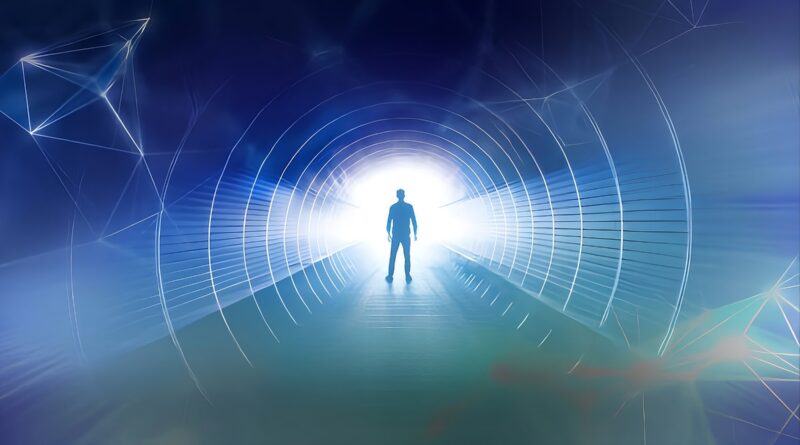
They describe floating above their bodies, hearing voices from the medical team, moving through an intense light, encountering people they believe they recognize, or experiencing a profound sense of peace. Some describe memories unfolding with extraordinary clarity. Others return with a feeling that is difficult to put into words: the conviction that, for a brief period, they were conscious while their bodies appeared to be completely unresponsive.
These experiences are generally known as near-death experiences, or NDEs.
For decades, they occupied an uncomfortable space between medicine, psychology, philosophy, and spirituality. To some, they were nothing more than hallucinations produced by a brain under extreme physiological stress. To others, they represented evidence that consciousness might somehow exist independently of the body. Science has not settled that debate. What is changing, however, is the ability to investigate the biological events surrounding these experiences.
Artificial intelligence, advanced brain monitoring, and increasingly sophisticated methods of analyzing enormous amounts of neurological data are giving researchers tools that were almost unimaginable only a generation ago. AI cannot tell us whether there is an afterlife. It cannot measure a soul. But it may help us understand something more fundamental: what actually happens inside the human brain as the body approaches death.
And that question is already challenging some of our simplest assumptions about the final moments of life.
When the Brain Does Not Simply Switch Off
For a long time, the popular image of death was remarkably simple. The heart stops. Blood stops circulating. The brain stops functioning. Consciousness disappears. Reality is considerably more complicated.
One of the most intriguing developments in recent neuroscience has been the discovery that electrical activity in the brain does not always disappear in a perfectly smooth or instantaneous way during the dying process. Under certain circumstances, organized patterns of activity can persist or even temporarily become more prominent as the brain undergoes profound physiological stress.
One of the most widely discussed examples came in 2022, when researchers published a case involving an 87-year-old patient whose brain activity was continuously recorded around the time of cardiac arrest. The patient had suffered a traumatic subdural hematoma and experienced seizures before his death, making the case exceptionally complex. Nevertheless, the EEG revealed changes in several frequency bands, including gamma activity and patterns of coordination between different brain rhythms.
The finding immediately captured the public imagination. Gamma oscillations are associated with a variety of cognitive processes, including perception, attention and memory in healthy brains. It was therefore tempting to imagine that the dying brain might be producing a final, organized sequence of memories or conscious experience. But this is where science asks us to slow down.
The researchers themselves did not claim that they had recorded a person’s final thoughts. The patient could not report what he experienced, and the recording was complicated by severe brain injury, seizures, medication and other physiological factors. Independent commentary on the case has also pointed out that some of the high-frequency signal could potentially have been influenced by muscle activity rather than purely neuronal activity.
The observation is fascinating precisely because it raises questions without answering them. Perhaps the most important lesson is not that scientists have discovered consciousness surviving death. They have not. It is that the dying brain may be more dynamic and complicated than the old image of a machine simply being switched off.
Listening to the Brain During Resuscitation
Another important line of research comes from the AWARE studies led by Sam Parnia and colleagues, which investigate consciousness and awareness during cardiac arrest and cardiopulmonary resuscitation. The AWARE II study was designed to examine cardiac-arrest patients using real-time EEG and cerebral oxygenation monitoring, while also interviewing survivors about what they remembered. The research involved multiple hospitals and was specifically intended to explore the relationship between brain activity, resuscitation and reported consciousness.
The results were striking enough to reopen an old question.
Among the patients who survived and were able to complete interviews, some reported memories or perceptions associated with the period surrounding their cardiac arrest and resuscitation. At the same time, researchers observed periods of organized EEG activity during CPR, including patterns that could be compatible with conscious brain function.
But again, there is an important distinction. The study does not establish that a person was consciously experiencing a traditional NDE at the exact moment that a particular EEG pattern appeared. Nor does it demonstrate that consciousness exists independently of brain activity.
What it does show is that consciousness during cardiac arrest and resuscitation is a much more complicated scientific problem than previously assumed. That distinction matters.
A person can have a powerful subjective experience during the process of cardiac arrest, during CPR, during the recovery of brain function, or at several points surrounding the event. Memory itself may also be constructed and reconstructed after the fact. Separating these different stages is one of the central challenges facing researchers. And this is where artificial intelligence could become increasingly important.
Where Artificial Intelligence Enters the Picture
A human researcher looking at a few minutes of EEG data can identify obvious patterns. But modern intensive-care environments produce enormous quantities of information. EEG recordings, heart rhythms, blood oxygenation, blood pressure, medication levels and other physiological measurements can change from second to second. The signals can also be contaminated by movement, medical equipment and muscle activity.
For a human being, finding meaningful patterns inside all that noise can be extraordinarily difficult. Machine-learning systems offer another approach. Instead of asking an algorithm to decide whether a patient is having a near-death experience, researchers can train computational models to recognize patterns within large datasets. The goal is much more modest, but potentially much more useful: identify relationships that would be difficult for humans to see consistently.
An AI system could compare thousands of EEG recordings and examine how different combinations of brain rhythms change before, during and after cardiac arrest. It could look for recurring patterns of synchronization between brain regions. It could compare those patterns with oxygen levels, heart activity and, when available, the memories later reported by survivors.
The important word here is correlation. Finding a recurring neural signature would not automatically explain what a person experienced. It would simply give researchers another piece of the puzzle. And that puzzle is enormous.
From Individual Stories to a Global Database of Human Experience
There is another side to the mystery that has nothing to do with EEG machines. It begins with the stories people tell. Across decades, thousands of people have described experiences that occurred during moments of extreme physiological crisis. Their stories vary enormously. Some speak of a tunnel or a brilliant light. Others describe an overwhelming sense of love or peace. Some remember seeing relatives or familiar figures. Others report something much stranger and more difficult to classify.
The challenge for researchers is that human memory is not a recording device. A memory is reconstructed. Language changes it. Culture influences it. Expectations can influence how an experience is interpreted. The passage of time can alter details. This does not mean that NDE accounts are meaningless. It means they need to be studied carefully. Here, artificial intelligence could provide researchers with an entirely new way of approaching the problem.
Natural-language-processing systems can analyze enormous collections of narratives, identifying recurring themes, linguistic structures and relationships between different descriptions. Instead of relying only on a researcher reading hundreds of individual accounts, computational models can examine thousands of them and reveal patterns that might otherwise remain hidden.
The goal would not be to prove that every account describes the same phenomenon. It would be to determine which elements appear repeatedly and which appear to depend more strongly on culture, language, personal beliefs or expectations. That distinction could help transform a collection of extraordinary stories into something that can be studied systematically.
The Possibility of Seeing What the Brain Sees
Perhaps the most extraordinary possibility lies even further ahead. Neuroscientists have already demonstrated that brain activity can contain enough information to reconstruct aspects of visual perception. In experimental settings, researchers have used functional brain imaging and computational models to reconstruct images from patterns of neural activity.
The technology is still far from reading a person’s private thoughts like subtitles on a screen. But the direction is unmistakable. As brain-computer interfaces, functional imaging and generative models become more sophisticated, researchers may eventually be able to ask a much more precise question about unusual states of consciousness. Not simply, “What did the patient say they saw?” But:
“What was happening in the brain while they experienced it?”
Imagine a future intensive-care unit in which EEG signals, cerebral oxygenation, heart activity and other physiological measurements are continuously analyzed by AI. A patient survives cardiac arrest and later describes seeing a particular environment or hearing specific sounds. Researchers could then compare the timing of the reported experience with the physiological record.
That would not prove that the experience occurred exactly as remembered. But it could help establish when particular forms of brain activity occurred and whether certain experiences repeatedly correspond to specific neurological states. The difference would be enormous. For the first time, subjective experience could be studied alongside continuously recorded biological data rather than being examined only after the event.
The Mystery Remains
There is something deeply human about our fascination with this subject. We are not simply asking what happens to neurons when they lose oxygen. We are asking what happens to us. That is why every scientific discovery surrounding the dying brain seems to carry a philosophical weight far greater than the laboratory data itself.
When researchers observe organized electrical activity near the end of life, people naturally ask whether consciousness might continue. When survivors describe extraordinarily vivid experiences, we wonder whether the brain created them or whether they reveal something about consciousness that we do not yet understand. Science has to resist the temptation to answer those questions too quickly. An EEG signal is not a soul. A gamma oscillation is not proof of an afterlife. A memory reported after resuscitation is not, by itself, evidence that consciousness existed independently of the brain.
But the opposite conclusion would be equally premature. We should not assume that because an experience occurs during a medical crisis, we already understand every mechanism behind it. That is what makes this field so fascinating. Artificial intelligence is not bringing us closer to proving heaven or disproving it. It is doing something more practical and, perhaps, more important. It is giving researchers the ability to examine the boundary between biological processes and subjective experience with a level of detail that previous generations simply did not have.
The final frontier may therefore not be death itself. It may be our incomplete understanding of consciousness. For centuries, death was viewed as the moment when the story ended. Today, neuroscience is asking whether the final chapter is more complicated than we thought. And artificial intelligence may become one of the tools that finally allows us to read it.
